The crash decision is usually about risk, not choosing a victim
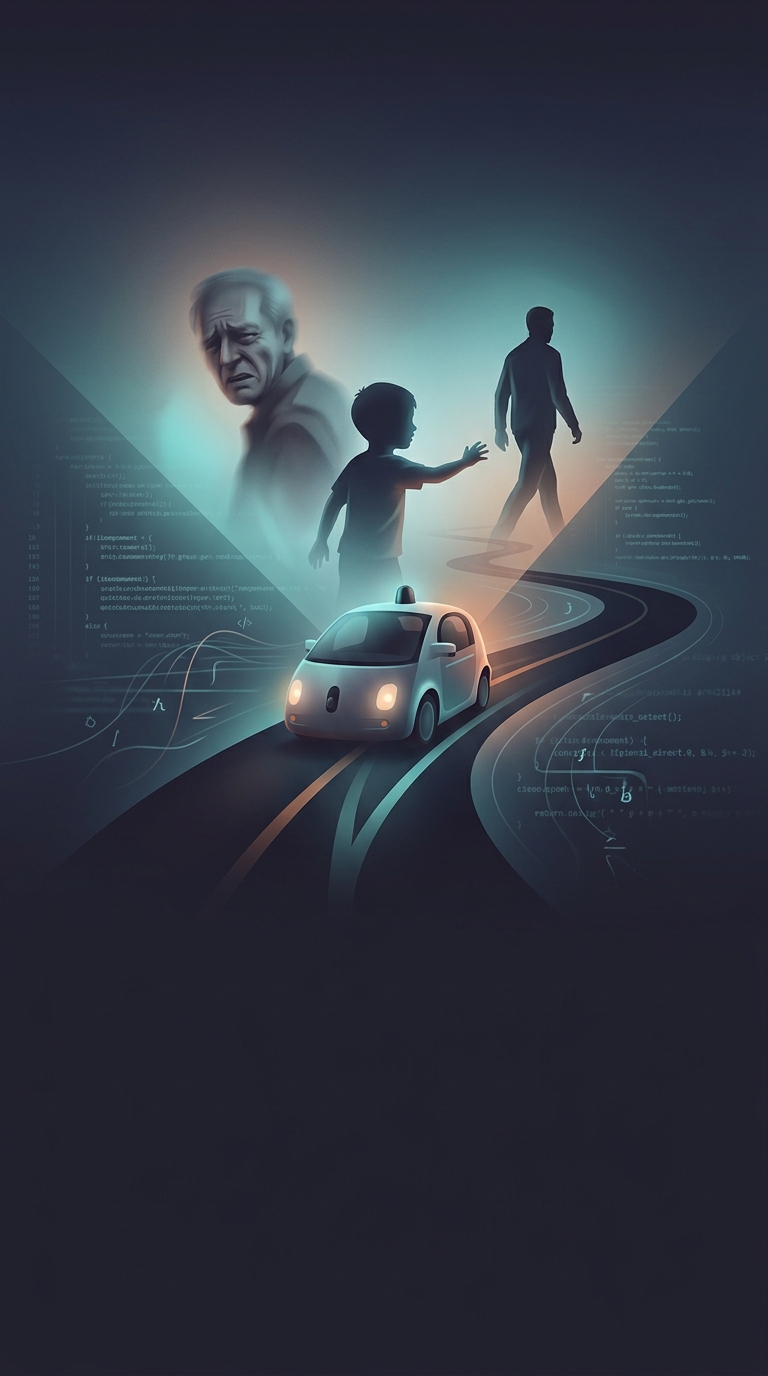
The dilemma often gets framed as a self-driving car choosing whom to hit: its passenger or a pedestrian, for example. But engineers do not typically write a simple rule telling a car to sacrifice one person for another. Real driving software is designed to prevent a crash in the first place, then to reduce harm if one cannot be avoided.
That still involves difficult choices. A car may need to decide how hard to brake, whether to swerve, and how much risk a maneuver creates for people nearby. A sharp swerve might avoid one obstacle but send the vehicle into another lane. Braking hard may reduce the impact but not stop the car in time. Every available action can shift danger among the occupants, pedestrians, and other road users.
Why the software cannot simply “do the math”
The car’s sensors do not provide a perfect picture of the road. They estimate what objects are, where they are moving, and how certain those estimates are. The system must act quickly using that incomplete picture; waiting for certainty can itself be dangerous.
Engineers therefore build priorities into the system—such as obeying traffic rules, maintaining safe distances, and avoiding sudden maneuvers that could cause another collision. Those priorities shape what the car does in emergencies, even if they are not written as a dramatic “who should live?” rule. The hard question is how to balance safety goals when they conflict, and who should decide what counts as an acceptable risk.
A design choice with public consequences
Because automated cars make these decisions repeatedly, their behavior reflects choices made before any particular trip: how cautious the software should be, which risks it should avoid, and how it should respond when its predictions are uncertain. Those choices affect more than the person in the driver’s seat. A car’s emergency maneuver can put other road users at risk, making its safety priorities a matter for public scrutiny—not just an engineering preference.