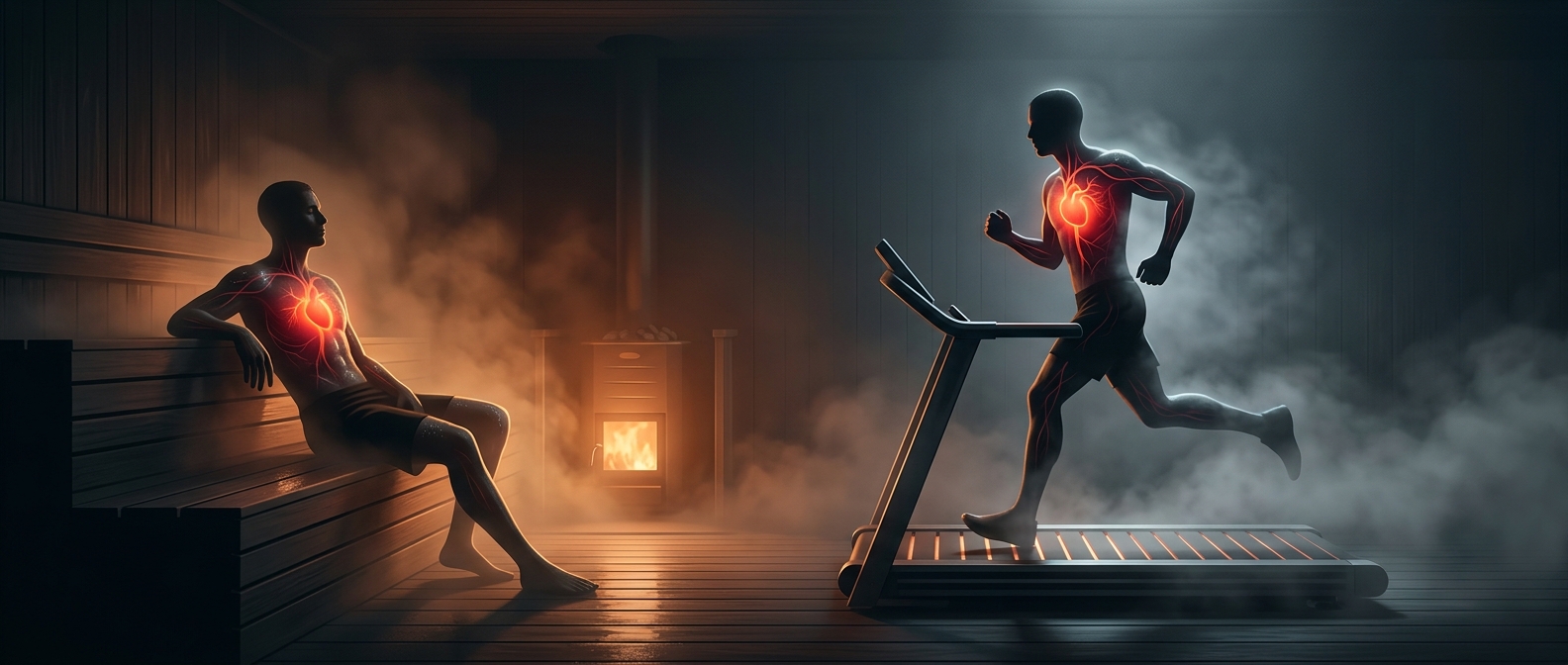
Why heat changes the heartbeat
As sauna air warms the skin, temperature sensors send signals to the brain’s heat-control center. It responds by opening up small blood vessels near the skin’s surface. That brings warm blood closer to the outside of the body, helping heat move into the surrounding air.
This redistribution changes the circulation. More blood is held in vessels near the skin, and sweating gradually removes water from the body. With less fluid available, the heart may pump less blood with each beat. It compensates by beating faster to keep blood moving to the organs as well as the skin.
A cooling response with a cost
The faster pulse is part of temperature control, not a sign that the heart is producing useful exercise work. The body is balancing two demands: sending blood outward to shed heat while maintaining circulation throughout the body. That balance becomes harder to maintain as heat exposure continues and fluid is lost.
Once you leave the sauna, the cooling demand eases, so the circulation can gradually shift back toward its usual pattern. The striking part is that a quiet stay in a hot room can make the heart work harder simply because the body is treating heat as a problem it must actively manage.