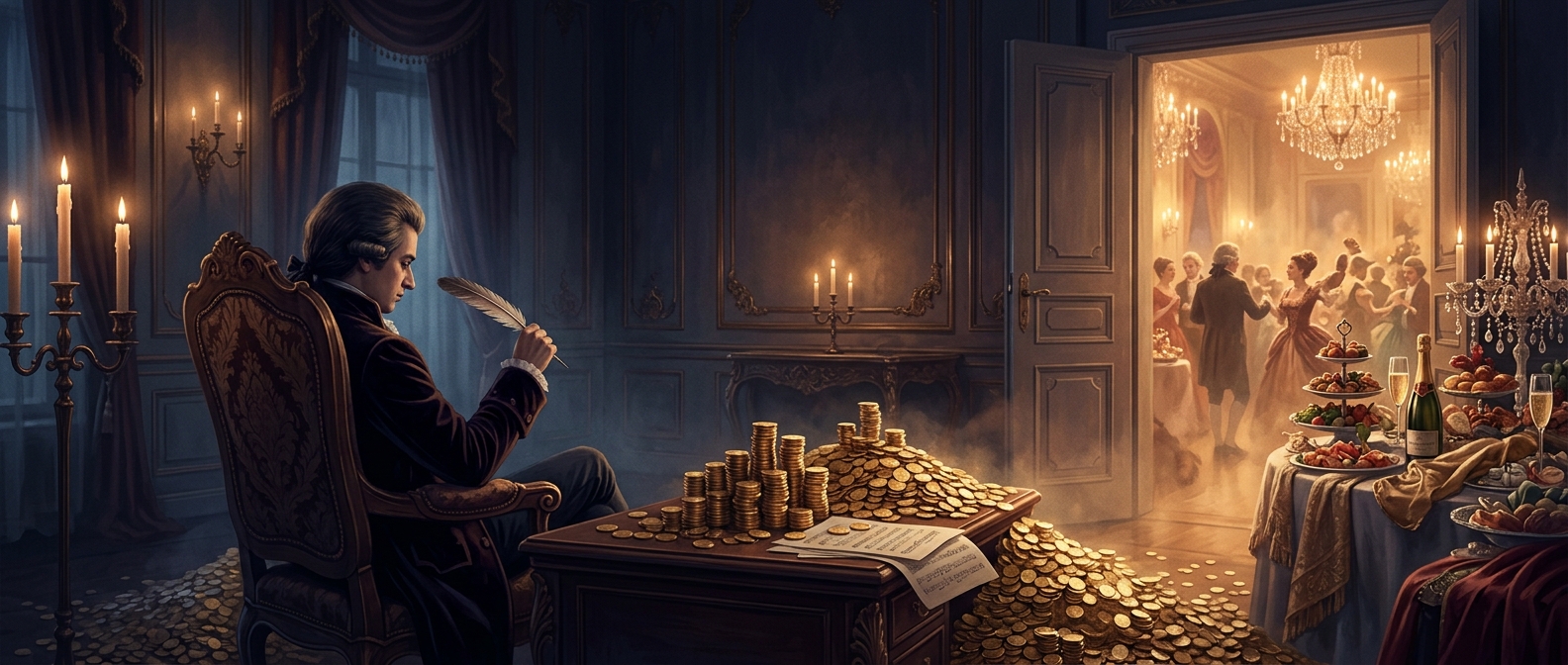
A meal designed to make wealth visible
The pearl story survives because it turns a fortune into a scene: instead of merely serving an extravagant dinner, Cleopatra supposedly made a costly object disappear in front of Mark Antony. The wager, recorded by the Roman writer Pliny the Elder, made spending itself the spectacle. A pearl worn as jewelry signaled wealth; consuming it made that wealth seem almost effortless.
That display mattered in a world where elite status was publicly performed. Lavish banquets could advertise access to rare goods and the power to command them. Cleopatra’s gesture, as Pliny tells it, raised the stakes: the prize was not just an expensive meal, but proof that she could outspend Antony on a single act.
What the vinegar could do
Pearls are made mostly of calcium carbonate, the same basic mineral found in chalk and limestone. Vinegar contains acetic acid, which reacts with calcium carbonate and gradually breaks it down, producing dissolved calcium compounds and bubbles of carbon dioxide. So the chemistry behind the tale is real, even though vinegar would not make a large pearl vanish instantly; the speed depends on conditions such as the acid’s strength and how much of the pearl is exposed.
The point of the anecdote is not a practical recipe for dissolving jewelry. It is the image of wealth converted into a drink—and the audience meant to witness it. In Pliny’s telling, the bet ended when Cleopatra’s pearl made extravagance itself the meal’s final course.