The joke is the collision between rules and reality
A physical-challenge show gives a contestant a simple goal—stay upright, reach a target, finish a task—then makes the body an unpredictable part of the game. A wobble, a failed landing, or a startled yelp can puncture the contestant’s apparent confidence. The laugh comes from that sudden mismatch: an orderly contest meets human limits.
The challenge also gives the chaos a shape. Viewers can understand what success looks like and see exactly where a contestant goes wrong. As obstacles become harder or the clock runs down, anticipation builds before anything happens. A stumble then releases that tension, while the contestant’s reaction tells the audience how the moment felt from inside the stunt.
The line between slapstick and real harm
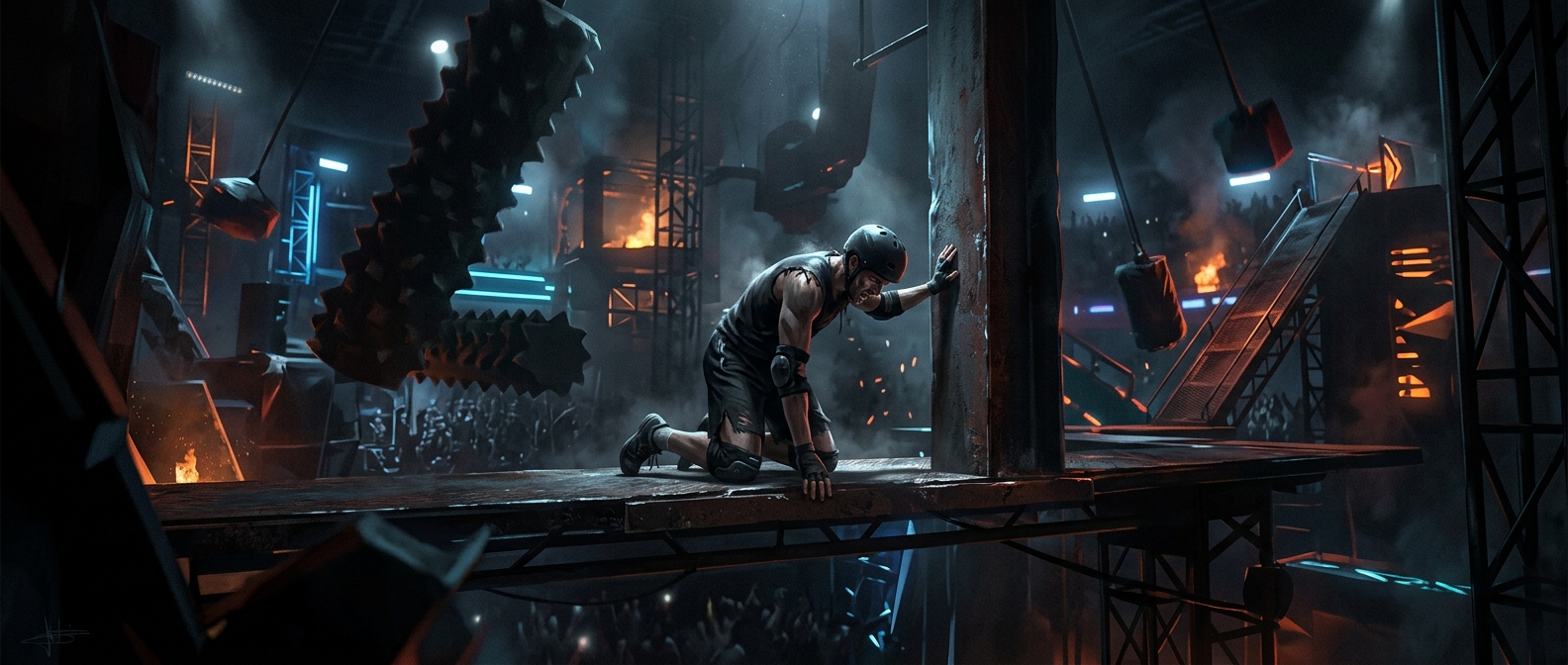
Physical comedy depends on the appearance of danger, but pain itself is a blunt tool. A pratfall or a splash can read as playful when the setup makes the risk seem bounded; a serious injury would change the scene from a game into an emergency. That distinction is why stunt design, clear rules, and control over the challenge matter—not just to contestants’ welfare, but to whether viewers can enjoy the joke.
Editing shapes the effect, too. A show can hold on a contestant’s attempt, cut quickly through a tumble, then linger on the reaction. That timing turns a brief mishap into a complete comic beat: expectation, failure, response. The spectacle works best when the audience is laughing at the contest’s absurd demands, not wondering whether someone has been badly hurt.