Fitness does not transfer evenly from one obstacle to the next
An obstacle course can turn a broad measure of fitness into a series of narrow tests. Running helps contestants cover ground, but it may do little for a wall that demands precise foot placement or a suspended obstacle that depends on grip and controlled momentum. A person can be strong and well-conditioned yet lack the particular skill a course asks for at its hardest point.
That mismatch is part of the spectacle. Viewers can recognize the effort—climbing, jumping, hanging on—without needing to share the contestant’s fatigue. But the decisive challenge may be less visible: judging a distance, timing a swing, or keeping a firm hold after earlier exertion has made the forearms tired.
Small failures can make the whole course feel harder
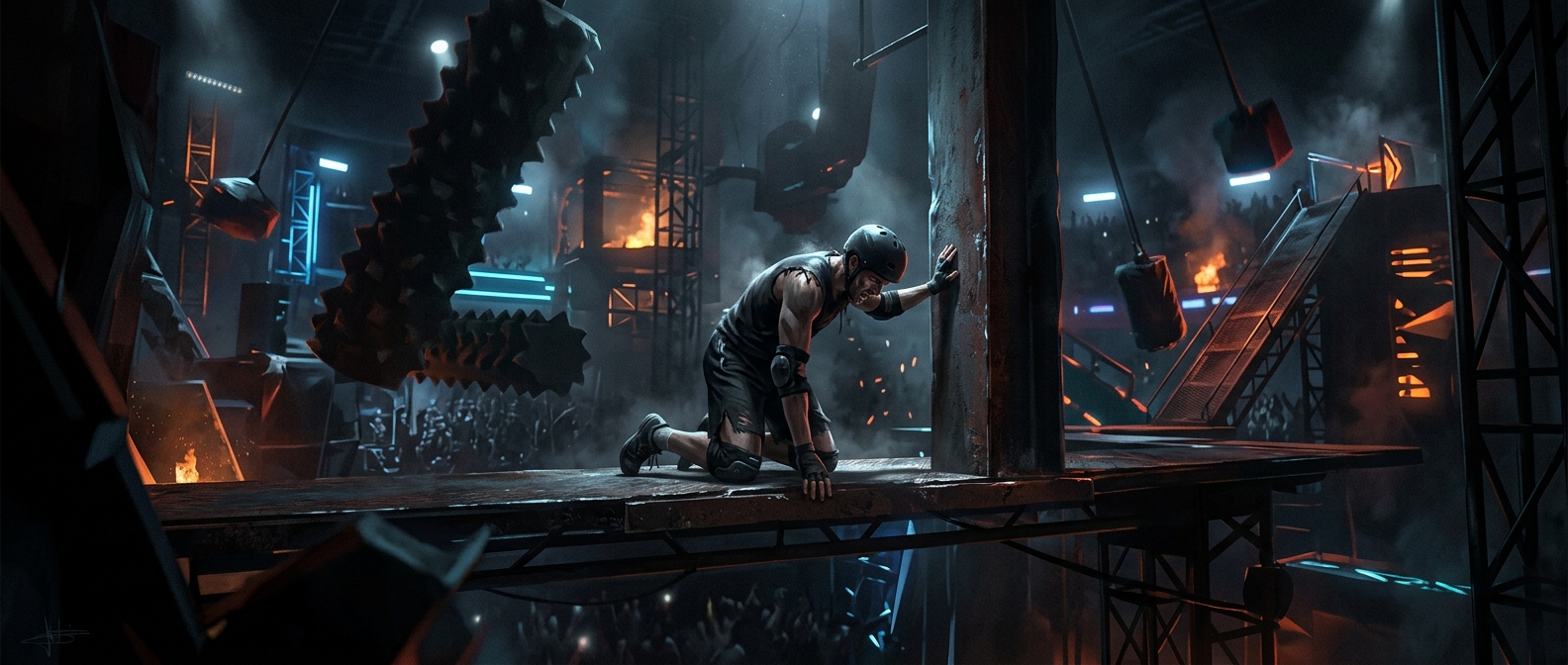
Obstacles also arrive in sequence. A slip or awkward landing can cost time and energy, while a successful attempt may leave a contestant less rested for whatever comes next. The course therefore tests not just isolated strength, but how well someone adapts when tired and under pressure.
Designers have to make that difficulty legible: an obstacle should look possible, yet demand enough coordination or control that success is uncertain. When contestants pause, lose their grip, or fall short, the audience can see the consequence immediately. The course makes ordinary athletic ability look insufficient by testing specific skills in a punishing order—not by asking for fitness in the abstract.