Why the Snow Takes Its Time
Inside a snow globe, the flakes are heavier than the liquid around them, so gravity pulls them downward. But gravity is not the only force at work: as each particle moves, the liquid pushes back against it. A thicker liquid creates more resistance, slowing the descent. This resistance is called viscosity—the same quality that makes honey pour more slowly than water.
The synthetic syrup in a globe is chosen to make the miniature snowfall linger. Give the liquid too little thickness, and the flakes quickly collect at the base. Make it too resistant, and the flakes may barely drift after the globe is shaken. The effect depends on a balance between the liquid’s thickness and the particles’ size and weight.
A Tiny Scene with a Longer View
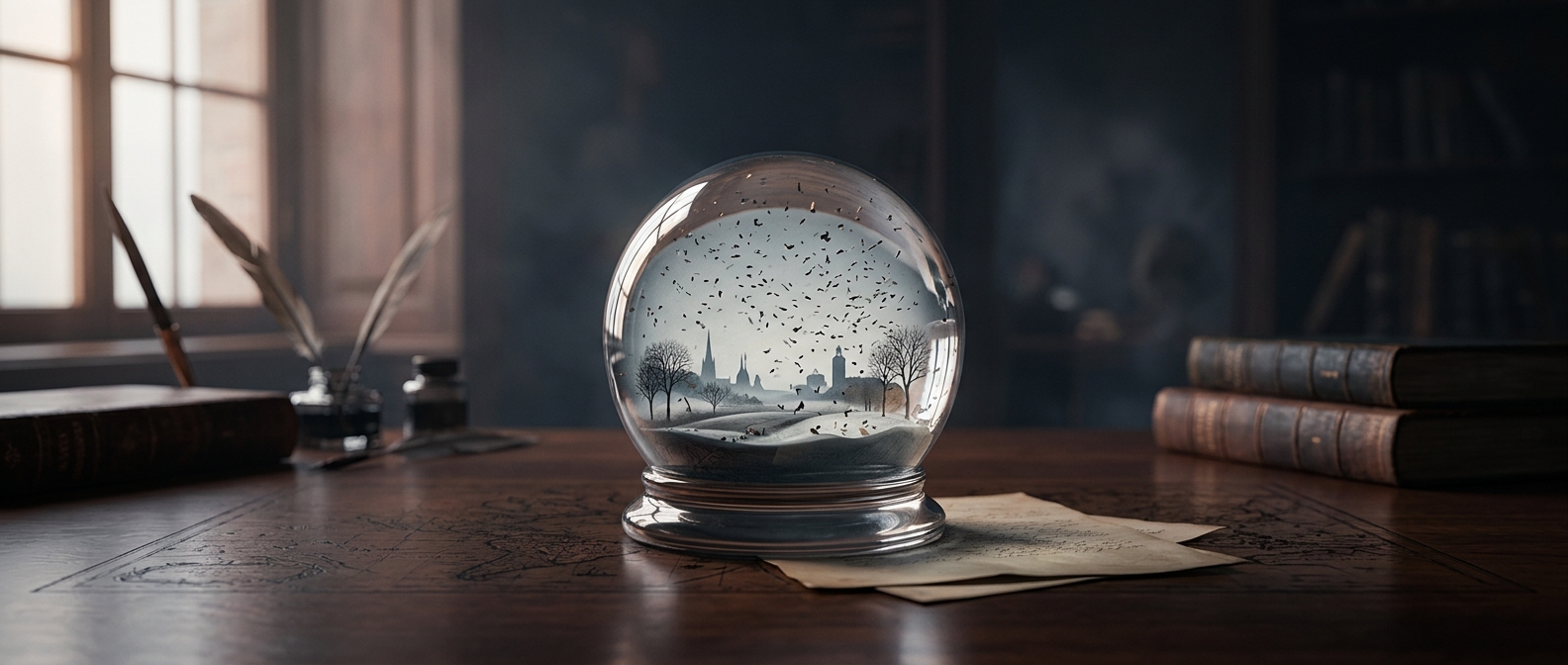
That balance shapes how the globe is enjoyed. A quick shake stirs the flakes through the scene; then the thickened liquid stretches their descent into a slow reveal. Instead of seeing the snow fall all at once, you can watch it pass the tiny buildings, trees, or figures inside.
The liquid also changes how the object behaves in different conditions. Warmth can make many liquids flow more easily, while cold makes them flow more slowly, so a globe’s snowfall may not look identical in every room or season. The familiar pause after a shake is therefore not just decoration: it is the visible result of a carefully slowed fall.