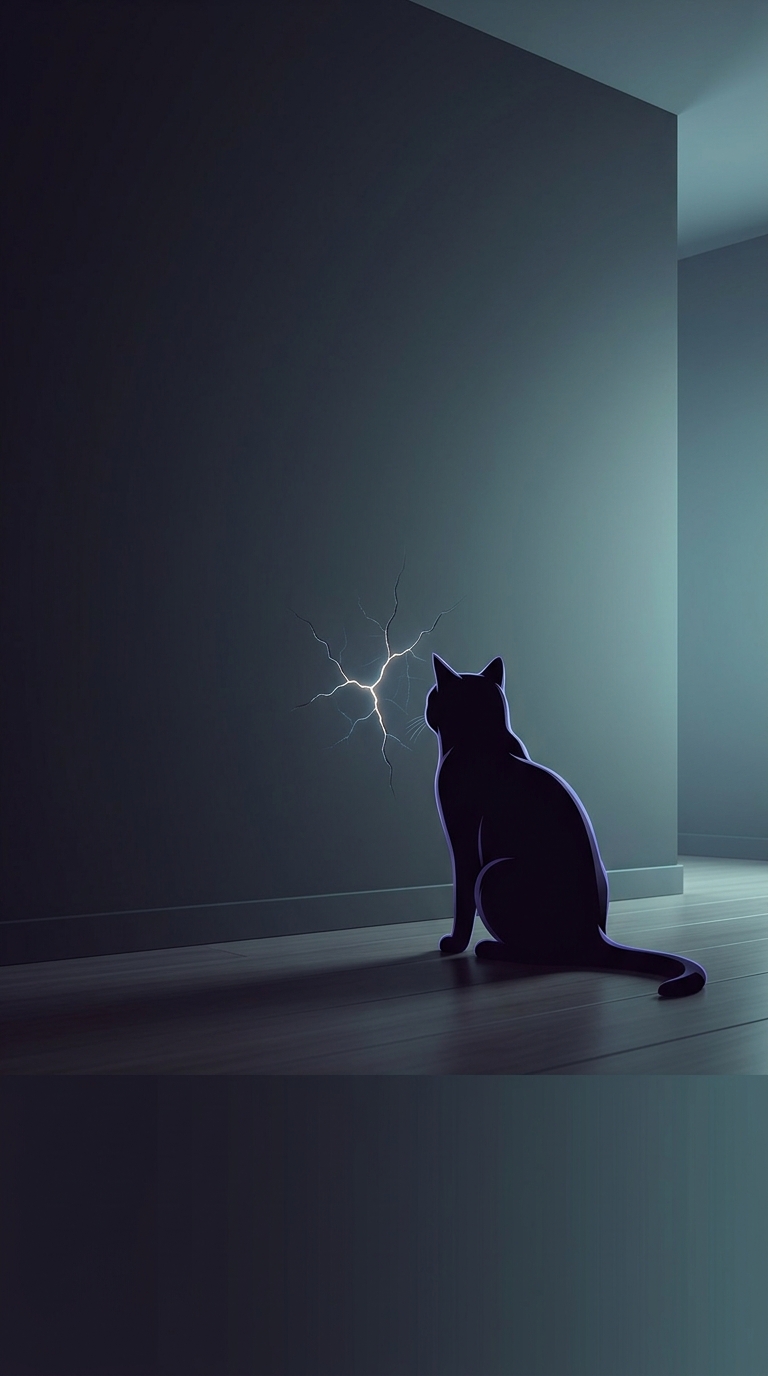
A “blank” wall may not be blank to a cat
A cat can look motionless while tracking a faint cue that a person barely notices. A tiny insect, a shifting shadow, a glint of light, or subtle movement behind a gap can draw its attention. Cats are also sensitive to sounds beyond the range of human hearing, so a faint rustle or high-pitched noise from inside a wall may be part of what holds its gaze.
That does not mean a cat can see through the wall or has identified a mouse. From the outside, there is often no way to tell which cue—if any—the animal has noticed. Its eyes may simply be pointed toward the source of a sound, or toward a spot where something moved briefly and then stopped.
Stillness is part of watching
Cats are predators, and sustained attention followed by stillness can help them monitor a possible target without startling it. But a long pause does not necessarily signal a hunt. Cats also rest with their eyes open, and they may hold a gaze while responding to a small stimulus that has already disappeared. What looks like intense concentration to a person may be an ordinary moment of alertness—or simply a cat sitting quietly.
The useful clue is the rest of the behavior. A cat that otherwise eats, moves, and responds normally may just be attending to something subtle. If staring episodes come with unusual confusion, poor responsiveness, or other sudden changes, that is a different situation worth discussing with a veterinarian. The wall may look empty; the cat’s attention alone cannot tell you why it is watching.