A scholar’s home was also his workplace
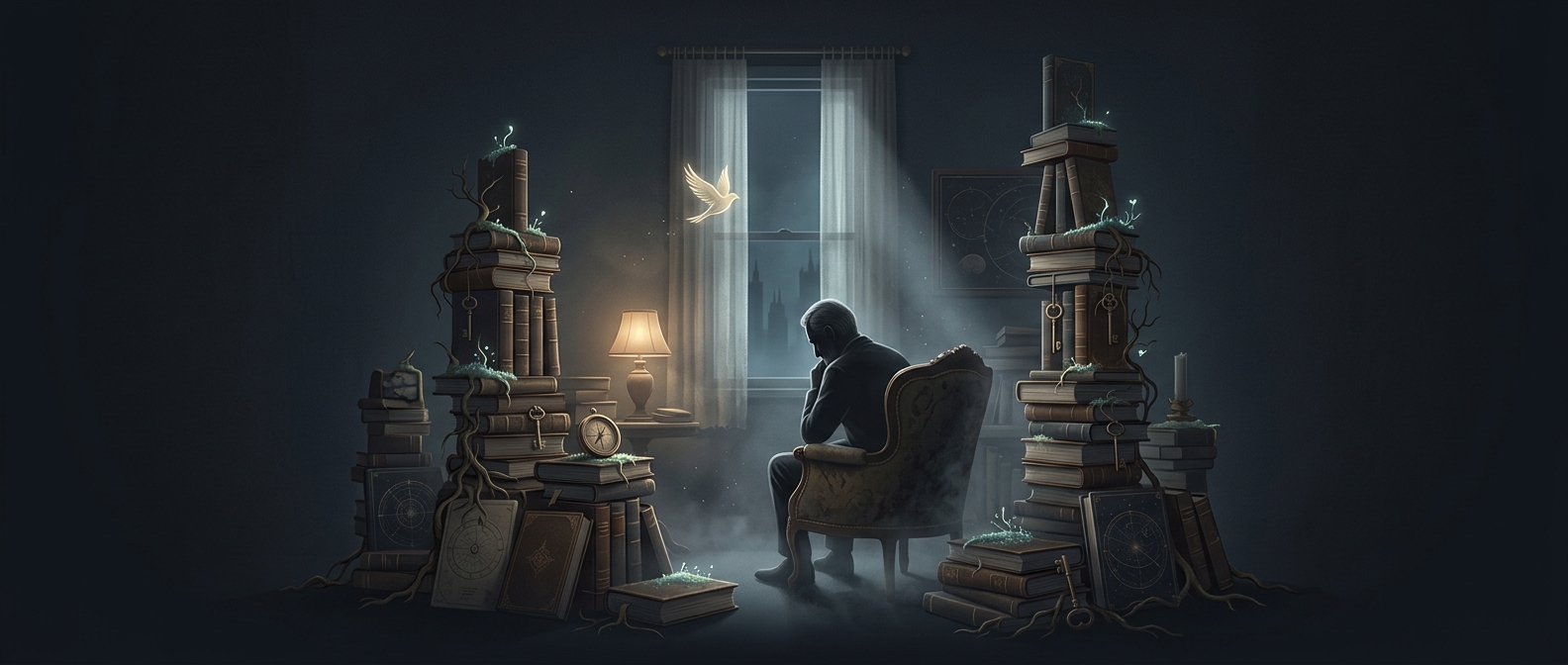
For John Dee, the boundary between private life and intellectual work was thin. His home at Mortlake housed the books and materials behind a career that ranged across mathematics, astronomy, navigation, and astrology. The same door that separated him from household noise also admitted visitors seeking his knowledge—or simply interrupted whatever he was doing.
That makes his complaints more than a record of domestic irritation. They reveal the practical conditions under which scholarship happened: not in a silent institution, but amid neighbors, callers, and the ordinary friction of managing a home and its boundaries.
The diary brings the grand and the mundane together
Dee’s reputation rests on his learning and his connection to Elizabeth I’s court. His diary, by contrast, records the small pressures that do not fit neatly into that public image: noise, disputes over property, and people arriving at his door. Such entries show how much of a scholar’s time could be claimed by other people and everyday business.
The contrast is striking because Dee’s library was a major intellectual resource, yet possessing books did not create uninterrupted time to use them. Even a royal adviser could be pulled from study by the sounds and demands just outside his door.