John Dee’s “007” was a mark of secrecy
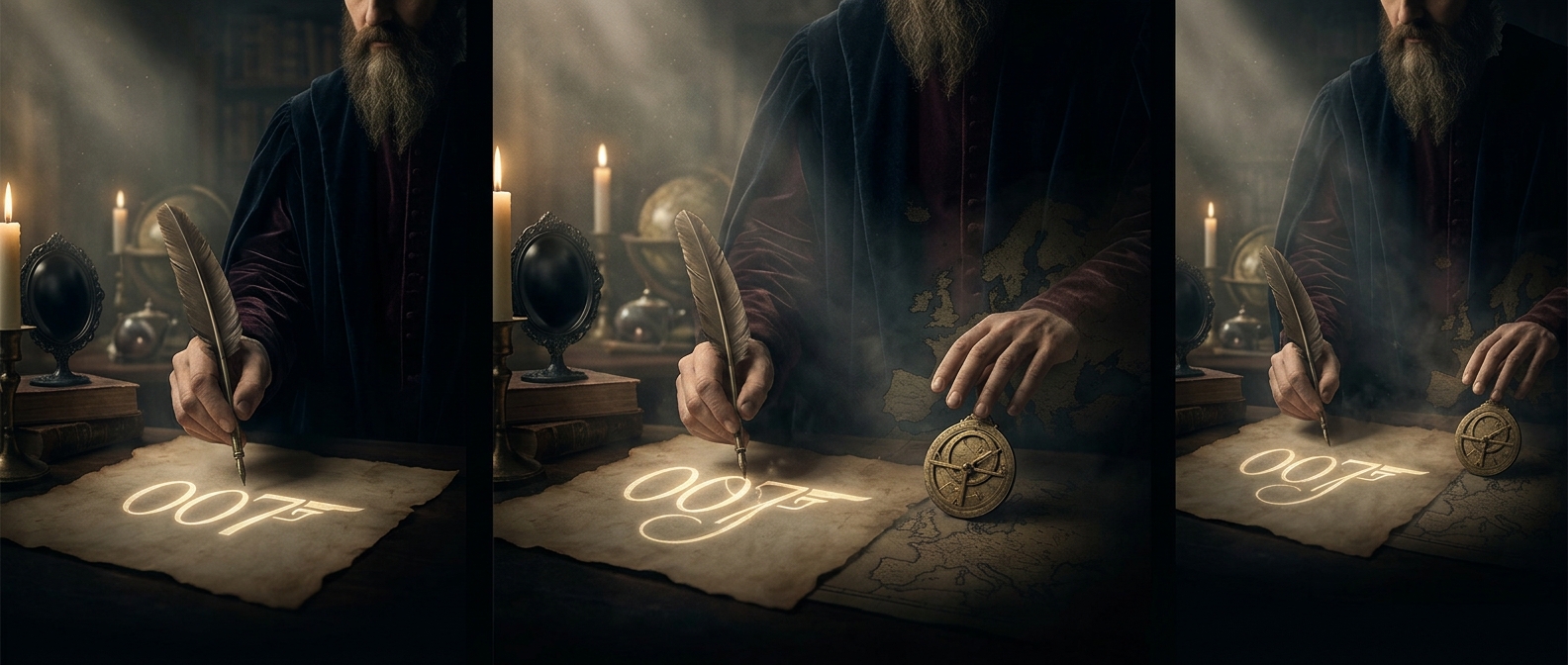
John Dee used a distinctive sign on confidential correspondence connected to Elizabeth I: two small circles followed by the number seven. The circles have been interpreted as eyes, making the mark resemble “007.” It was a personal emblem, not a government code number or a formal title.
Dee was a scholar who advised the queen on subjects including astrology and navigation. He also carried out intelligence work, sending reports from abroad and seeking royal support for his missions. In that setting, a recognizable mark could signal that a letter was private or associated with him without spelling out its purpose.
The symbol’s meaning—and its limits
The eyes-and-seven reading fits Dee’s interest in symbolic signs and the secretive character of his correspondence. But the mark should not be mistaken for proof that he held a modern spy rank, or that it worked exactly like a cipher. It was an identifying device in a world where letters could be intercepted and messages often traveled through other people’s hands.
Its later fame comes from an unexpected resemblance: centuries afterward, “007” became the fictional agent James Bond’s designation. Dee’s sign was not the origin of Bond’s code, but the visual coincidence gives a striking glimpse of how an Elizabethan courtier could combine personal symbolism with clandestine work.