Why an Equal Line Can Look Longer When It Stands Up
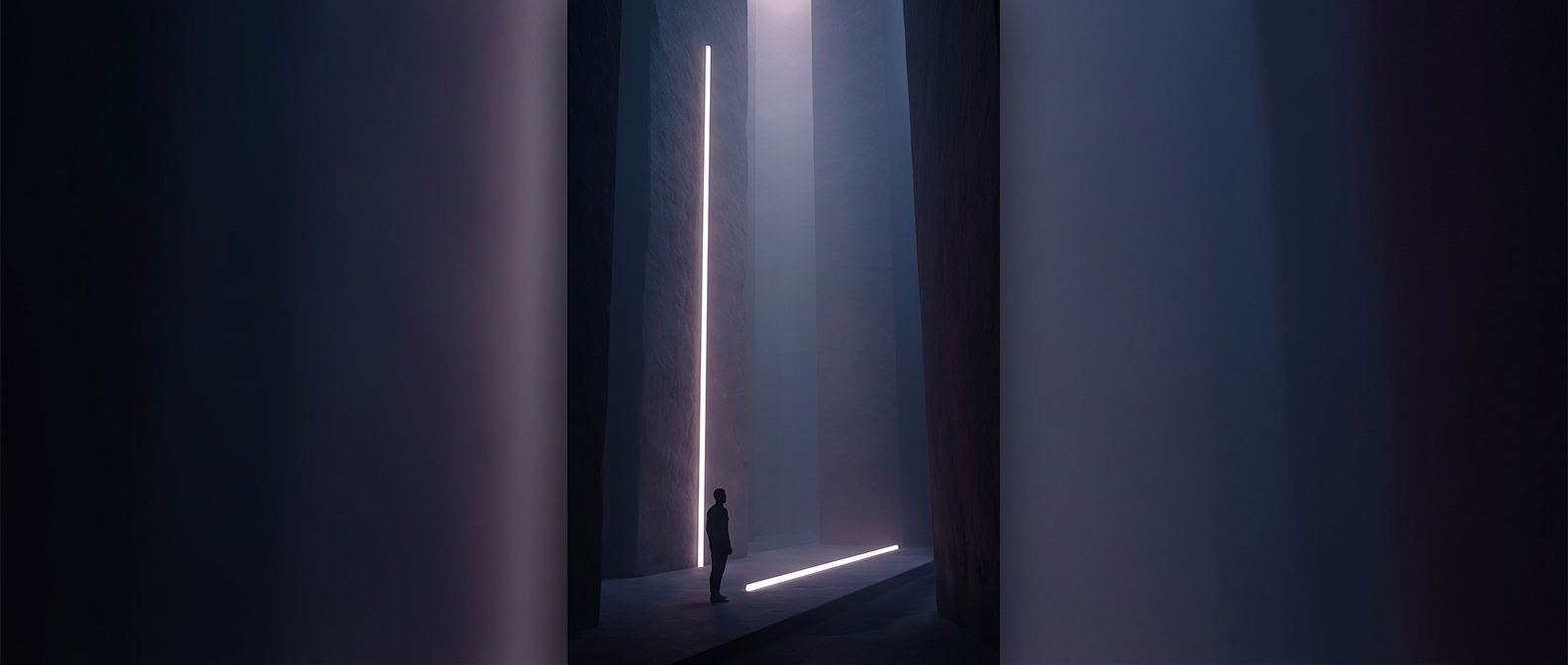
The effect is easiest to see in a simple drawing: make an L from two lines of equal length, one vertical and one horizontal. Many people judge the upright stroke as longer, even though measuring the drawing shows no difference. The mismatch comes from how the visual system turns a two-dimensional image into estimates of size—not from a deliberate decision to ignore what the eyes see.
Vision Estimates Extent, It Doesn’t Measure It
The brain has to infer the size of objects from patterns of light on the retina. A line’s apparent length is influenced by more than its endpoints: orientation, surrounding space, and the shape formed by other lines can all affect the estimate. In an L, the upright segment reaches across more of the visual field’s top-to-bottom dimension, which can make its extent feel greater than the horizontal segment’s.
That judgment is useful in ordinary vision, where the brain rarely has a clean pair of isolated lines to compare. It must make quick size estimates from incomplete images and changing viewpoints. Those estimates are generally helpful, but a carefully balanced drawing can expose a systematic bias.
The Shape Around the Lines Matters
The effect is often demonstrated with an L rather than with two separate strokes because the junction gives the eye a direct comparison while also organizing the lines as parts of one shape. The orientation contrast makes the unequal impression noticeable; it does not change the actual lengths. Rotate the drawing, alter its surroundings, or ask different observers, and the strength of the illusion can vary.
That is why a ruler and a visual judgment can disagree without either being mysterious: the ruler compares physical distances, while perception supplies an interpretation. An equal-armed L can therefore look unbalanced even when its corner is perfectly square.