Four elements, four kinds of beings
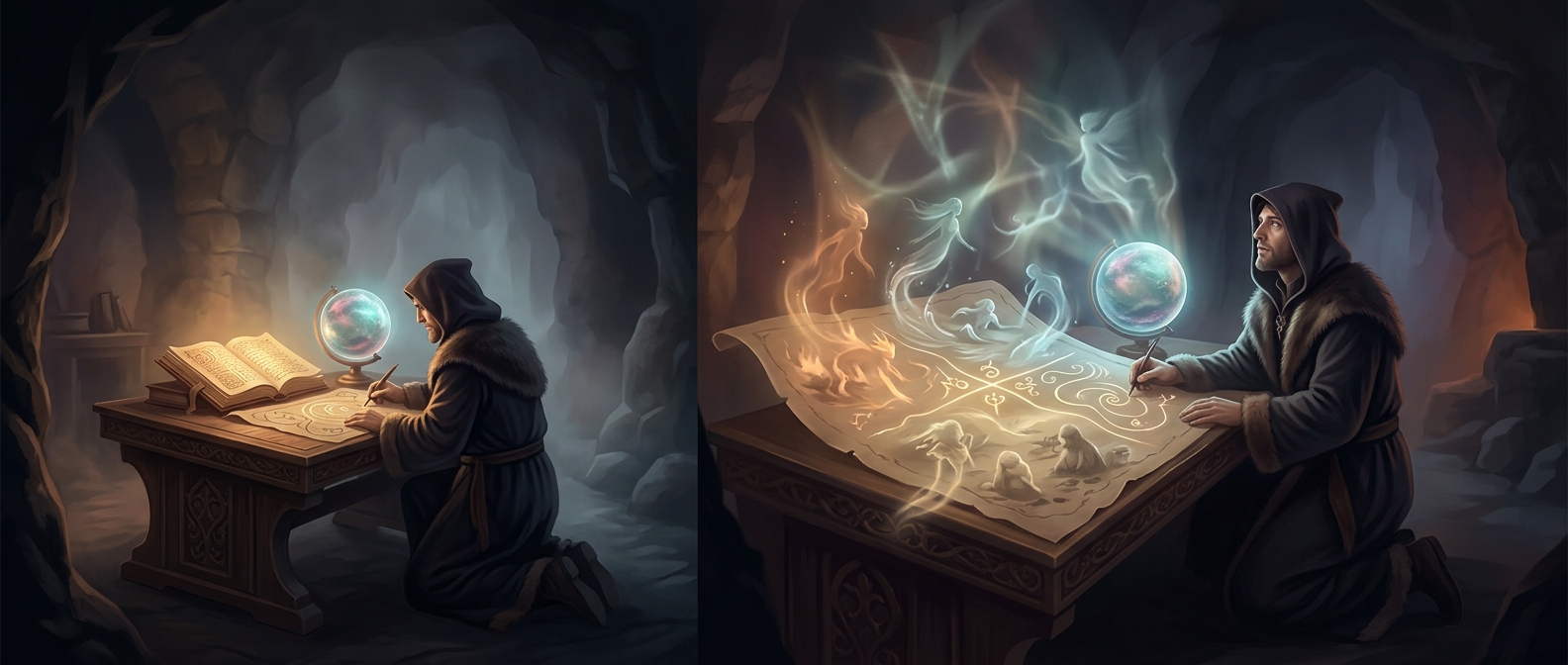
Paracelsus treated earth, water, air, and fire not merely as ingredients of the physical world but as realms inhabited by distinct beings. In his scheme, gnomes belonged to earth, undines to water, sylphs to air, and salamanders to fire. These beings—often called elementals—were not simply tiny versions of humans or gods. They were imagined as creatures whose nature and surroundings were bound to one element.
That idea fit a Renaissance worldview in which nature could be read as a living, layered order. Paracelsus was a physician and natural philosopher, but his account also drew on occult thought: unseen beings helped explain why the elements seemed to have different qualities and powers.
How a learned scheme entered fantasy
The taxonomy gave later writers a ready-made cast. Each name came with an elemental setting, so a storyteller could suggest a creature’s character through its habitat: a water being might seem changeable, while an earth being could be tied to hidden places underground. Writers adapted the categories rather than following Paracelsus as a strict rulebook, and the beings gradually became familiar figures in European literature and, later, fantasy.
The names did not all have the same history or meaning before Paracelsus, and modern fantasy has reshaped them repeatedly. But his four-part arrangement made them easy to remember and reuse. A speculative account of nature became a durable storytelling toolkit: four elements, each with its own kind of inhabitant.