A Carousel Horse Is Designed for Its Place in the Circle
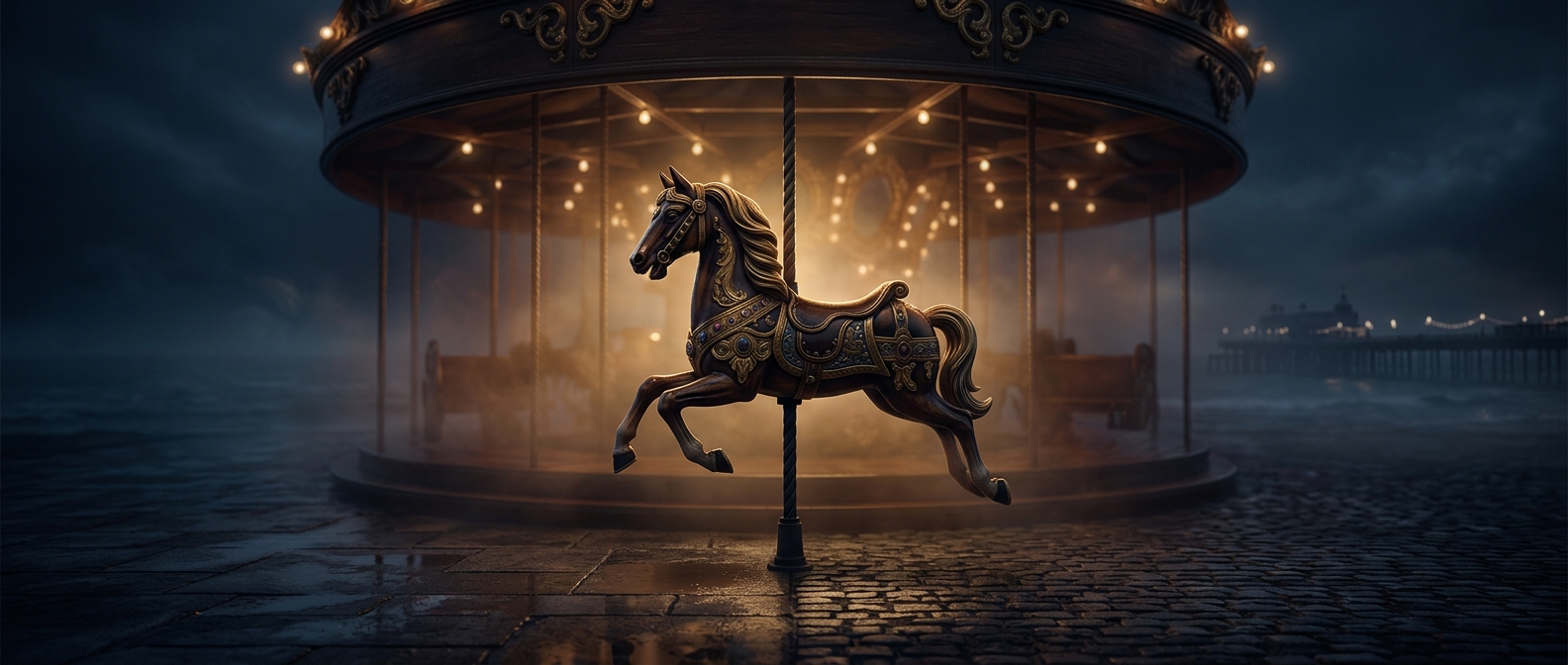
Carousel horses usually stand in rows around a central axis, facing outward. That arrangement makes the horse’s outer side the one most likely to catch a rider’s eye or appear in a photograph. The side turned toward the carousel’s center is harder to see, especially while the ride is moving.
Where the Carving Work Goes
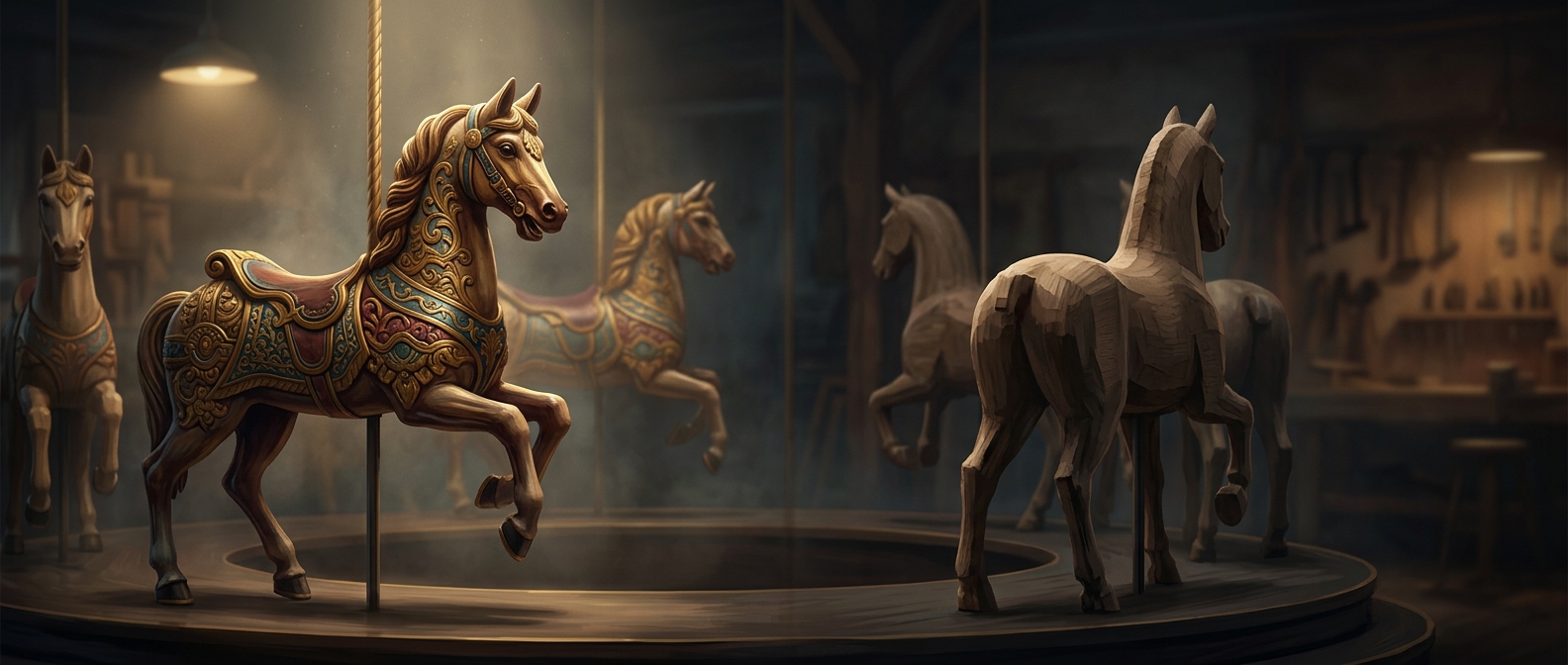
A carved horse takes more than a recognizable outline: its muscles, mane, tack, and painted details all require time and skill. Giving both sides equal sculptural detail would add work without making much difference to what most viewers see. So carvers could concentrate that effort on the exposed side, leaving the inward-facing flank flatter and less finished.
That choice is a practical kind of stagecraft. The horse is not treated as a sculpture meant to be examined from every angle; it is part of a moving scene, built to look convincing from the viewpoints that matter. Its blanker side is a reminder that even a festive object can be carefully shaped around what an audience is likely to notice.