Why Event Hot Dogs Go Into Water
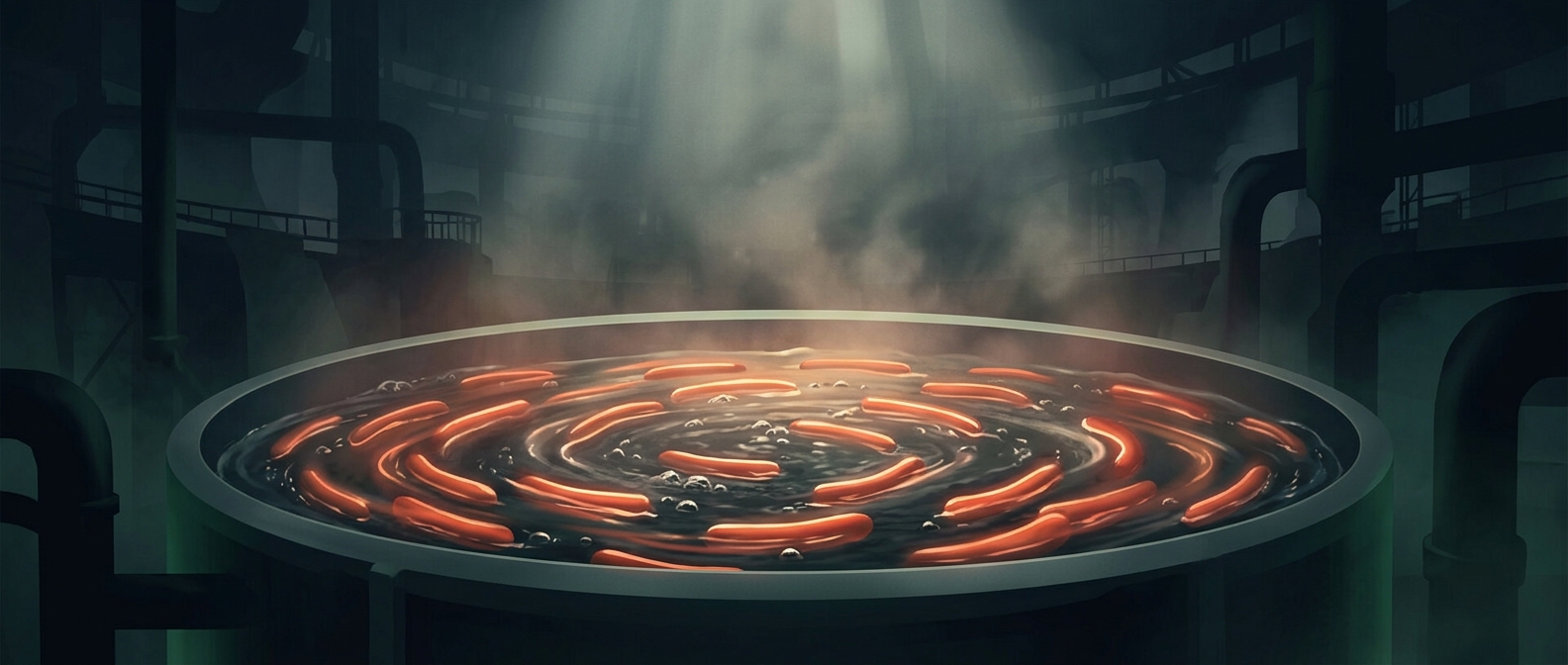
A grill cooks each hot dog where it touches a hot surface; a pot of water heats the sausages together. As the water circulates around them, it carries heat across their surfaces, so vendors can warm a batch without turning each dog or managing a row of separate grill spots. That matters when serving happens in bursts: the hot dogs can be prepared in advance and taken from the batch as customers arrive.
Water also acts as a temperature buffer. It heats more gently and evenly than a very hot grill surface, making it easier to warm the sausages without scorching their skins. The trade-off is flavor: grilling can brown the outside, producing toasted, savory notes through high-heat reactions between proteins and sugars. A hot dog heated in water does not develop that same browned exterior.
The Trade-Off Is Built Into the Method
The choice is less about finding one universally better way to cook a hot dog than about matching the method to the job. A grill can give an individual dog a crisp, browned surface, but it demands close attention and limits how many can be handled at once. A pot sacrifices that char for a simpler batch process.
That difference is easy to notice at a crowded event. The hot dog may be ready quickly because the cooking work happened in a shared pot; its flavor and texture, however, reflect the practical choice to prioritize steady, high-volume service over grill marks.