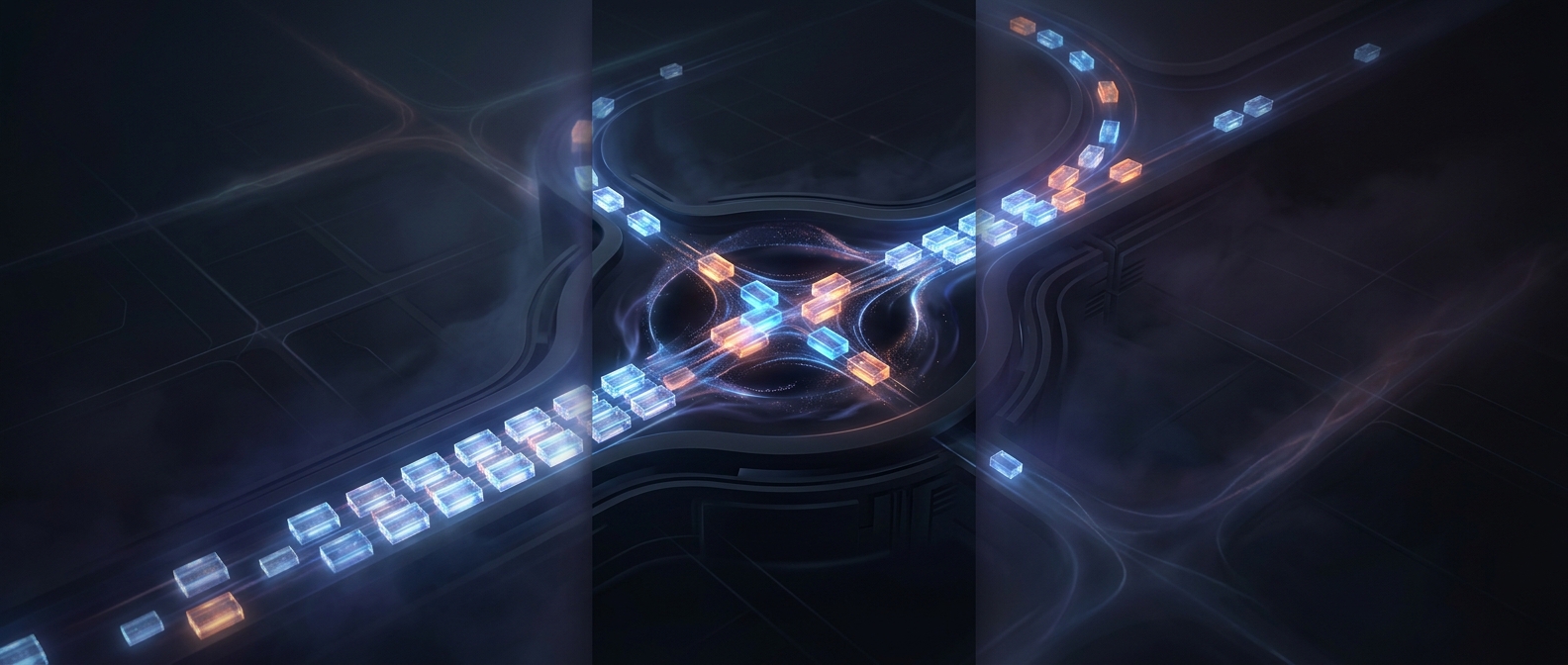
Why a Network Needed a Turn-Taking Rule
On an early shared local-area network, several computers used the same communications channel. If two began transmitting at once, their signals could interfere, forcing the machines to detect the problem and try again. Token passing avoided that uncertainty by making permission circulate in a fixed order.
The token was a short control message, not the data itself. A computer that had nothing to send passed it along. One with data could take its turn, attach a destination address to the data, and send it around the network. The intended recipient copied the information; the frame continued until it returned to its sender, which removed it and released the token.
Order Bought Predictability
Because only one station could hold the token, traffic did not depend on a scramble to seize an idle line. Each computer waited for its turn, so a busy machine could not indefinitely crowd out quieter ones. That made token-based networks attractive for workplaces where orderly access mattered, especially as many machines shared a limited connection.
The arrangement also imposed a cost: a computer might have to wait for the token even when the line was otherwise quiet. And the network depended on the token continuing to circulate; if it vanished or became corrupted, the system needed a way to restore it. The design traded spontaneous access for scheduled access—a small, circulating permission slip that made shared communication predictable.