Two networks, one invented portrait
Edmond de Belamy was produced with a generative adversarial network, or GAN: a machine-learning system built from two networks with competing jobs. One generates images; the other judges whether they resemble examples in its training material. As the generator tries to fool the judge and the judge gets better at spotting fakes, the generator gradually learns patterns in the examples—in this case, historical portraiture.
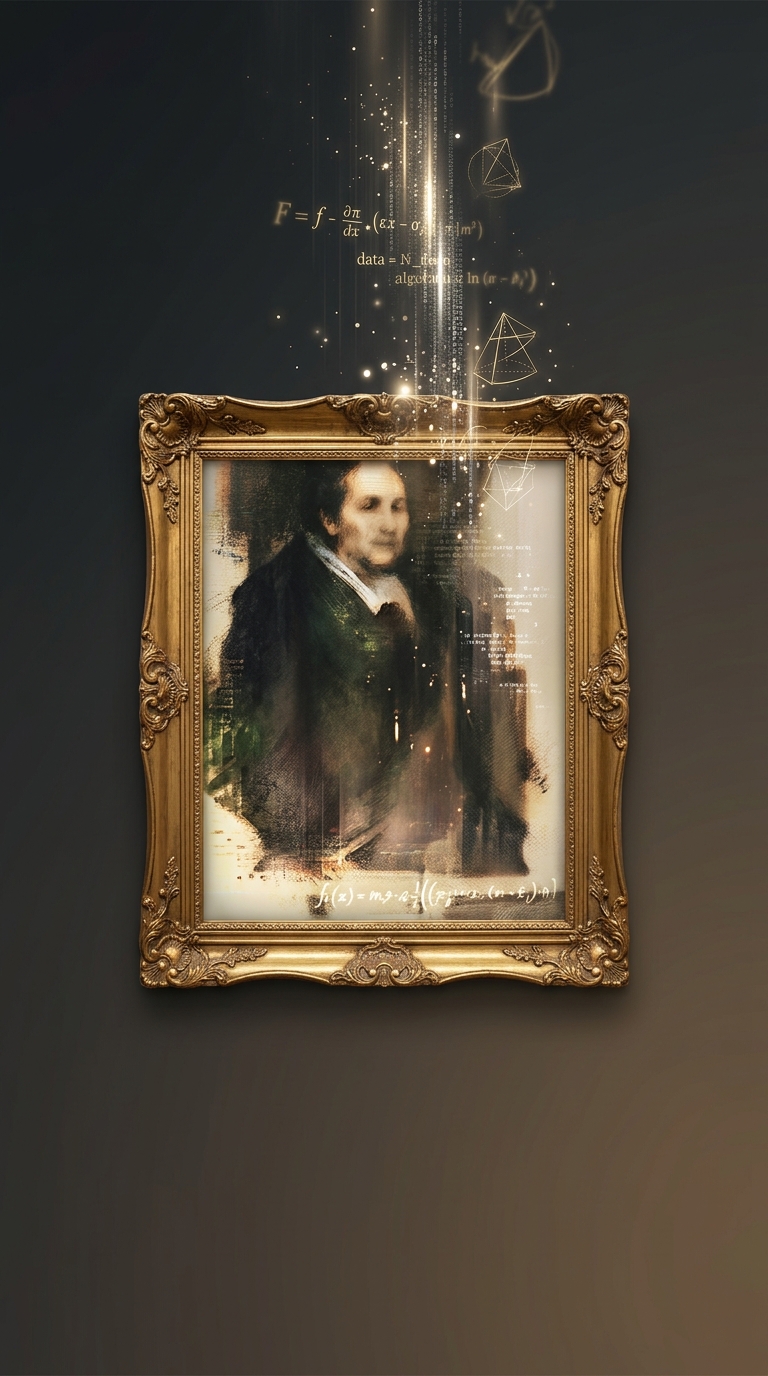
The system did not retrieve a particular sitter or copy a single painting. It assembled learned visual tendencies into a new image. That helps explain the portrait’s indistinct face and softened edges: the output is an approximation of portrait-like features, not a carefully rendered likeness. A GAN can produce a convincing overall impression while leaving details unresolved.
The human decisions behind the machine
The network did not choose its own artistic brief. Obvious selected the historical portraits, set up the generation process, and decided which result to present as a finished work. Those choices shaped what the system could learn and what viewers would see. The algorithm supplied an image, but the collective supplied the framing that made it an artwork: selection, title, canvas, and presentation.
The formula printed as the signature points to the network’s role, but it does not settle who deserves credit. A mathematical expression can identify the kind of process used; it cannot by itself describe the human decisions that guided that process or determine whether the result should be judged as art.
Why the auction mattered
The sale brought a machine-generated image into a high-profile art-market setting, where buyers and institutions had to confront a practical question: if software makes the marks, what exactly is being valued? The answer could include the image, the collective’s concept, and the novelty of seeing a GAN’s output treated as a collectible object.
That tension is part of the work’s lasting significance. Its blurred face is not merely a flaw to overlook; it makes visible the gap between a system that has learned the appearance of portraits and a person who can explain whom they mean to portray.