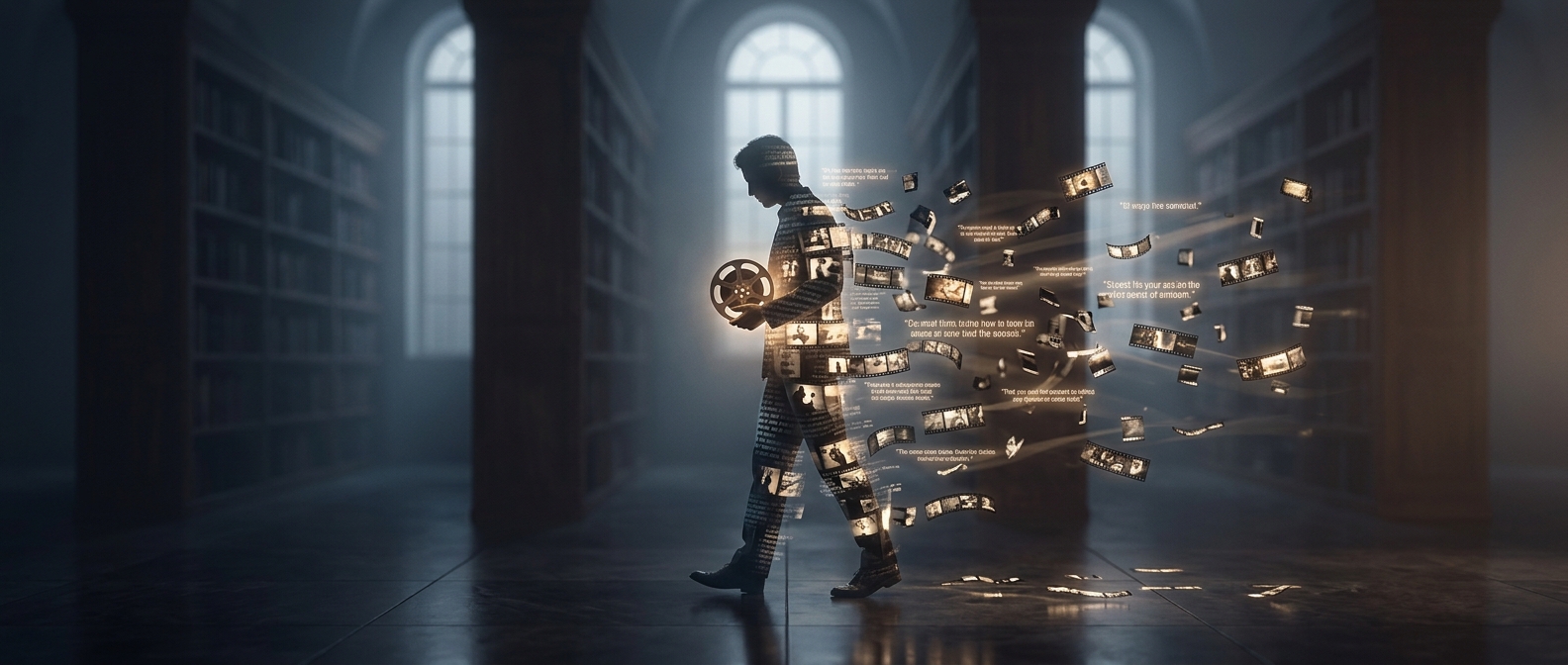
Why a movie quote can feel like a social password
A line from a well-known film does more than deliver a joke. It checks whether another person recognizes the same scene. If they do, the quote creates a tiny moment of belonging: both people can respond without explaining the reference, and the familiar words bring their original comic or emotional charge with them.
That shortcut can be useful in conversation. Quoting a film lets someone signal a mood—mock outrage, affection, disbelief—while keeping the exchange light. It is a low-risk way to connect, especially with people whose tastes are not yet familiar.
When the shortcut starts doing the talking
A quote comes with a ready-made voice and meaning. Instead of searching for words that fit a particular moment, the speaker can borrow a line that has already landed before. The other person may laugh, but the exchange reveals less about what the speaker actually thinks than a personal response would.
The distinction is not simply how often someone quotes movies. It is whether the quote opens a conversation or replaces one. A line followed by an explanation—“That scene reminds me of…”—can lead into a real opinion. A string of borrowed reactions can keep the interaction entertaining while leaving the person’s own perspective hard to see.
The difference between recognition and knowing someone
Shared references create familiarity quickly, but familiarity with a person’s favorite scenes is not the same as knowing their judgments, memories, or preferences. Those emerge when someone adds something that cannot be supplied by the script: why the moment matters to them, what they disagree with, or how they would respond in their own words.
That is why a quote can be both a genuine bridge and a conversational hiding place. The laugh establishes a connection; what comes after it shows whether the speaker is willing to be known.