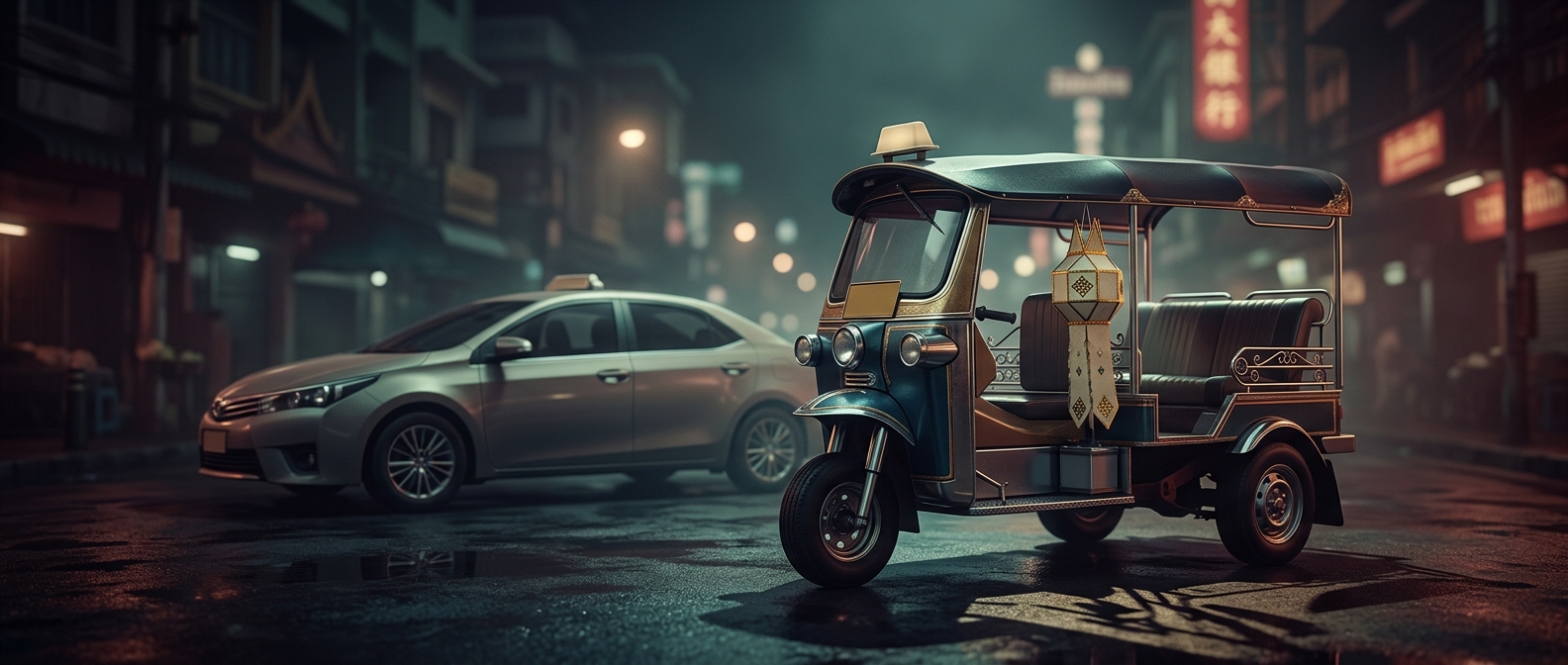
Why a short tuk-tuk ride can carry a tourist premium
In Thailand, many tuk-tuk rides are priced by agreement rather than by a meter. The driver and passenger settle on a fare before the trip, so the price can reflect more than distance: demand, traffic, the pickup location, and how much a visitor seems willing to pay can all matter. A taxi using its meter, by contrast, gives both sides a running calculation based mainly on the journey.
That difference is especially noticeable around tourist areas. A tuk-tuk’s open sides, engine noise, and close-up view of the street make the ride an experience as well as transport. Drivers may price for that appeal, and visitors unfamiliar with local fares may accept a higher offer. This does not mean every tuk-tuk costs more than every taxi; the route and the agreed fare make the comparison.
The price is part of the ride
Tuk-tuks can also be useful where a car is awkward: they are compact, easy to board for a quick trip, and can feel more nimble in congested streets. But an exciting ride is not automatically the fastest or cheapest one. Before setting off, agree on the destination and total fare, and compare it with a taxi estimate when practical.
The key tradeoff is that a tuk-tuk fare is negotiated upfront, while the ride itself is exposed to the city’s traffic—and, unlike a sealed taxi, its exhaust.