A station that grew into a district
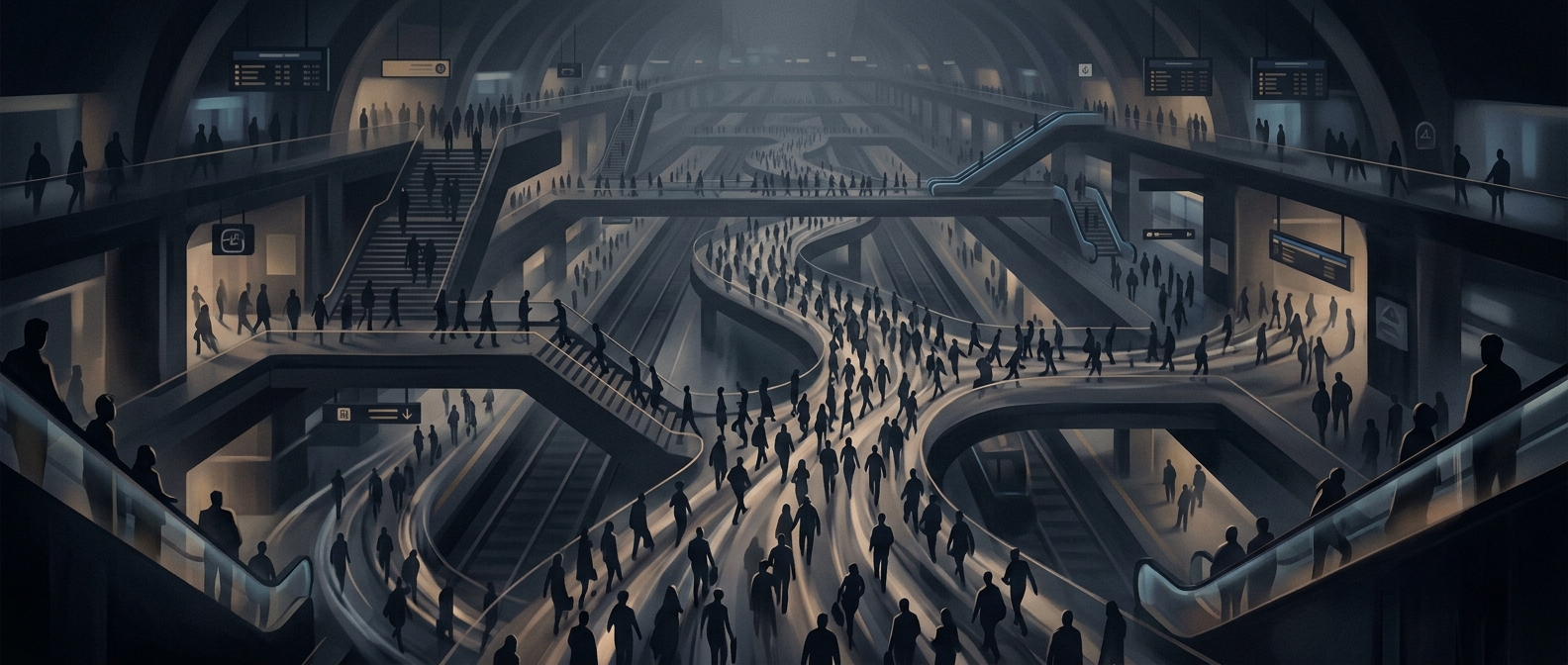
Shinjuku is easier to understand as a network of connected railway spaces than as one building. Different rail operators run their own lines, platforms and passenger facilities, while passageways link many of them to one another and to the surrounding shops and buildings. The result is a station area with multiple concourses and routes between places that may look close on a map but feel far apart on foot.
That arrangement reflects how Tokyo’s rail system serves both the city and its suburbs. Separate companies’ lines meet in Shinjuku, but their facilities were not all designed as parts of a single, unified terminal. Connections therefore vary: some involve a straightforward walk; others require finding a different concourse or passing through ticket gates.
Why navigation can feel difficult
The challenge is not only the number of people moving through the station. A sign for a railway line, a station exit and a nearby building may point toward different parts of the same sprawling complex. Choosing the wrong exit can leave a traveler on the opposite side of the tracks or at the wrong street-level entrance, turning a short-looking trip into a longer walk.
For visitors, the most useful question is often not simply “Which line?” but which operator, destination, and exit. Checking all three before setting off can prevent a transfer from becoming an accidental tour of Shinjuku’s underground corridors.