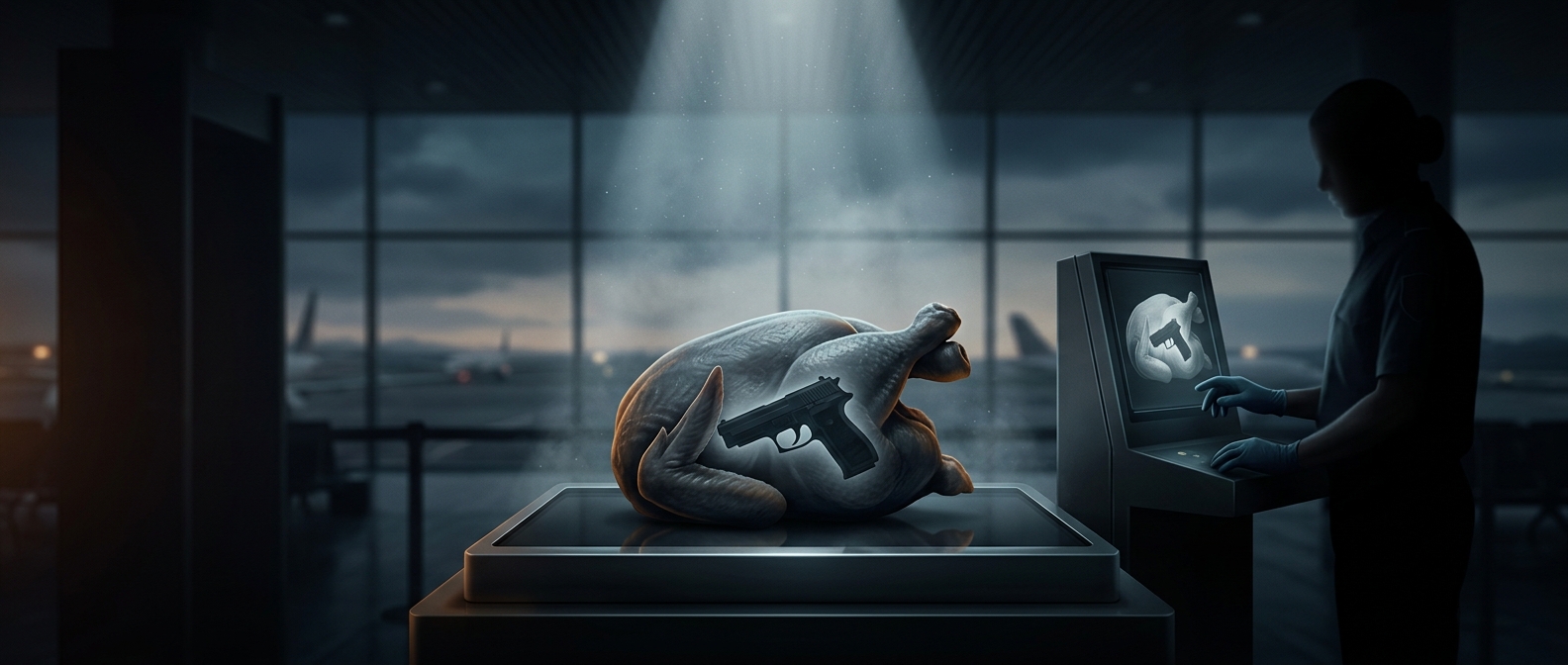
Why a Chicken Couldn’t Hide the Gun
Airport baggage screening does not identify objects by recognizing their names or labels. X-ray systems show how materials in a bag absorb radiation, producing patterns that trained officers and screening technology can examine. A gun’s components create a different pattern from the surrounding food, even when the objects overlap in the image.
Raw poultry is mostly water and soft tissue, so it can make an image harder to read by adding layers and obscuring outlines. But it does not erase the contrasting signals from a firearm. Concealment may complicate interpretation; it does not make the contents invisible.
When an Image Raises Questions
Screening is designed to flag bags whose images need closer examination, not to rely on a single unmistakable silhouette. If an object is obscured or appears inconsistent with what is permitted, officers can take a closer look. The discovery at Fort Lauderdale-Hollywood International Airport shows the practical limit of an improvised disguise: an unusual bundle can still attract scrutiny rather than pass unnoticed.
For travelers, the important distinction is between packing an item discreetly and transporting it legally. Firearms are subject to specific airline and security requirements, and hiding one inside food does not replace following them.