A pilgrim’s route into a guarded city
In the early 20th century, Lhasa was not an ordinary destination for a European traveler. Foreigners faced restrictions on entering Tibet, and an unmistakably foreign visitor could be stopped long before reaching the city. David-Néel’s challenge was therefore not simply to cross difficult mountain terrain: she had to pass through a human landscape where language, dress, and behavior could invite scrutiny.
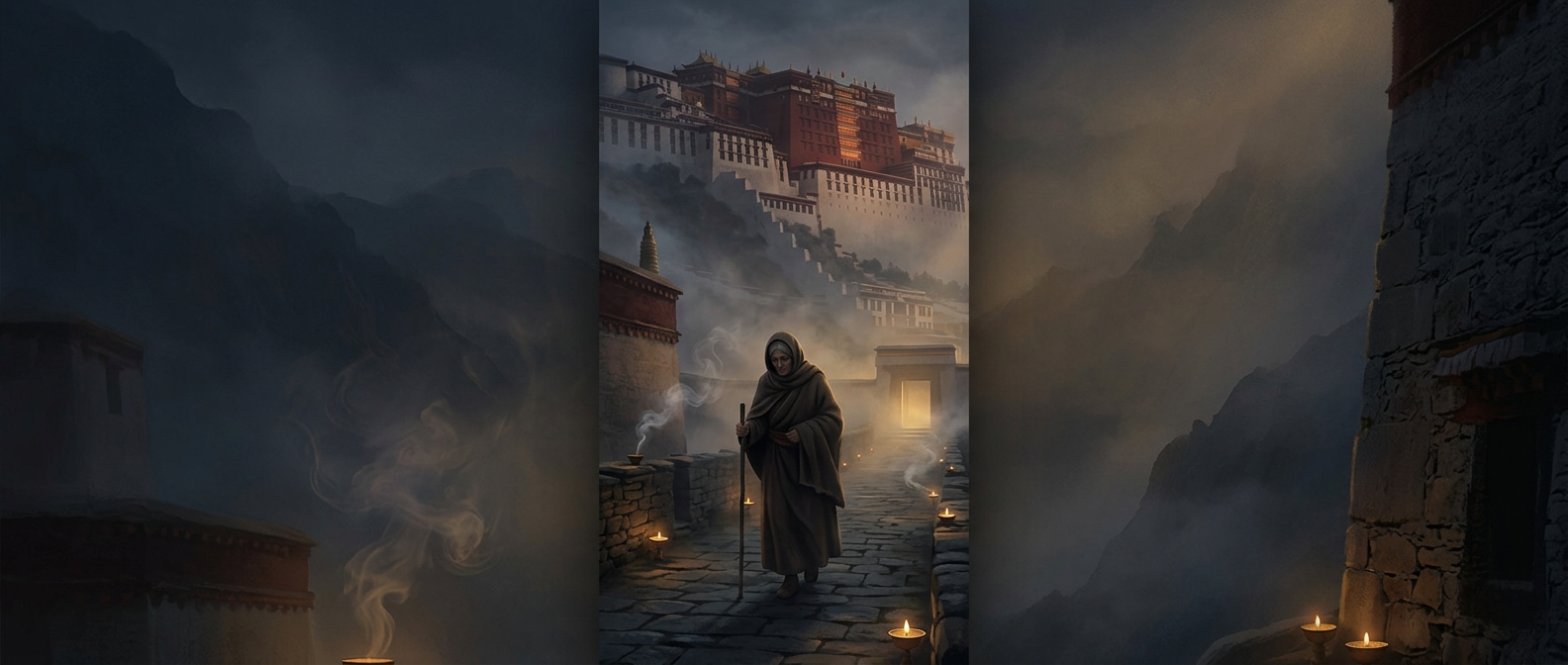
Her disguise worked as a whole identity, not just a change of clothes. She traveled with Yongden, her Tibetan-born companion, and presented herself as a poor pilgrim. Familiarity with Tibetan customs helped her make that appearance plausible as she moved through settlements and along the route. The disguise could not remove the hazards of the journey, but it made her less conspicuous than a foreign explorer traveling openly.
What the journey made possible
Reaching Lhasa gave David-Néel access to a city that outsiders were not generally permitted to visit. The achievement depended on combining physical endurance with local knowledge: a traveler had to cross the Himalayas, but also avoid drawing attention at the checkpoints and communities along the way.
The episode is often remembered for its dramatic costume. Its sharper lesson is practical: in a place where access was controlled, being able to pass as an ordinary traveler mattered as much as being able to make the trek. David-Néel’s route turned a journey into an exercise in observation and concealment, with the city itself as the destination—and the disguise as the key that helped her get there.