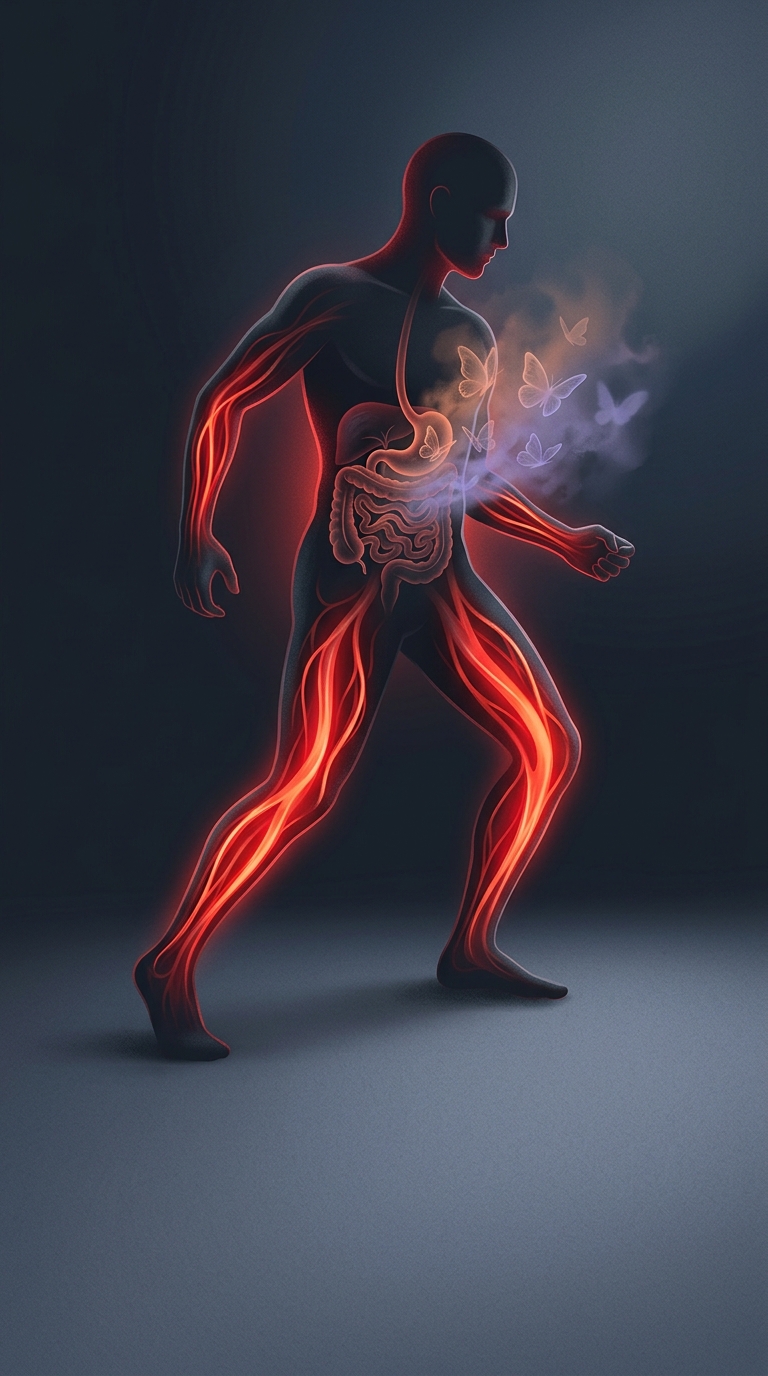
How chewing can give panic something else to focus on
During a panic attack, the brain can treat ordinary body sensations—such as a pounding heart or tight breathing—as signs of immediate danger. Attention then turns inward: noticing a sensation can make it feel more alarming, which can intensify the body’s stress response.
Chewing gum adds a steady, familiar stream of sensations: pressure in the jaw, flavor, and movement in the mouth. Following that repeated pattern gives attention a concrete task outside the cycle of monitoring and fearing symptoms. The effect is a form of sensory grounding—using present-moment sensations to anchor attention—not a switch that turns off panic.
A small cue, not a cure
Chewing also involves regular, repeated movement, which some people find settling. If someone slows down enough to notice each chew, that rhythm may help them feel more oriented to the present. But gum does not reliably slow a racing heart or stop a panic attack, and its effects vary from person to person.
The useful distinction is between calming the body directly and changing what the mind attends to. Gum is a portable, low-effort cue that can interrupt a spiral for a moment; for someone in panic, that moment may make it easier to focus on a slower breath or on what is happening around them.