The Explosion Has a Pecking Order
In an action scene, danger may look indiscriminate: a blast throws debris across a room, alarms blare, and people scatter. But the scene is usually organized around a hierarchy of attention. The lead actor is the person the story needs viewers to follow into the next scene; the surrounding characters can be sacrificed to make the danger feel immediate.
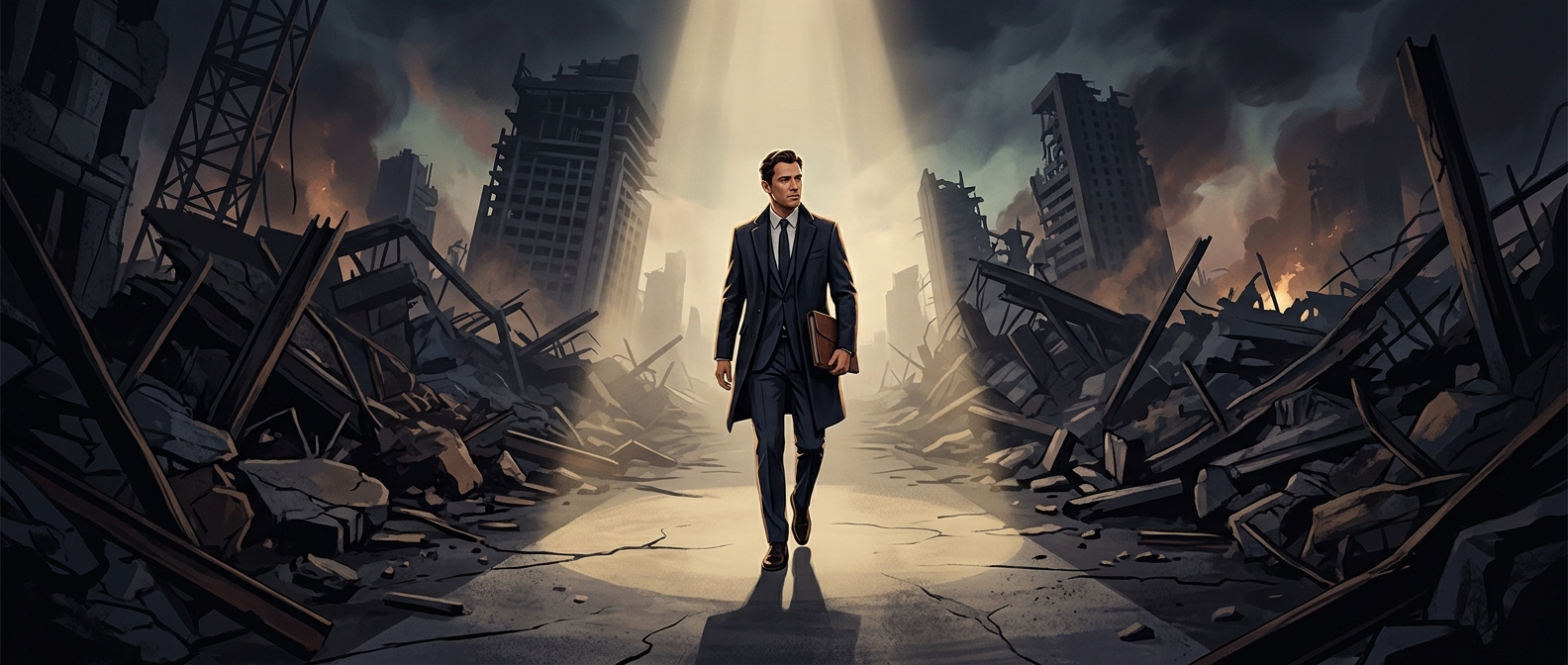
That creates the comic mismatch: the most important person on screen seems to face the least lasting risk. The explosion wipes out a ring of capable allies, yet the star emerges ready with a line or a determined look. The joke comes from recognizing that survival is being assigned by narrative status, not by who appears best prepared.
How the Scene Makes the Joke Work
Filmmakers can sharpen the contrast through timing and framing. A rapid sequence of reactions and falls makes the blast seem devastating; a pause, reveal, or close-up then isolates the lead, untouched. The editing gives the surrounding chaos weight while making the star’s survival feel almost absurdly convenient.
The expendable characters also serve a practical storytelling function: their apparent peril shows that the threat is real without ending the central story. Because viewers understand that the lead is likely to continue, the scene can turn that expectation into humor. The more convincingly the supporting figures seem trained and capable, the sharper the reversal when they are the ones taken out.
This is a joke about storytelling’s invisible protection. The explosion may be powerful enough to defeat everyone nearby, but the plot has already decided whose next scene matters.