A meditation space, not a conventional temple
The Matrimandir stands at the center of Auroville, an experimental township in southern India. Its name means “temple of the Mother,” but it is intended as a place for silent concentration rather than worship or organized religious services. That purpose shapes the visitor experience: the visit is structured to quiet conversation and focus attention on the building itself.
Light draws the eye inward
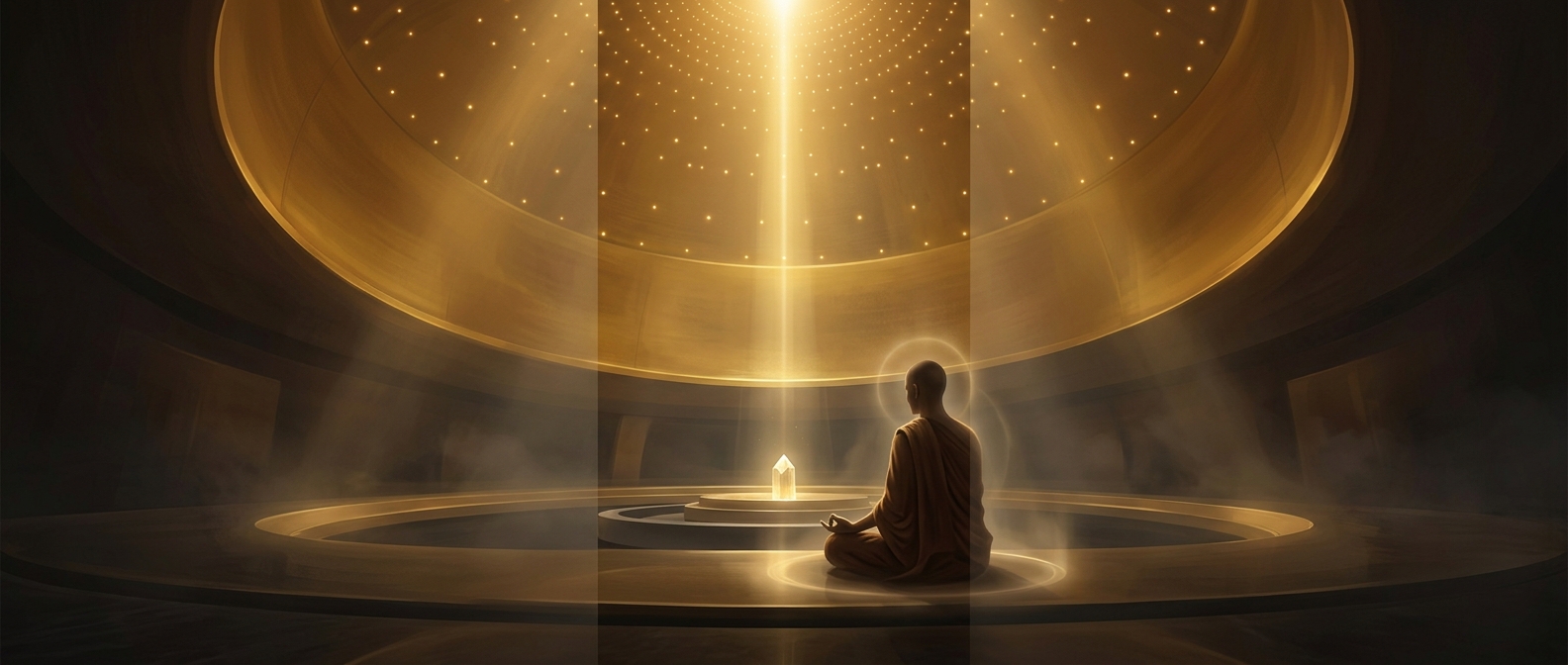
The gold-colored exterior is made of discs that catch and reflect sunlight, making the sphere’s appearance shift with the day. Inside, the architecture turns markedly spare: a white chamber surrounds a large crystal globe. Sunlight is directed onto the crystal through a system of mirrors and a lens, making light—not decoration or ceremony—the chamber’s visual center.
The crystal is not presented as a supernatural object. Its role is architectural and contemplative: it gives visitors one fixed point on which to rest their attention. Silence helps keep the room from becoming an ordinary sightseeing space, where conversation and movement would compete with that concentrated experience.
Why access is carefully managed
Advance booking and an orientation help visitors understand that entry is not simply a chance to wander through a striking building. The rules preserve the chamber as a shared quiet space, while the limited, planned visit gives people time to approach it with the right expectations. The result is a place where even the light has been arranged to slow the visitor down.