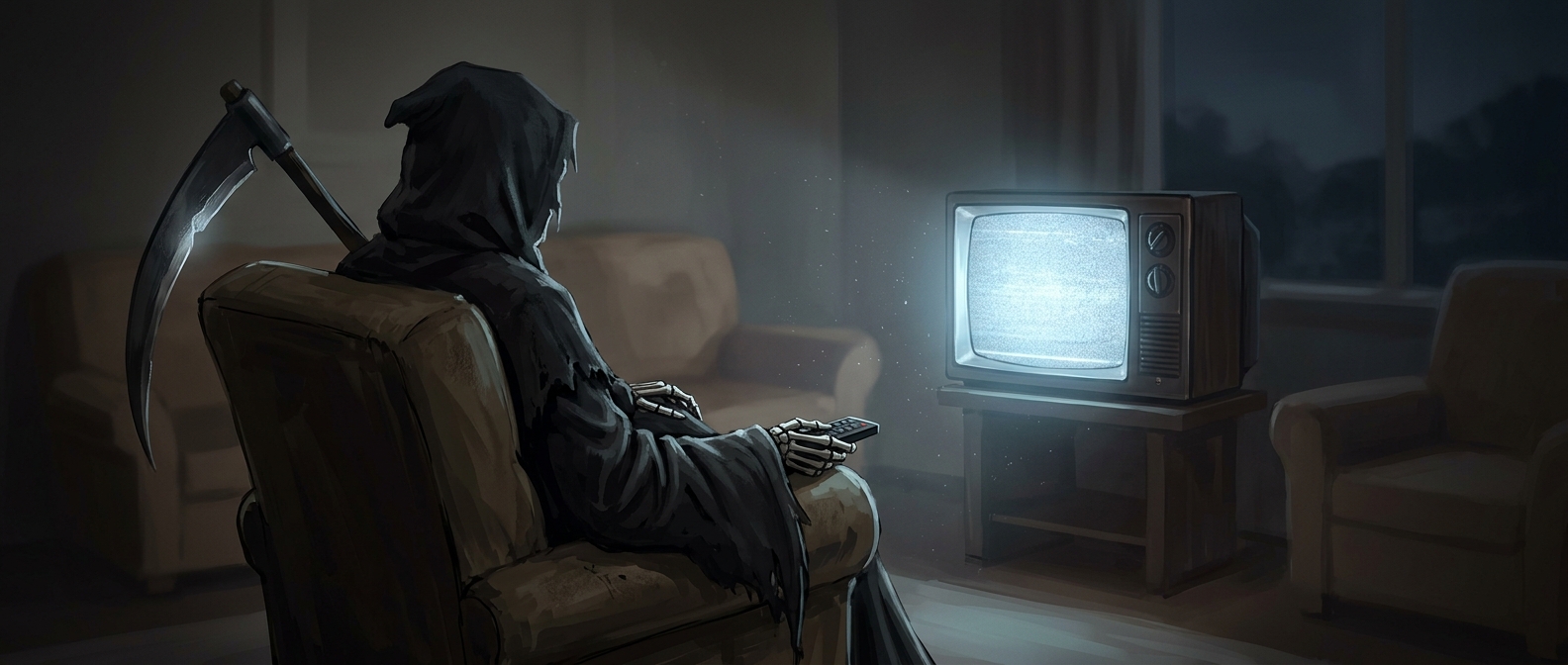
The Grim Reaper’s Break Turns Death Into Domestic Comedy
The joke depends on a collision of roles. The Grim Reaper has just performed a grave, supernatural duty; now he is sprawled on an ordinary couch, eating chips and watching reality television. That sudden shift makes death feel less like a grand cosmic event and more like a job with an awkward pause between tasks.
The staging sharpens the contrast. The family is grieving in the kitchen, while the Reaper relaxes in the next room. Their rooms are close enough to share one home, but emotionally they occupy different worlds: the family is living through a loss, while the Reaper has completed his part of the process. The couch and television make that mismatch instantly legible without explaining the afterlife in dialogue.
Why the Contrast Works in a Game
Games often have to communicate character and tone quickly, through what a player can see. A familiar object—a couch, a snack, a television—can make an extraordinary figure feel recognizable. At the same time, placing him beside people who are mourning keeps the scene from becoming a generic gag about a spooky character.
The humor comes from the Reaper’s casualness, not from the family’s grief. That distinction matters: the scene can make death absurdly mundane while leaving the bereaved people’s experience intact. One room holds the consequence; the other holds the supernatural worker who has already clocked out.