How filtered exposures become a color image
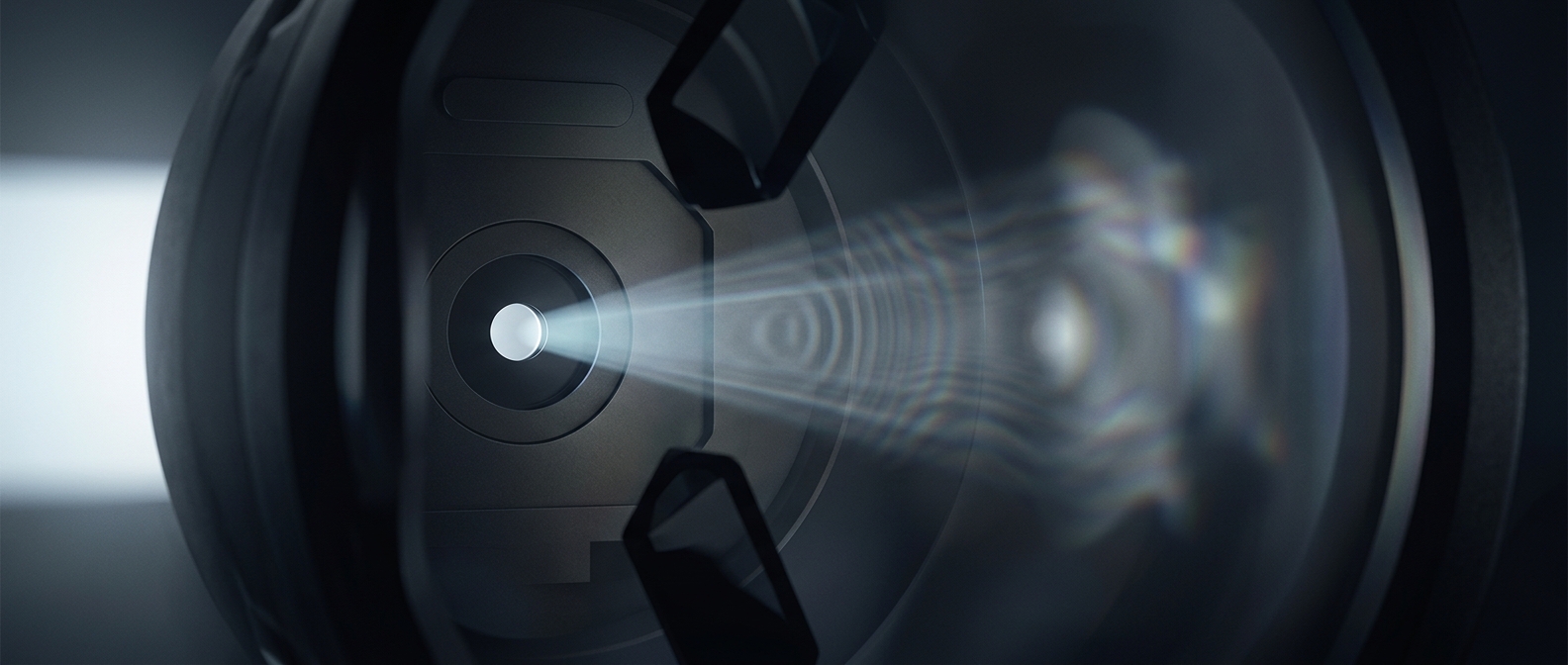
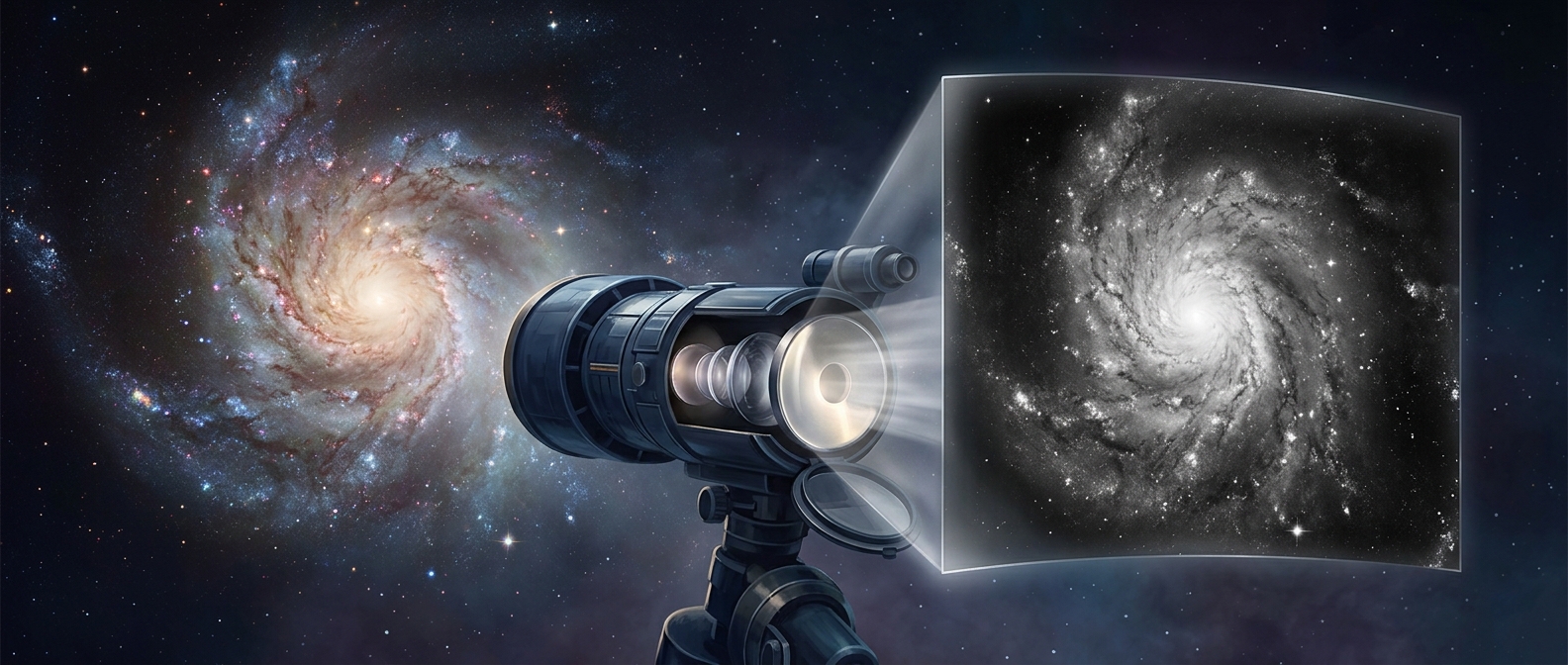
A telescope detector usually records how much light reaches each pixel, not the color of that light. Many scientific sensors are effectively monochrome: without color-sensitive pixels, they produce a brightness map rather than a familiar color photograph. A filter placed in the light path restricts the detector to a selected range of wavelengths, or colors of light.
Astronomers take separate exposures through different filters. Each exposure is therefore a map of where a particular band of light is bright or faint. Software then aligns the maps—so the same star or cloud falls on the same pixels—and assigns them to color channels such as red, green, and blue. Combining those channels produces the color image.
The colors can show more than the eye sees
When the filters sample visible light, the assigned colors can approximate what a human observer might see. But telescopes also observe wavelengths outside human vision, including infrared and ultraviolet. Those wavelengths must be represented with visible colors if they are to appear in an image. In that case, the colors are a visual key to differences in the data, not a literal view of the scene.
This method lets astronomers compare structures that respond differently to different wavelengths. A region bright in one filtered exposure but dim in another may stand out in the combined image, revealing contrasts that a single, ordinary snapshot would conceal. The finished picture is thus both an image and a translation: separate measurements of light turned into colors people can interpret.