Why a Bag of Popcorn Flew With the Fire TV
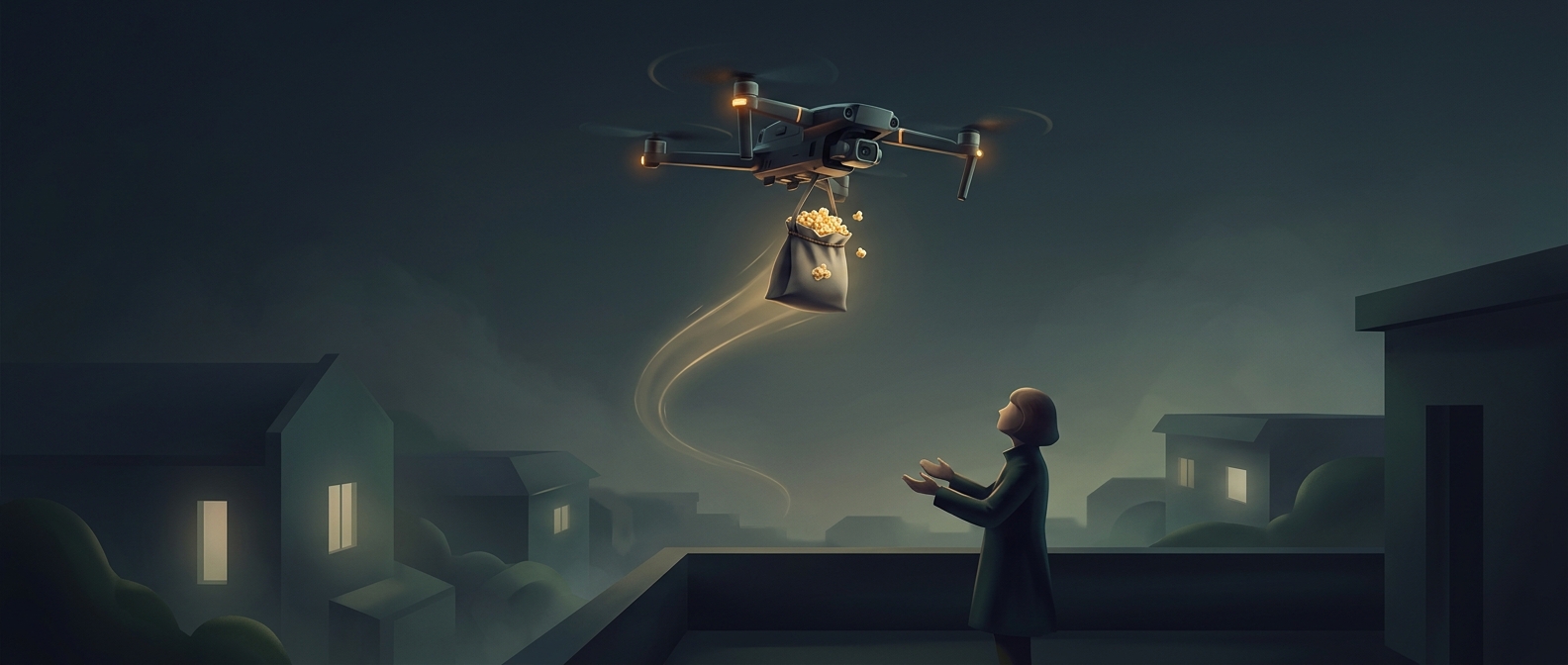
Amazon’s UK demonstration paired a piece of electronics with an ordinary snack: a Fire TV device and a bag of popcorn went to a customer named Richard. That combination made the delivery feel less like a stunt about flying machines and more like a test of a practical question: could a drone carry the small, everyday orders people might actually want brought to their door?
The cargo also suited the basic economics of drone delivery. A drone has limited room and lifting capacity, so it is best matched to compact parcels rather than large or heavy shopping. A streaming device and a snack fit that profile—and together showed that a delivery could contain more than one item.
The Hard Part Is the Whole Trip
A delivery drone is not simply a parcel with rotors attached. It must travel from a dispatch point to a destination, carry its load steadily, and complete the handoff without a person guiding it through every moment of flight. In practical systems, the aircraft’s route and the final delivery location matter as much as its ability to lift the package: homes have obstacles, and a drone needs a safe place to leave its cargo.
That is why a demonstration can establish that a particular delivery is possible without showing that drones can replace ordinary delivery vans everywhere. Small, suitable orders and workable drop-off locations are a much narrower problem than serving every address and every kind of purchase.
The memorable detail is that the test did not send an especially dramatic payload. Its promise was more mundane: one day, a small household order might arrive from the air, with the popcorn ready for movie night.