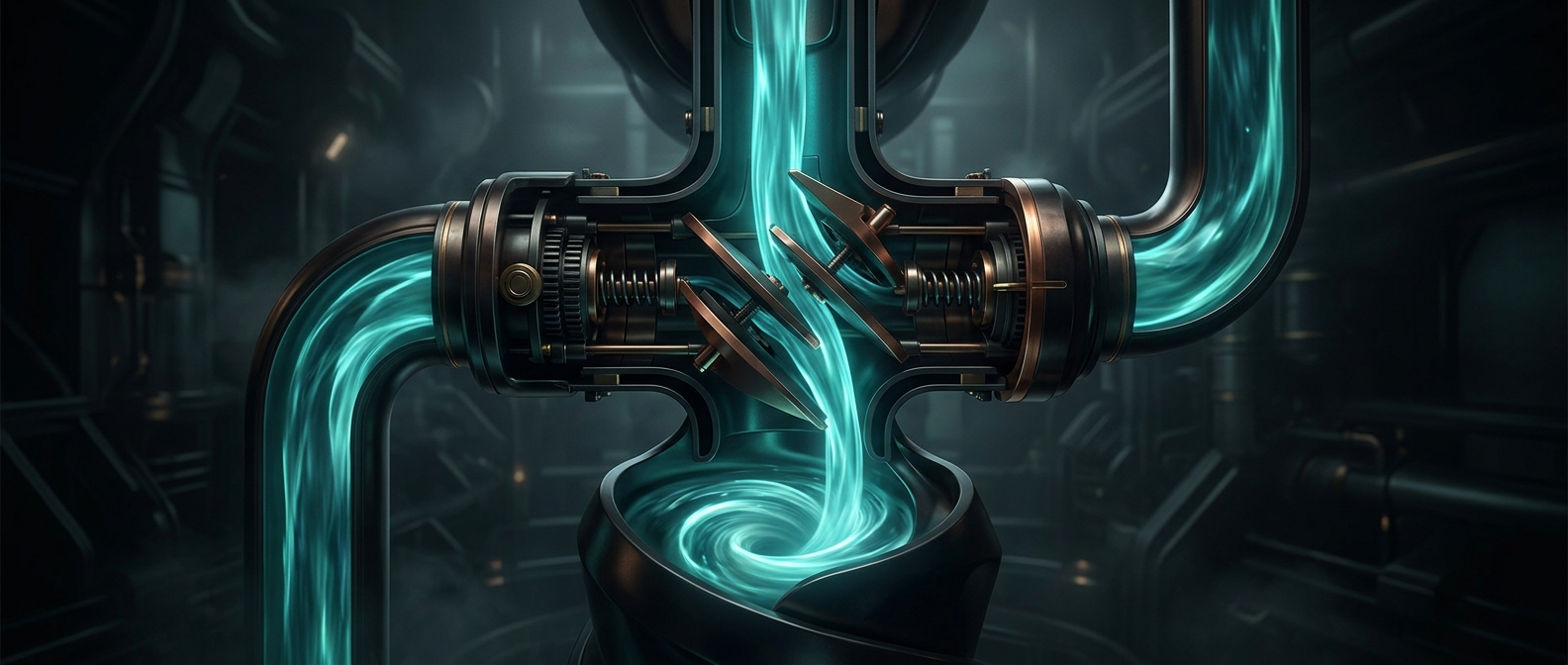
The small fall that powers a ram pump
A hydraulic ram pump does not lift water from a level stream by force of will: it needs a steady supply flowing downhill through a drive pipe. The vertical drop from the source to the pump gives the water its speed. A second pipe carries a smaller portion uphill, often to a tank or field above the source.
Inside the pump, the waste valve opens and lets water run through. As the flow accelerates, it eventually snaps the valve shut. The moving water cannot stop instantly, so its momentum briefly raises pressure in the pump body. This pressure pulse—called water hammer—opens a one-way delivery valve and sends a little water into the uphill pipe. When the pulse fades, the valves reset and the sequence starts again.
Trading water for height
The pump’s energy comes from the water that falls, not from the device itself. Most of the incoming water leaves through the waste valve; only part is delivered uphill. In general, lifting water farther above the pump means delivering less of it, because the same limited supply of falling water must do more work.
That tradeoff makes the design useful where a stream or spring runs continuously and a modest drop is available, but electricity is difficult to supply. The source must provide enough flow, and the pump must sit low enough to create the needed fall. A ram pump can run unattended for long stretches, but it cannot overcome a shortage of water or elevation: its quiet, repeating pulses are gravity’s energy being redirected, one small delivery at a time.