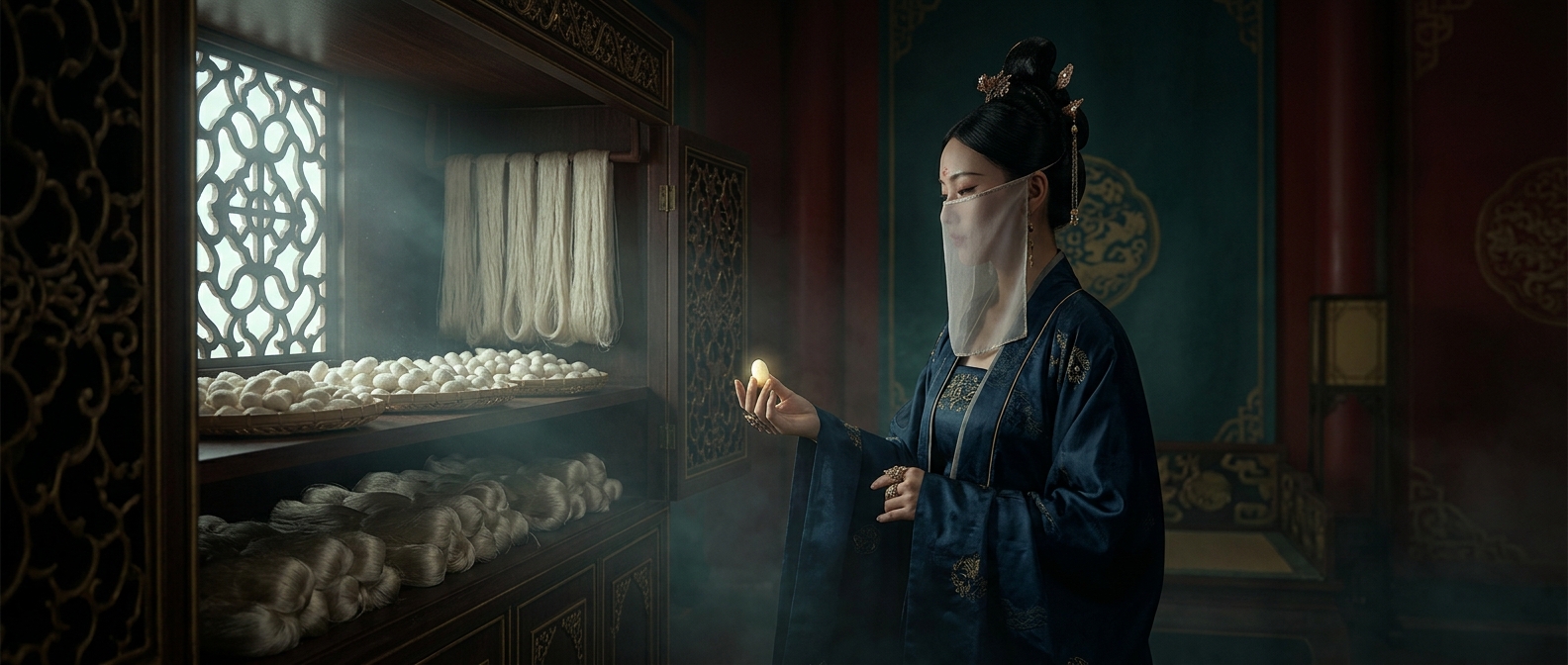
The secret was a production chain, not just a worm
Silk begins with the silkworm, the caterpillar of a moth that feeds on mulberry leaves and spins a cocoon from a continuous filament. To make usable thread, workers soften the cocoon and carefully unwind that filament. Producing silk reliably therefore depended on more than possessing silkworms: it required mulberry trees, healthy eggs, controlled rearing, and the skill to turn fragile cocoons into thread.
That practical knowledge made the secret difficult to copy from a bolt of finished cloth. Silk could be traded abroad, but seeing the fabric did not reveal how to raise the worms or harvest their thread. The guarded resource was the ability to reproduce the process at scale.
Why a tiny package could matter
Silk was valuable and relatively easy to transport compared with bulky goods. If the means of production traveled with merchants or envoys, other regions could eventually make the fabric rather than merely buy it. Mulberry seeds could help establish the worms’ food supply; silkworm eggs could carry the next generation. A small parcel might therefore threaten a much larger source of wealth.
The severe penalties described for smuggling those materials show how seriously the state treated the threat. The aim was not simply to protect a luxury textile, but to keep the expertise and living inputs behind it from being reproduced elsewhere. A secret measured in seeds and eggs could protect an entire industry.