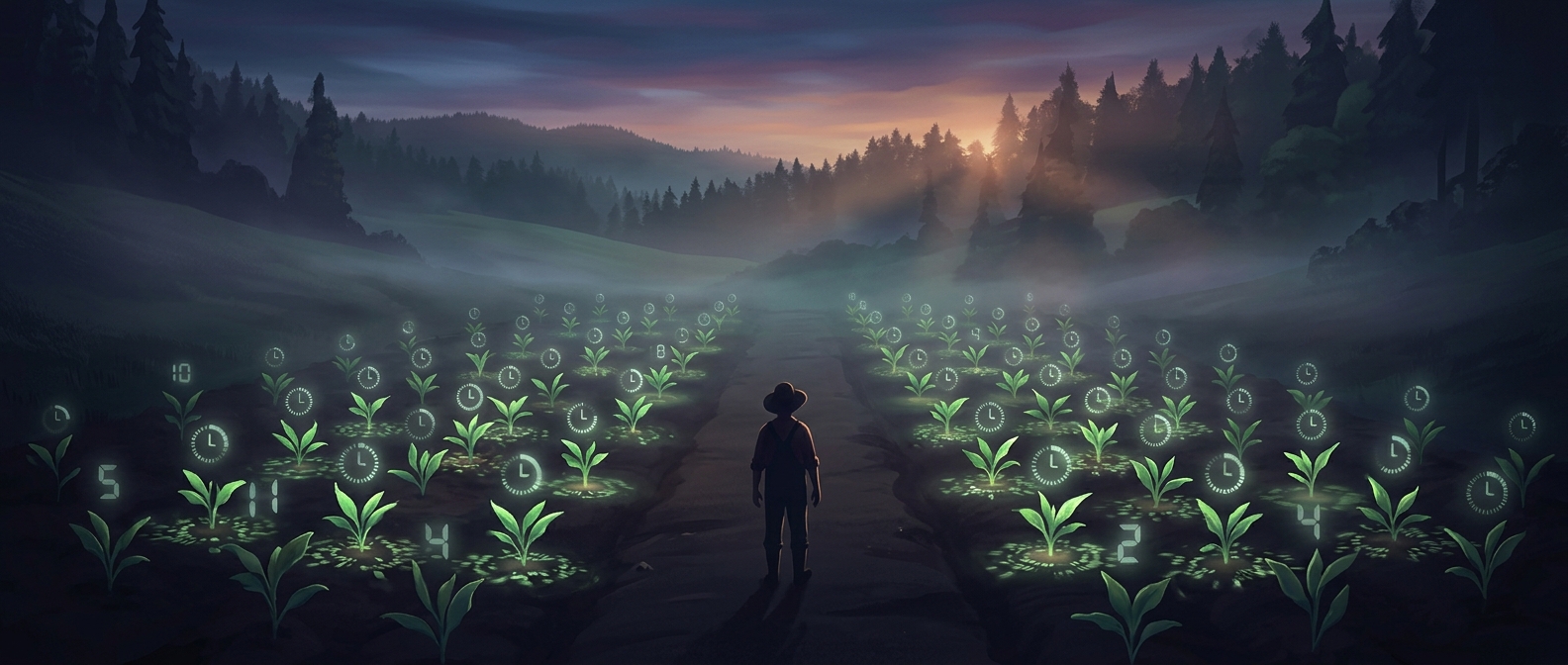
Why Stardew Valley crops change overnight
A crop’s growth is tracked by days, not by a visible animation. Each night, the game checks whether it was watered that day. If so, its growth timer advances; if not, the timer pauses. The next morning, a plant that has reached its required growth time appears ready to harvest.
That makes watering less like feeding a plant continuously and more like checking off a daily requirement. A seed with several days left does not visibly inch upward as the player walks past it. Its progress is recorded behind the scenes and shown only when the day turns over.
What the daily check means for a farm
Missing a watering day usually delays the harvest rather than killing the crop. The lost day matters, though: a slower harvest can mean less time to earn money from a crop before the season changes. Rain can take care of watering outdoors, while sprinklers automate it by watering nearby tiles, freeing the player from the same daily chore.
Some crops keep producing after their first harvest. For those, watering also matters to the wait between harvests: skip a day and the next crop takes longer to arrive. The farm’s rhythm is therefore set not just by what is planted, but by which plants receive water each day.
Because the check happens overnight, a newly planted crop’s progress is not something the player watches unfold in real time. The practical signal is the morning result: a growth stage advanced, or a day added to the wait.