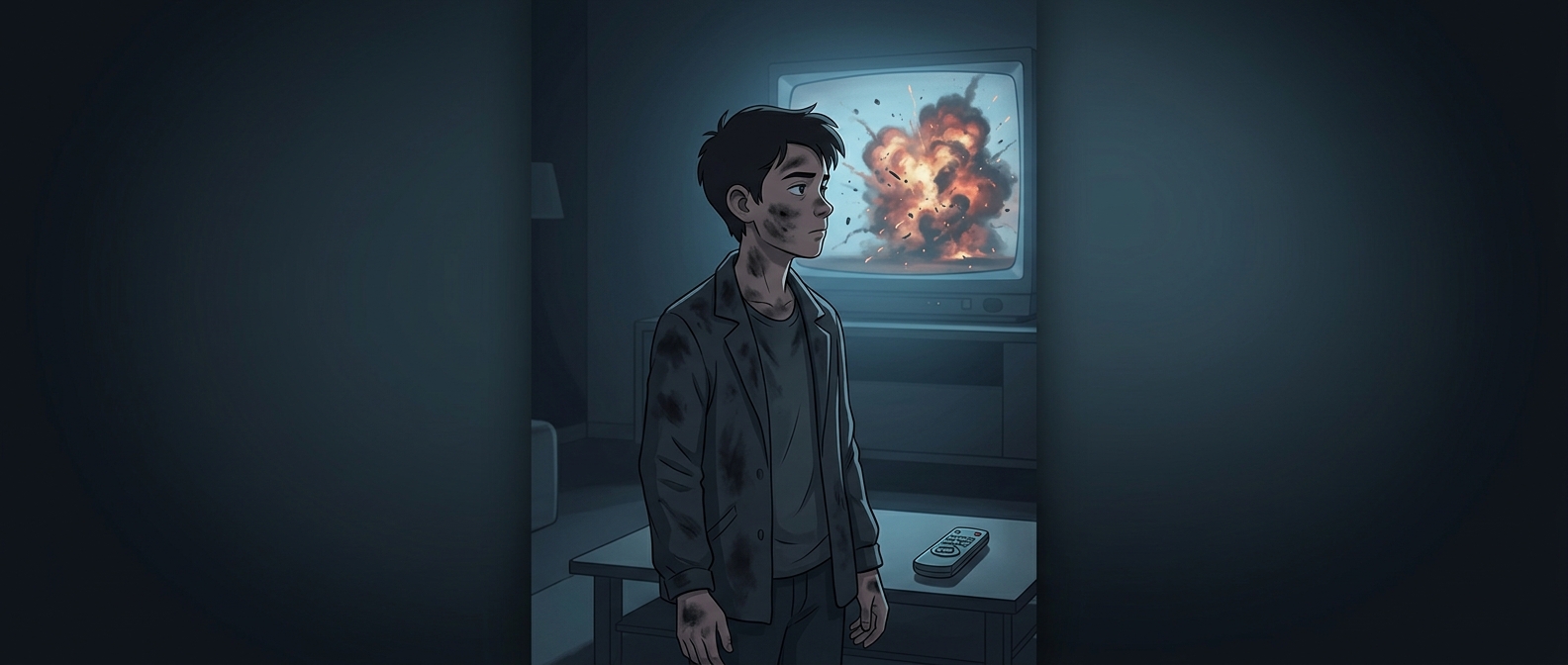
Soot Turns a Blast Into a Readable Punchline
A cartoon explosion can fill the screen with smoke, sparks, and noise, but the audience still needs to understand what happened to the character inside it. A coating of black soot solves that problem at a glance: the blast has left a mark, even though the character is still standing.
The gag depends on selective damage. Soot darkens the face and clothes while leaving the character’s shape, expression, and ability to move intact. That contrast makes the aftermath legible without interrupting the story to show a realistic injury.
A Simple Image With Good Comic Timing
Animation often communicates through exaggeration rather than physical realism. A soot-covered face is an especially efficient visual shorthand: the explosion happens, the smoke clears, and the audience can immediately read the result. Blinking eyes or a dazed look add a beat of reaction, turning the blast into a setup and the reveal into the punchline.
The detail also preserves continuity. A character can be briefly transformed by the blast, then return to the chase, conversation, or next joke. The soot signals that something dramatic happened while keeping the consequences reversible. That makes the explosion feel spectacular without forcing the story to stop and deal with lasting harm.
Why the Character Stays Recognizable
Black ash creates a strong contrast against a character’s usual colors and features, so the altered appearance stands out immediately. But because the face and body remain visible beneath it, the character is still identifiable. The joke works in the space between those two impressions: the character looks thoroughly blasted, yet is plainly ready to carry on.