How a Polished Group Image Can Outshine Weak Harmonies
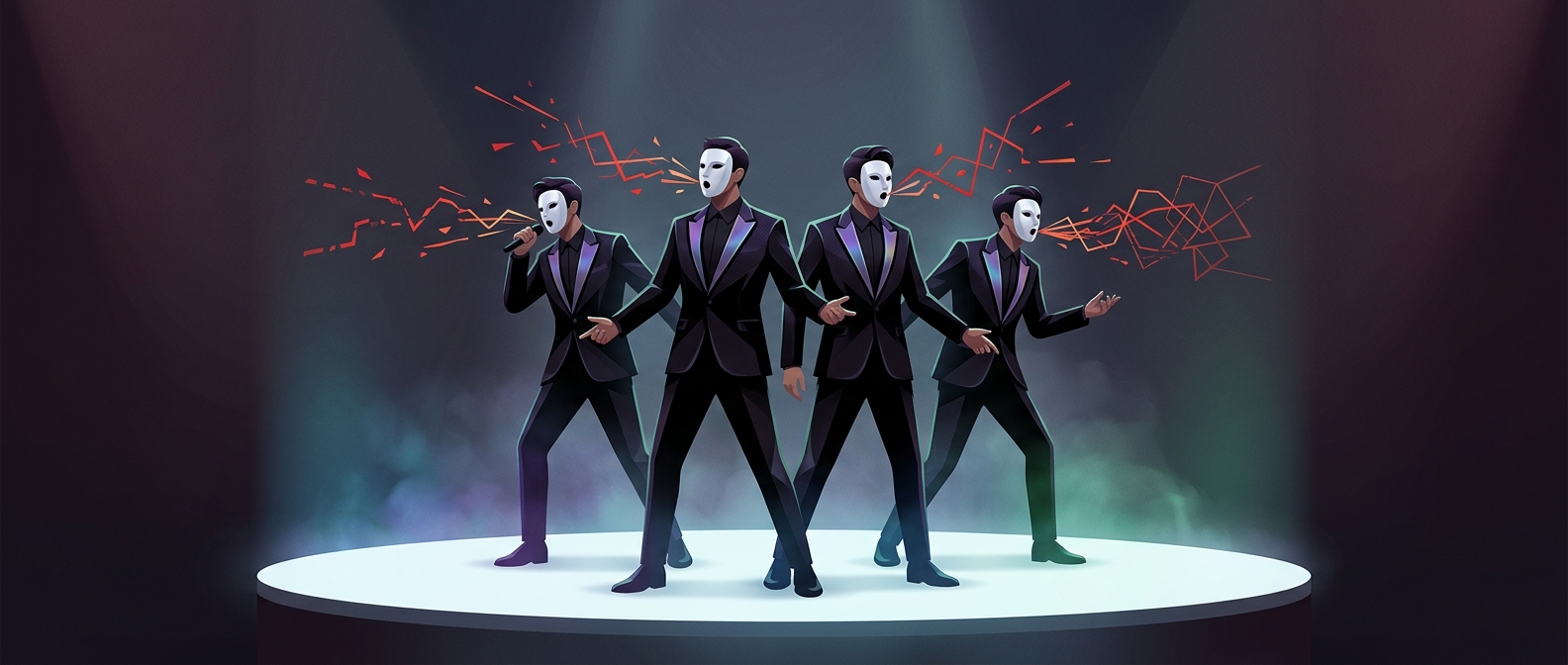
A vocal group is heard and watched at the same time. When singers move together in matching outfits, the eye has an easy pattern to follow: the same denim, the same gestures, the same steps landing on the beat. That visual unity can make the act feel coordinated before a listener has closely judged whether the voices blend.
What the choreography does for the performance
Choreography gives the audience something to track between sung phrases and during instrumental breaks. It also creates visible timing: even if the harmonies are rough, performers who turn or step together can still look tightly rehearsed. Costume and movement therefore strengthen the impression of a unified group, though they cannot make mismatched notes sound alike.
The effect is not necessarily a deliberate trick. Stage performances are judged as complete experiences, and presentation is part of that experience. But visual polish can draw attention toward what is working—the look and coordination—and away from what is not, the blend of the voices.
Where the impression breaks
A coordinated entrance may win the first glance; sustained singing gives the audience time to listen. Once the movement settles or the arrangement exposes the voices, weak harmonies become harder to overlook. The outfits can make the group look like one act, but the harmonies still have to make it sound like one.