The Turin scene behind Nietzsche’s collapse
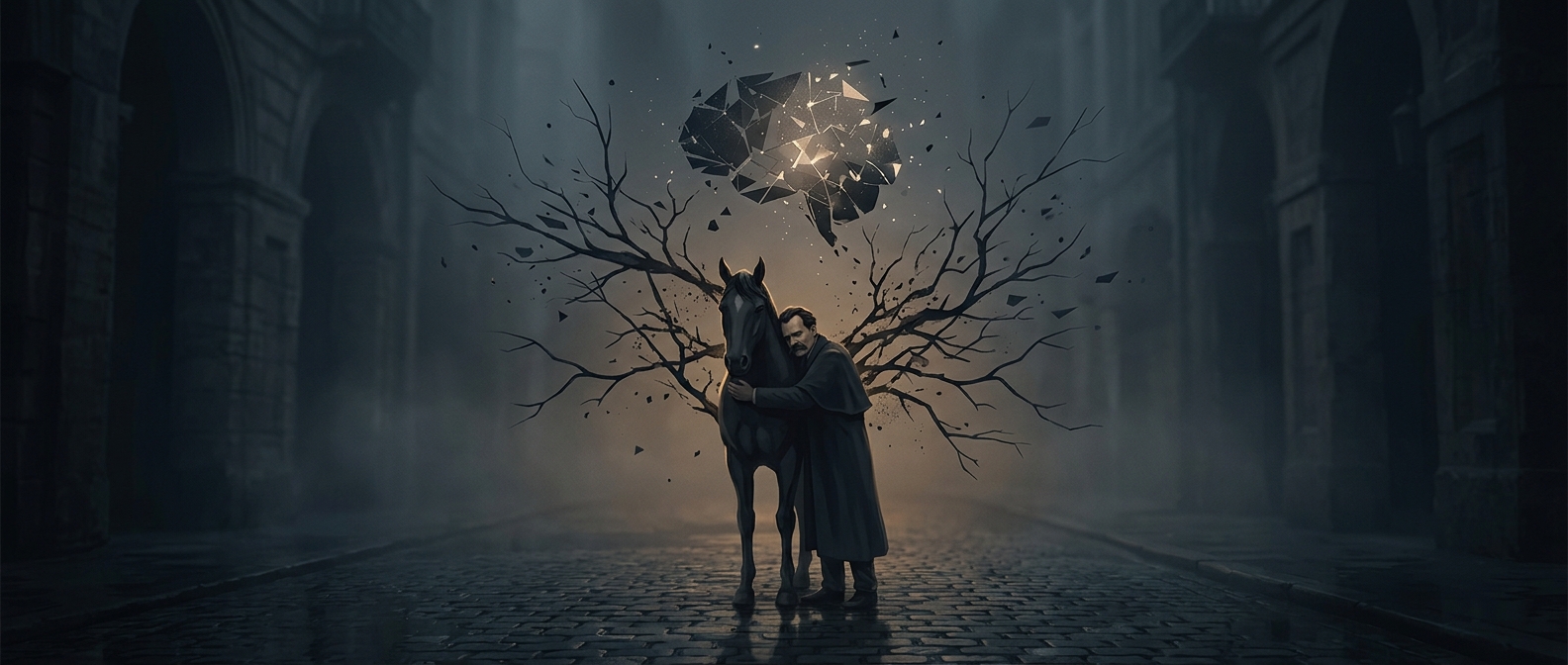
In January 1889, the German philosopher Friedrich Nietzsche was living in Turin, Italy, when he reportedly saw a carriage driver beating a horse. The story says he ran to the animal, put his arms around its neck, and broke down in tears. Soon afterward, he suffered a profound mental collapse and could no longer manage his life or work independently.
The episode is often remembered as the dramatic moment when Nietzsche’s public life ended. Its force comes from the contrast: a thinker famous for challenging conventional morality appears, in the story, overwhelmed by an animal’s suffering.
What happened afterward
Nietzsche’s collapse was not a brief interruption. Friends arranged for him to return to Germany, and his mother cared for him for years; later, his sister took over that role. He lived until 1900, but he did not return to philosophical writing or ordinary independent life.
The horse story gives a vivid scene to a much larger tragedy, but it cannot explain the medical cause of his breakdown. What it does mark is the suddenness with which the philosopher’s work gave way to dependence on others: after Turin, Nietzsche’s ideas continued to circulate, while he himself could no longer meaningfully take part in their reception.