The Pie Was Part of the Performance
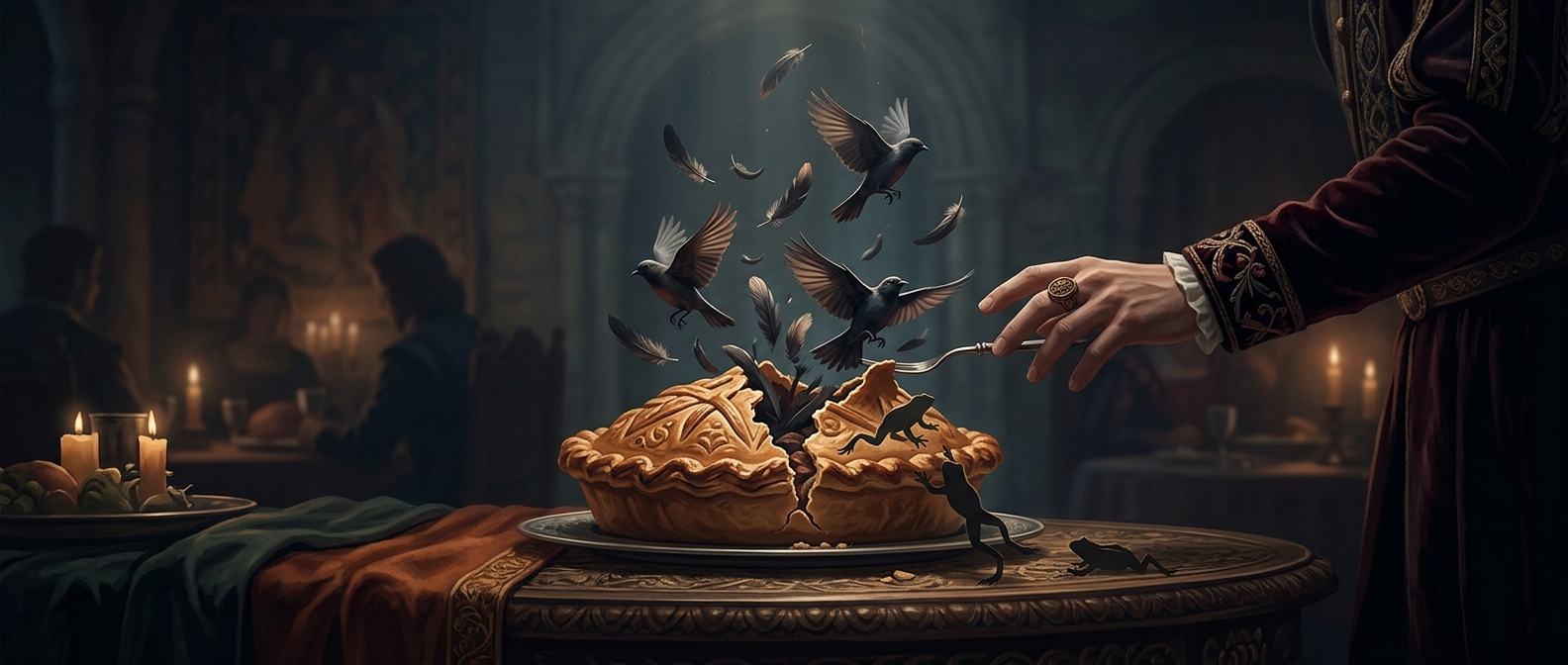
At elite feasts, food could serve as theater as well as nourishment. An entremet—a course or diversion presented between the main courses—might be designed to surprise the diners. A pie offered a ready-made prop: its closed crust concealed what was inside, and cutting it open supplied a dramatic reveal. In some recorded entertainments, live birds or other small animals emerged from the pastry.
The spectacle depended on the contrast between an ordinary-looking dish and an unexpected burst of movement. The pie was less a recipe than a container and a cue: the moment someone broke the crust, the performance began.
A Display of Wealth and Control
Such a stunt required more than an elaborate kitchen. Hosts had to arrange for live creatures to be placed inside a hollow crust and brought to the table without spoiling the surprise. The feat displayed access to skilled servants, unusual ingredients, and the resources to make a meal serve no practical purpose beyond entertaining guests.
The animals were not the cooked filling; the point was their release. That distinction is easy to miss when the story is remembered as a novelty pie, but it explains why the dish belonged to a feast’s theatrical interludes rather than ordinary dining.
The image endured because it compresses the whole performance into one gesture: a knife parts the crust, and a meal suddenly behaves like a stage.