Pompeii’s street-side food counters
The ruined city was Pompeii, where archaeologists have identified more than 80 thermopolia—shops that sold prepared food and drink. The name comes from Greek words meaning “hot” and “to sell.” They were not drive-throughs in the modern, car-based sense: customers stopped at a counter facing the street and bought food to take away.
How the shops served a busy city
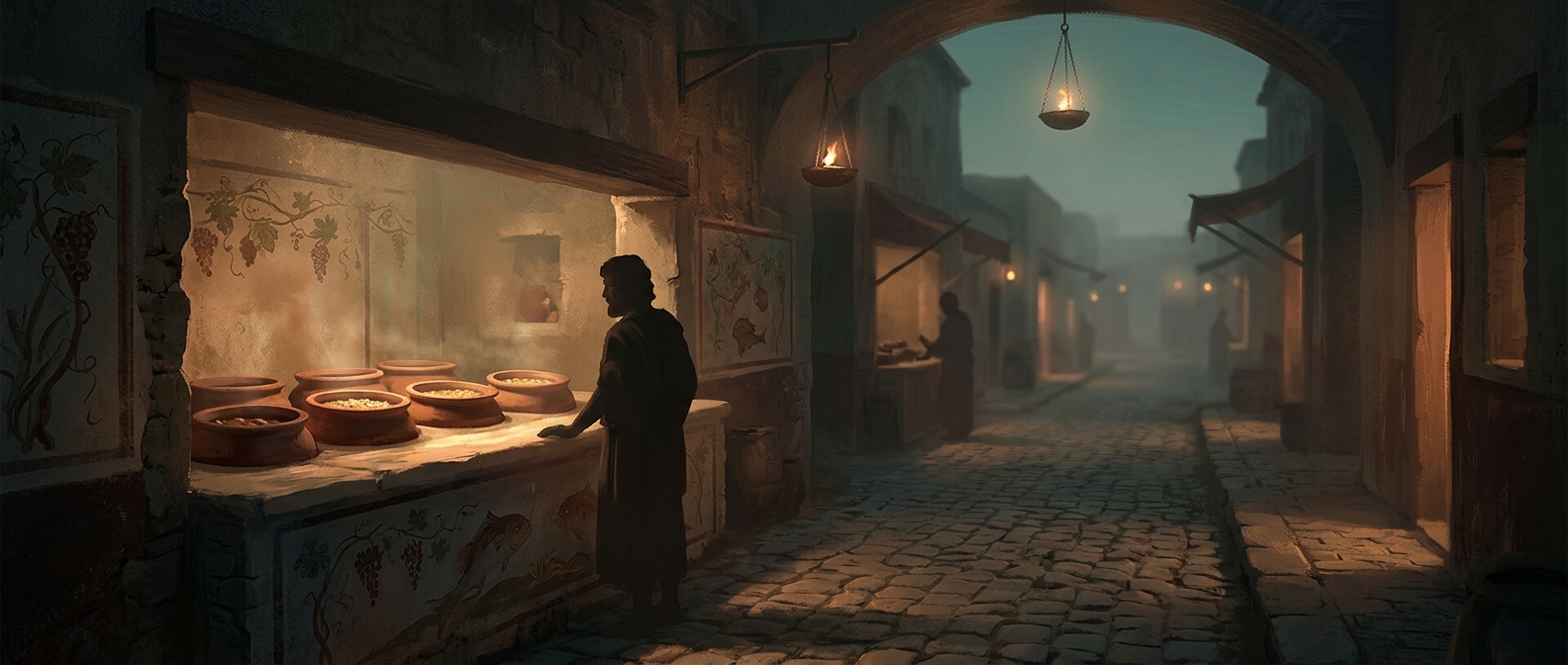
Many thermopolia had large clay jars set into holes in a masonry counter. The jars, called dolia, could hold food or drink; the counter made it easy for a vendor to serve people passing by. Some shops also had a room or seating area behind the street-facing counter, so the business could serve customers on site as well as those heading elsewhere.
These shops suited urban life. Not every resident had a private kitchen, and a prepared meal from a neighborhood counter offered a practical alternative to cooking at home. A thermopolium was therefore more than an ancient curiosity: it was part of the everyday infrastructure that helped feed a crowded city.
A snapshot preserved in the ruins
When Vesuvius buried Pompeii in 79 CE, it sealed buildings and street-level features that would otherwise have been altered or lost. The counters and embedded jars show how food was sold in public, right at the boundary between shop and street. The “drive-thru” comparison is a playful modern shorthand—but the striking reality is that Pompeii’s residents could buy a ready-to-eat meal without stepping far from the road.