A Counter Built for the Street
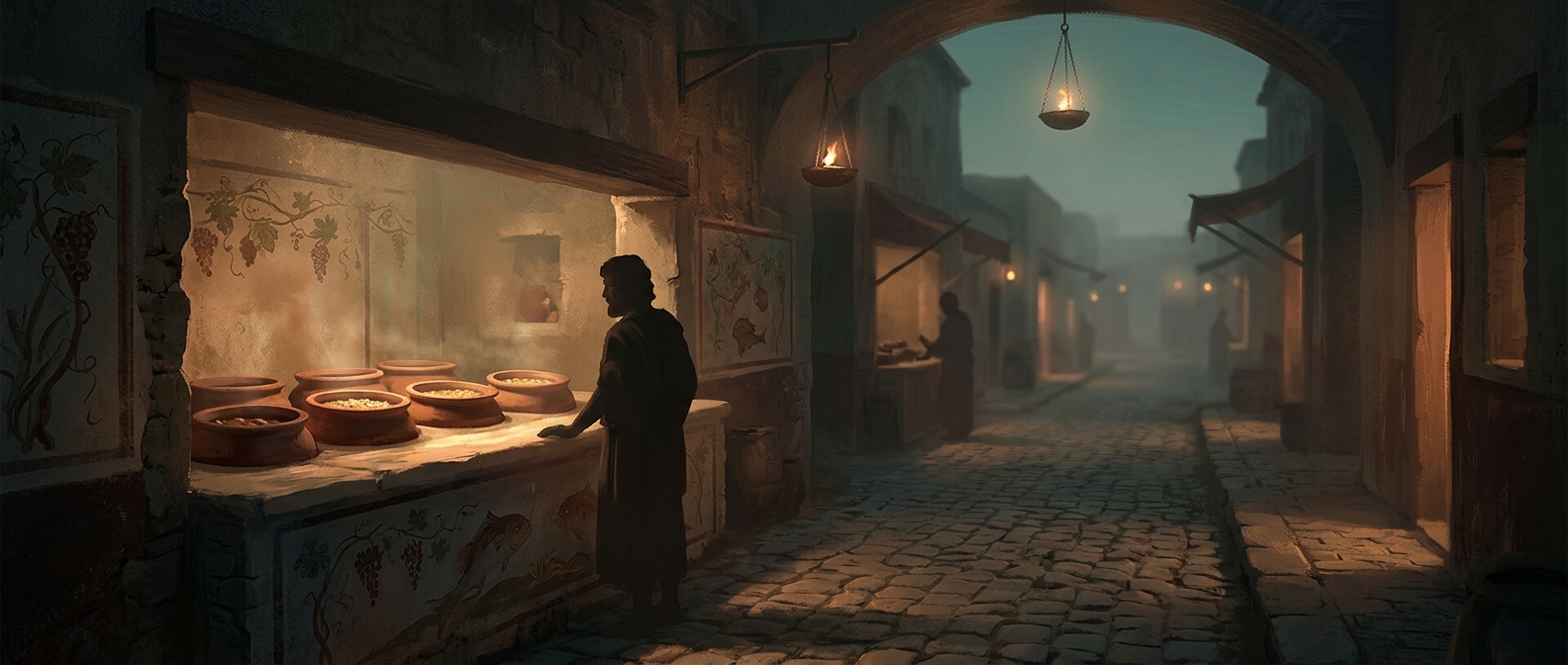
A thermopolium was more than a place to buy a meal: its design brought food service right to the flow of city life. The stone counter faced the street, where a customer could order without entering a dining room. Large storage jars, set into openings in the counter, held food or drink for serving. The setup made a quick stop practical in a crowded town where many errands and encounters happened outdoors.
How the Setup Worked
A worker could keep provisions in the jars and serve portions across the counter, rather than prepare each customer’s meal from scratch. Hot dishes and wine turned the shop into a small, everyday alternative to eating at home. For residents without a convenient kitchen—or those who simply needed a meal while out—this kind of service made prepared food part of ordinary urban routine.
The counters also reveal how commerce fitted into Pompeii’s streetscape. A shop could open directly onto a busy route, making its food visible and accessible to passersby. Its compact layout joined storage, serving, and the customer’s ordering point in one space.
A Snapshot of Daily Life
Pompeii’s buried remains preserve these counters in place, allowing archaeologists to see not just what people ate, but how food was sold. The thermopolium’s lasting significance is that it makes an ancient city feel unexpectedly familiar: a person could stop at a street-facing counter, choose a ready-made dish, and carry on with the day.