How a fighter jet turns without steering its nose
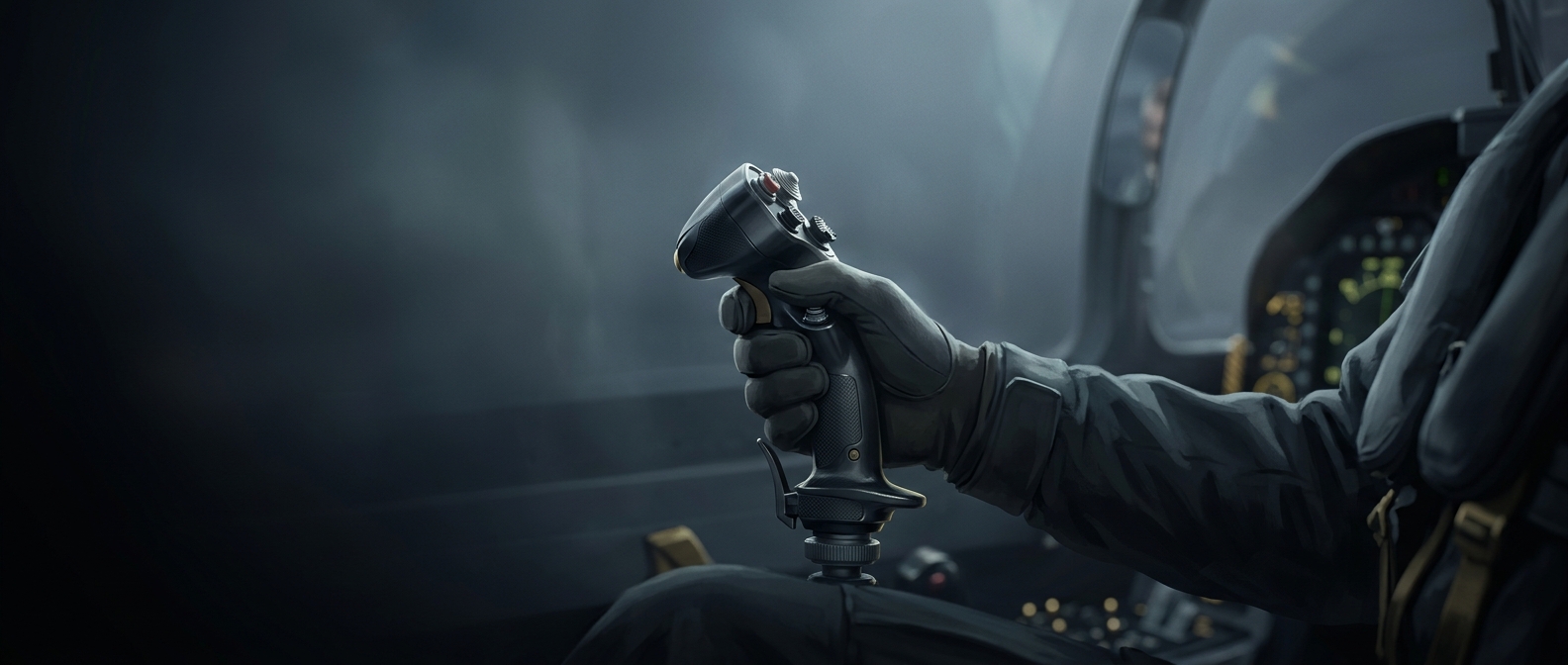
A jet does not make a normal turn by swiveling its nose like a car’s front wheels. The pilot first rolls the aircraft: moving the stick to one side commands the ailerons, hinged surfaces near the wing tips, to make one wing rise and the other fall. The wings tilt, and the aircraft begins to bank.
Once banked, the wing’s lift—the force that normally supports the jet against gravity—points partly sideways. That sideways component pulls the aircraft onto a curved path. The jet’s nose follows the curve as the aircraft changes direction; the stick’s small movement is only the first link in that chain.
Why a sharper turn demands more
A steeper bank aims more of the lift sideways, tightening the turn. But less of the lift points upward, so the wings must generate more total lift to keep the aircraft from losing altitude. That extra force makes the pilot and aircraft feel heavier for the duration of the maneuver, a condition called increased load factor.
The pilot therefore balances bank angle, speed, and altitude. A fast, steep turn can change direction quickly, but it places greater demands on the aircraft and its occupants. Pulling back on the stick can increase lift, but it also raises those loads; turning is not a free change of direction.
A coordinated turn also uses rudder—the movable surface on the tail—to help keep the aircraft’s nose aligned with its curved path. The controls work together, but the bank is what redirects the wing’s lift. That is why a barely visible hand input can send a massive aircraft carving across the sky.