A document built to look like a pact
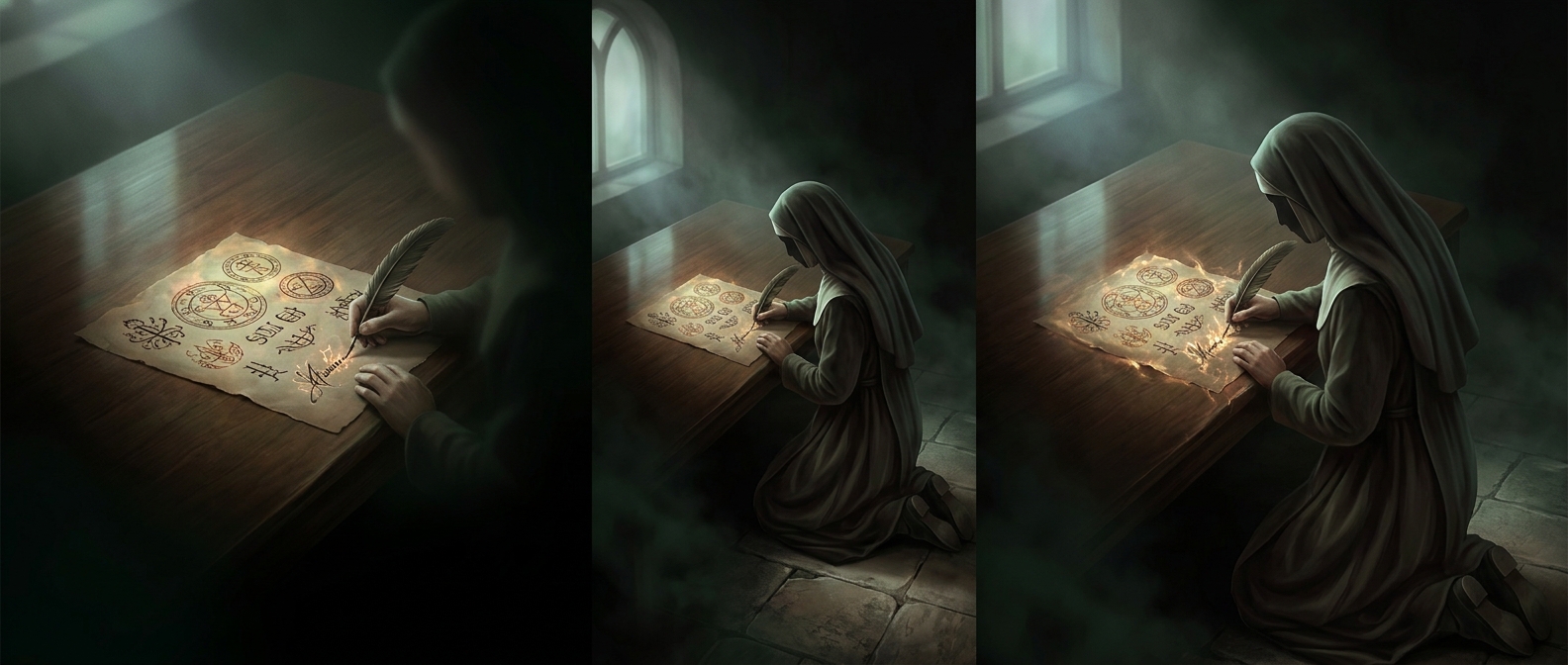
In the Loudun case, the parchment was presented as more than a written accusation: it was supposed to be a contract binding Urbain Grandier to the Devil. Its Latin ran backward, and its purported signatures included Satan and demons such as Asmodeus. The strange layout made the page look like an object from a reversed, hostile world—not an ordinary legal document.
That appearance mattered because the alleged possession was understood through the religious ideas of the time. A pact offered a concrete explanation for an invisible spiritual crime: if Grandier had made an agreement with demons, the parchment seemed to give that agreement a physical form that could be displayed and examined.
What a signature could—and could not—show
The signatures did not independently establish that demons existed or had signed the page. They belonged to the accusation’s claim, and the document’s force depended on whether authorities accepted that claim and the assumptions behind it. In that setting, a paper bearing an alleged pact could function as evidence within a case about witchcraft and possession, even though its extraordinary signatures could not be verified like ordinary ones.
The contrast is what makes the parchment memorable: it borrowed the authority of a signed contract while presenting names that no human court could authenticate in the usual way. The page turned a spiritual allegation into something tangible enough to put before a court—and left the central question not merely what was written, but whether anyone should treat it as proof.