When a Shadow Could Be More Than an Outline
In some Eastern European folk beliefs, a person’s shadow was not merely an effect of light. It could be understood as a double—a visible sign of the person’s life or essence, and therefore something that might be put at risk. If the shadow slipped away, the person might be left vulnerable, while the wandering double could enter the realm of spirits.
That idea made an ordinary wall and a patch of sunlight feel consequential. A shadow could be treated as a point of contact between the living and the unseen: attached to a body, yet able to seem separate from it.
The Logic of “Nailing” a Shadow
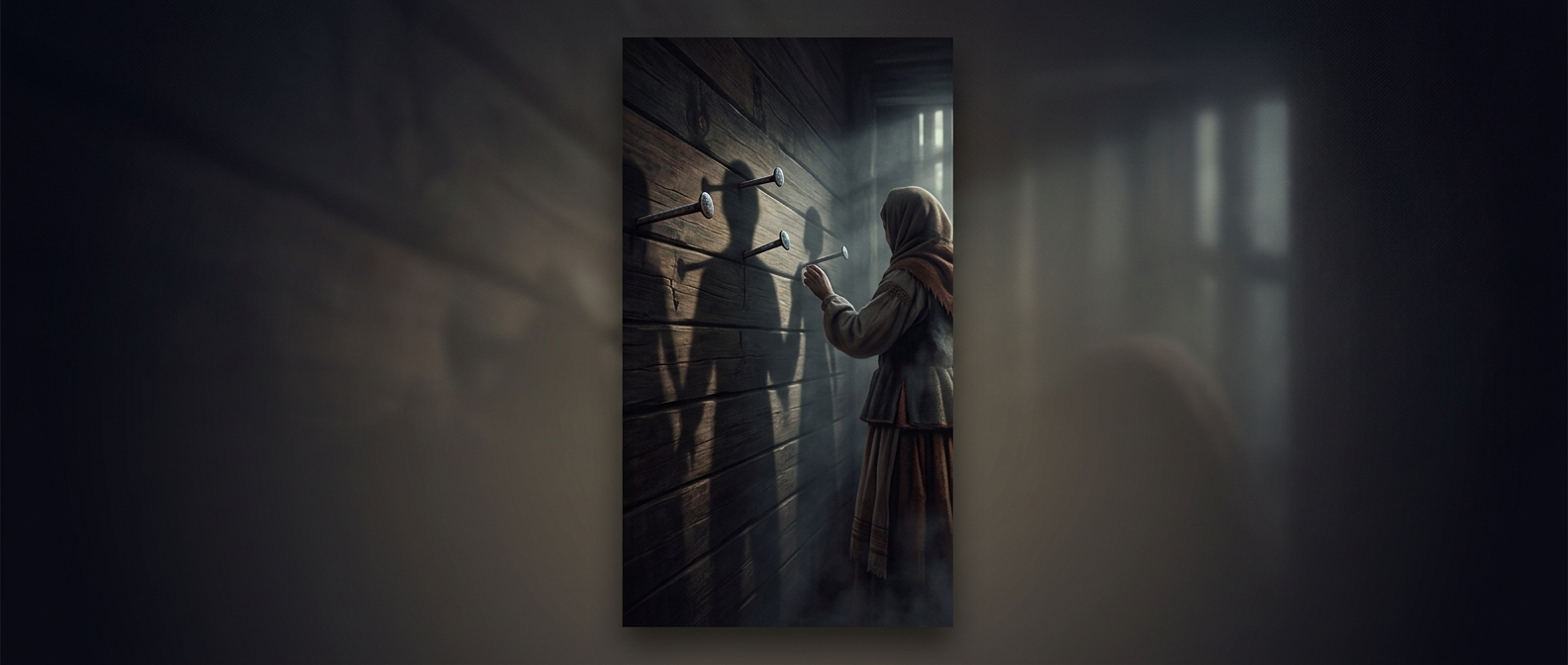
The ritual worked through symbolic action. A nail driven where a shadow fell was meant to pin the outline in place, and, by association, keep the person’s essence from straying. This is a form of sympathetic magic: the belief that acting on a likeness can affect the person it represents. The nail did not need to capture a physical substance; its force lay in treating the shadow as a bound double.
The practice also reveals a particular fear about separation. A shadow was always changing shape and disappearing when the light changed, making it an unsettling image of something that could leave without the body. In this way of thinking, fastening the shadow was an attempt to hold a person together—and to keep the boundary between the living and the spirit world from opening.