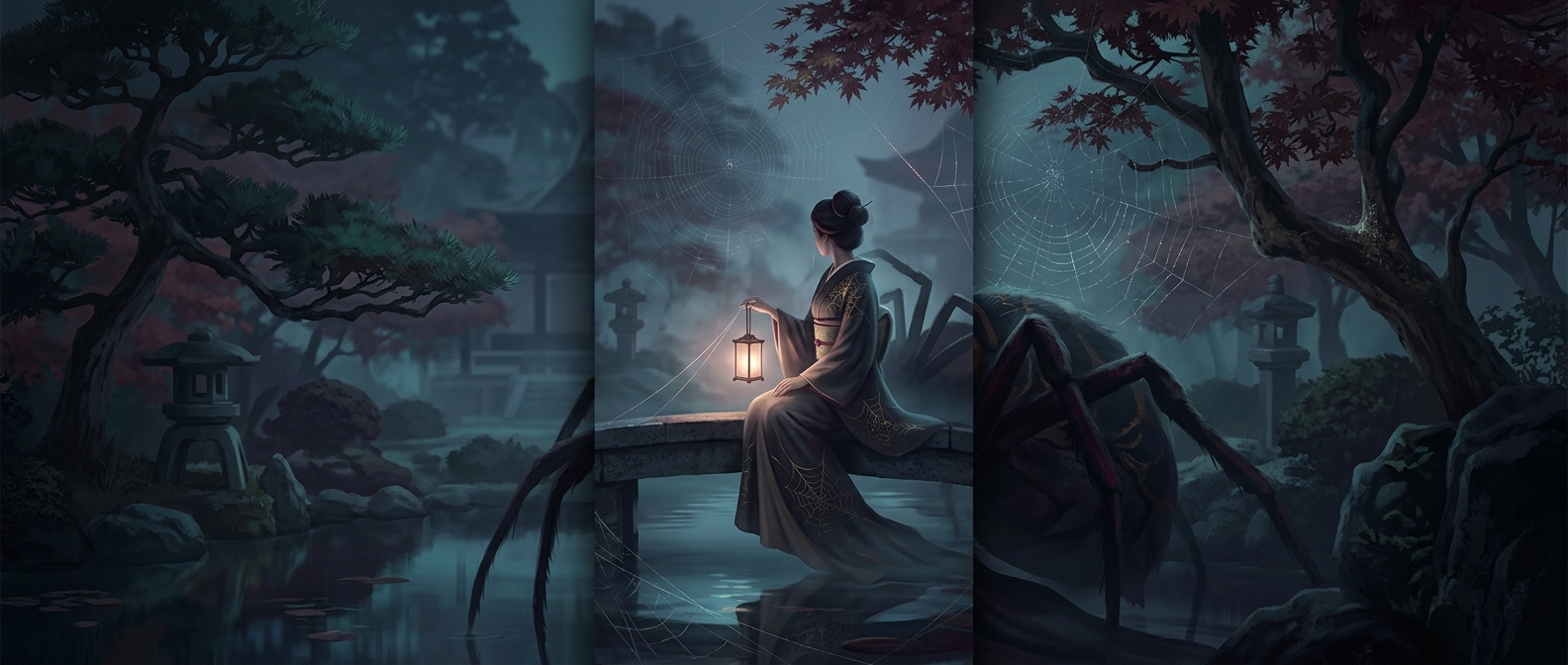
The jorōgumo’s disguise is part of the danger
A jorōgumo is a supernatural creature in Japanese folklore that can appear as a woman while hiding its identity as a giant spider. The transformation makes the encounter unsettling not simply because a monster is present, but because it is difficult to recognize: what seems like an ordinary meeting may already be a predator’s plan.
In stories where the creature lures someone through a date or romantic attention, the disguise draws the victim close. The reveal then changes the meaning of the earlier encounter. Charm and intimacy were not signs of safety; they were how the jorōgumo brought its target within reach.
A monster built around misreading
Folklore accounts can differ, but this basic pattern—an apparently human figure concealing a dangerous nonhuman form—turns mistaken trust into the story’s central threat. The jorōgumo belongs to the broad world of yōkai, a Japanese term for uncanny beings and phenomena in traditional stories. Here, the uncanny is not a distant apparition: it enters a familiar social situation and makes it perilous.
That is why the spider reveal matters. It exposes the trap while making the earlier clues look different in retrospect: the danger was present before anyone could see it. A jorōgumo story turns a charming date into a warning that appearances can conceal an entirely different creature—and an entirely different intention.