A sword turned into a sign of renunciation
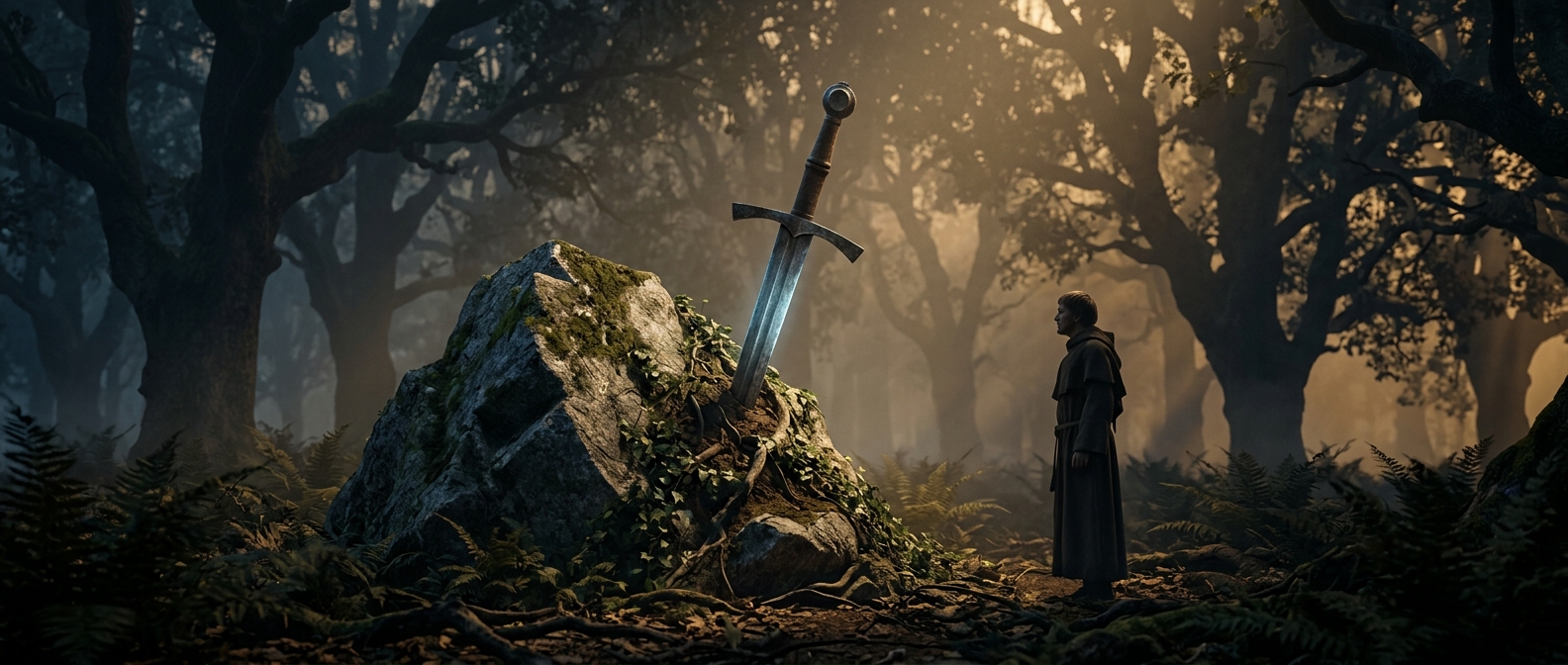
In the ruins of the chapel of Montesiepi in Tuscany, a medieval sword enters a slab of rock so that its hilt remains above the surface. The object is striking because it resembles the legendary sword in the stone—but here, the local story gives the gesture a different meaning.
Tradition connects the sword to Galgano Guidotti, a knight who, after a religious conversion, gave up his former life. In the story, he plunged his weapon into the rock to make a cross, choosing prayer over violence. The sword’s placement makes that change visible: a tool associated with fighting becomes a marker of renunciation.
What the stone can—and cannot—tell us
The sword is regarded as a genuine medieval object, but its physical presence does not verify every detail of the story attached to it. The tradition supplies the meaning; the artifact supplies a tangible link to the medieval devotion that took shape around Galgano and the chapel.
That distinction is part of what makes the site memorable. The blade is not displayed behind glass or presented as a weapon to admire. It remains lodged in the rock, so the act it represents—giving up the sword—continues to define how visitors encounter it.