A center made meaningful
The Greek word omphalos means “navel.” At Delphi, the stone gave physical form to an idea: the sanctuary was not merely a place to consult Apollo, but the point where the human world and the divine order met. Its importance came from that symbolic role, not from any claim that Delphi lay at the planet’s measurable midpoint.
How Delphi became the world’s center
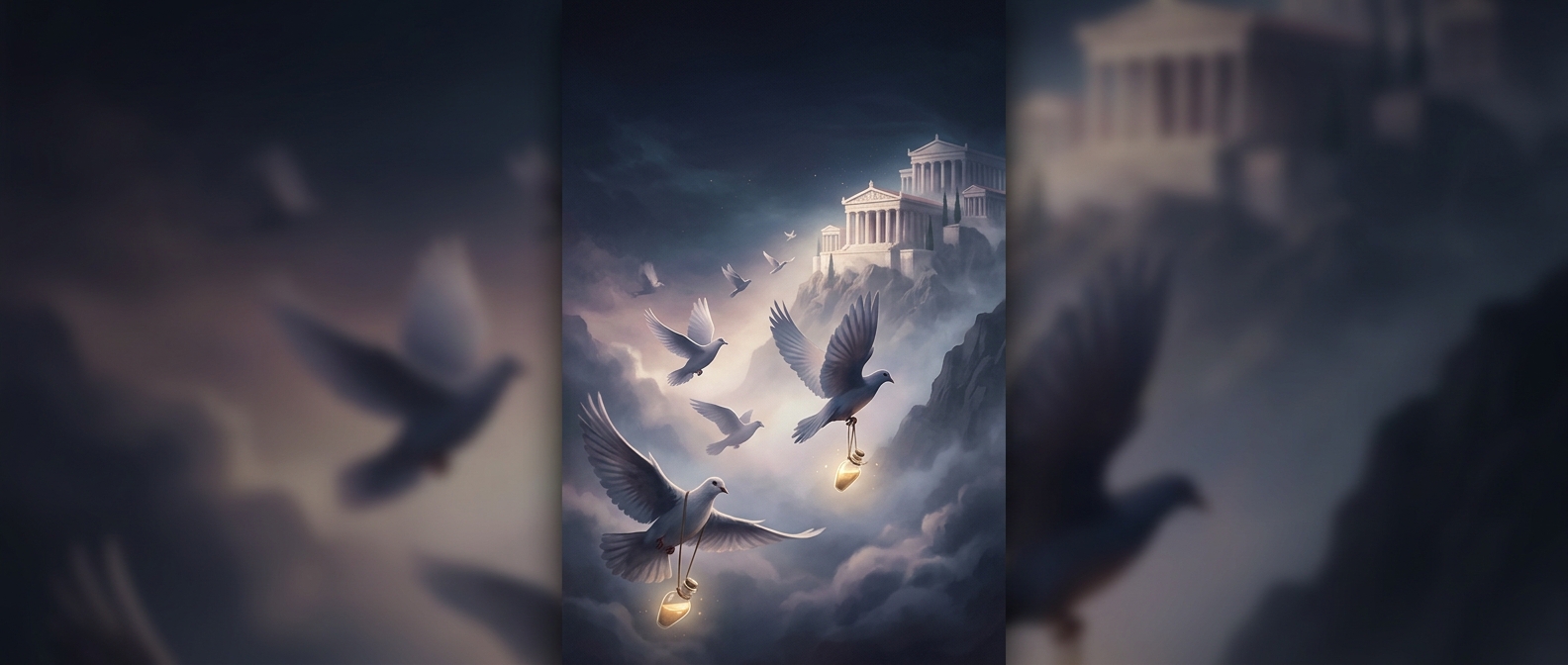
A Greek myth explained the location through Zeus. He sent eagles from opposite ends of the earth, and they met above Delphi, marking the spot as the world’s center. The omphalos made that invisible boundary visible. Visitors encountering the stone could see a tangible sign of Delphi’s special standing within Greek sacred geography—the imagined arrangement of meaningful places, rather than a map drawn to scale.
That distinction mattered in a world where communities sought guidance from divine powers through sanctuaries and oracles. Delphi’s reputation rested on Apollo’s oracle, and the omphalos reinforced the sense that answers sought there came from a place uniquely connected to the wider cosmos. The stone did not locate the center of the earth; it declared where the Greeks believed the world’s center was.