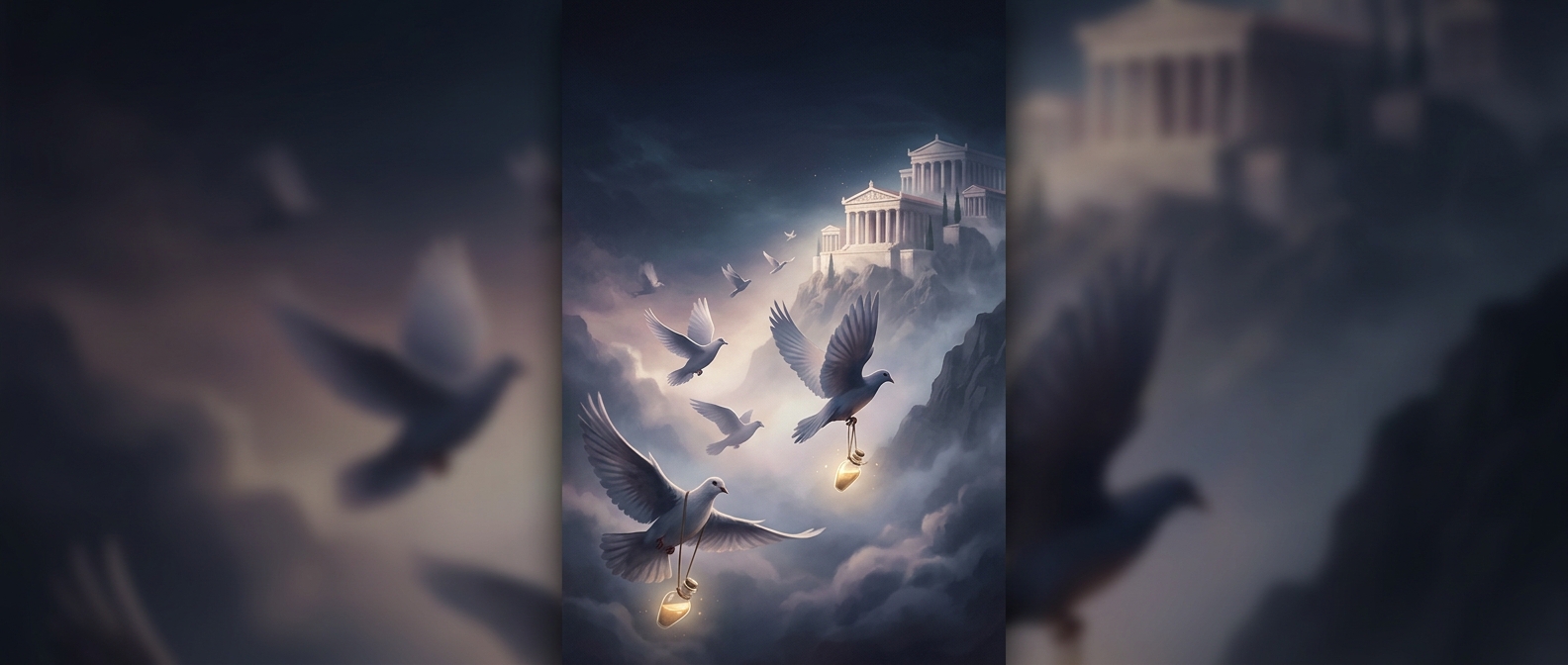
Ambrosia Made the Gods Different from Mortals
In Greek myth, ambrosia was the divine food associated with the gods’ deathless existence. It belonged to a world beyond ordinary human limits: mortals needed food to live, aged, and eventually died, while the gods remained ageless. Ambrosia was therefore more than a lavish meal; it marked the boundary between divine life and human life.
Why Doves Carried It to Olympus
The image of doves bearing ambrosia up Mount Olympus gives the gods’ sustenance a fittingly otherworldly delivery. Doves could travel between earth and the high mountain imagined as the gods’ home, making them messengers between the human and divine realms. Their role also made an invisible privilege—the gods’ access to immortal food—easy to picture as a scene.
Greek myths were retold in different forms, and ambrosia does not always have one fixed description: traditions may treat it as food, drink, or a substance with divine power. The enduring idea is what it does in the story. A dove’s flight carries not just a meal to Olympus, but a reminder that the gods’ youth and permanence depend on a kind of life mortals cannot share.