How a Tiny Ball Becomes a Cosmic Cleanup Crew
In Katamari, growth is not just a reward; it is the game’s main rule. The player pushes a sticky ball called a katamari through a landscape, gathering objects that are smaller than the ball. A paper clip or coin can join early on. As the katamari grows, larger objects become available, opening up new routes through the same world.
That size limit gives each stage a practical puzzle. A ball that is too small cannot collect a chair, so the player has to find smaller objects first. Bigger targets then become stepping-stones: collecting them increases the ball’s size, which makes still bigger targets reachable. Objects larger than the katamari can also get in the way or knock collected items loose, turning a simple sweep into a matter of timing and route choice.
Why the Scale Keeps Escalating
The game makes progress visible by changing the meaning of ordinary scenery. At first, a room is a landscape of obstacles and tiny prizes. Later, the same kinds of objects are trivial, and the world itself becomes something to gather. This shift lets players feel their growing power without needing a complicated system of numbers or upgrades: the ball’s changing size tells the story.
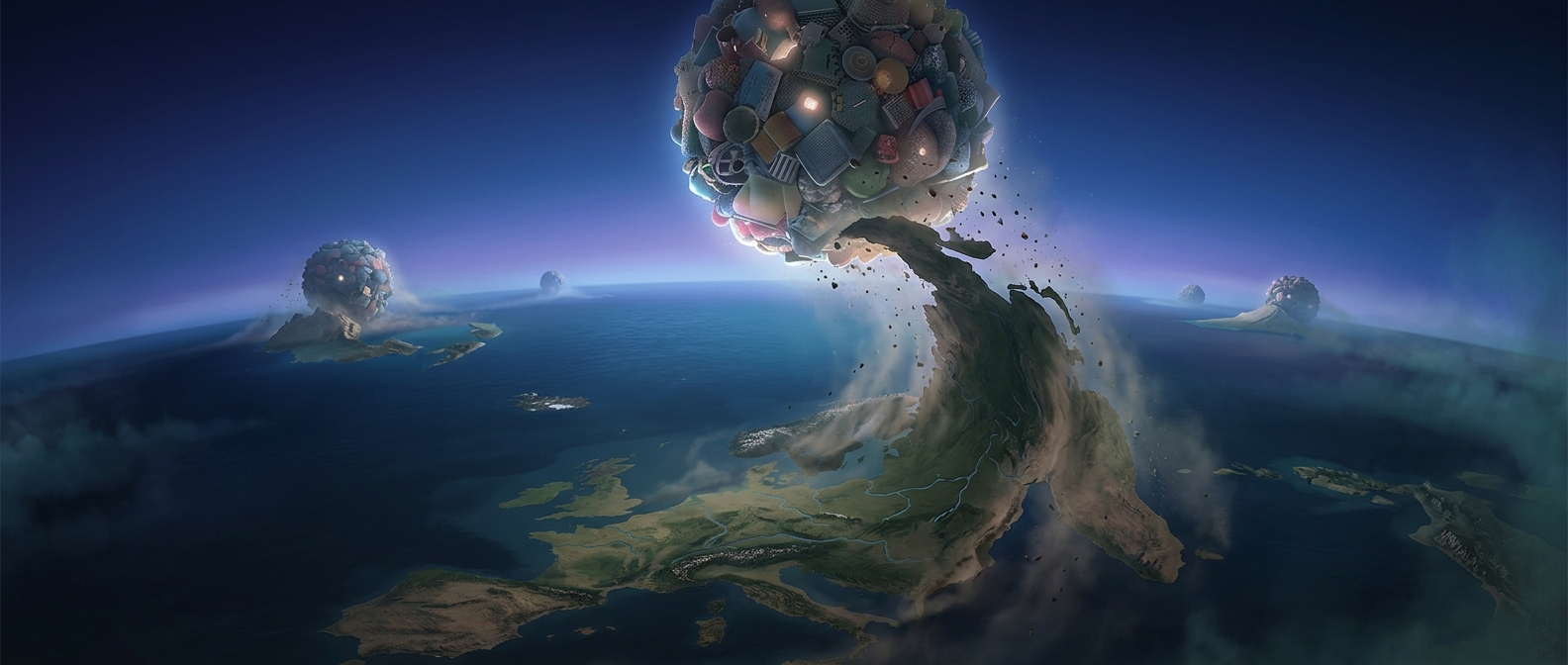
The cosmic premise pushes that progression into absurdity. What begins as tidying at a household scale expands toward planetary and continental targets for the King of All Cosmos. The joke works because the basic action never changes—keep rolling—but the consequences grow impossibly large. A familiar room can become a whole universe of potential debris, and the player’s cleanup tool becomes large enough to make the planet part of the mess.