How Racter Made Sentences Without Understanding Them
Racter’s name suggested a talkative machine, but its method was more constrained than conversation. The program assembled text by following grammatical patterns and choosing words from stored vocabulary. A sentence could have the shape of ordinary English while its ideas wandered from one image to another.
That distinction matters. Racter did not hold beliefs about policemen, beards, or anything else in its book. It had no human-like grasp of what its words referred to. Its oddness came from the gap between grammatical form and meaningful thought: familiar sentence structures made unexpected combinations sound almost purposeful.
From Computer Output to a Printed Book
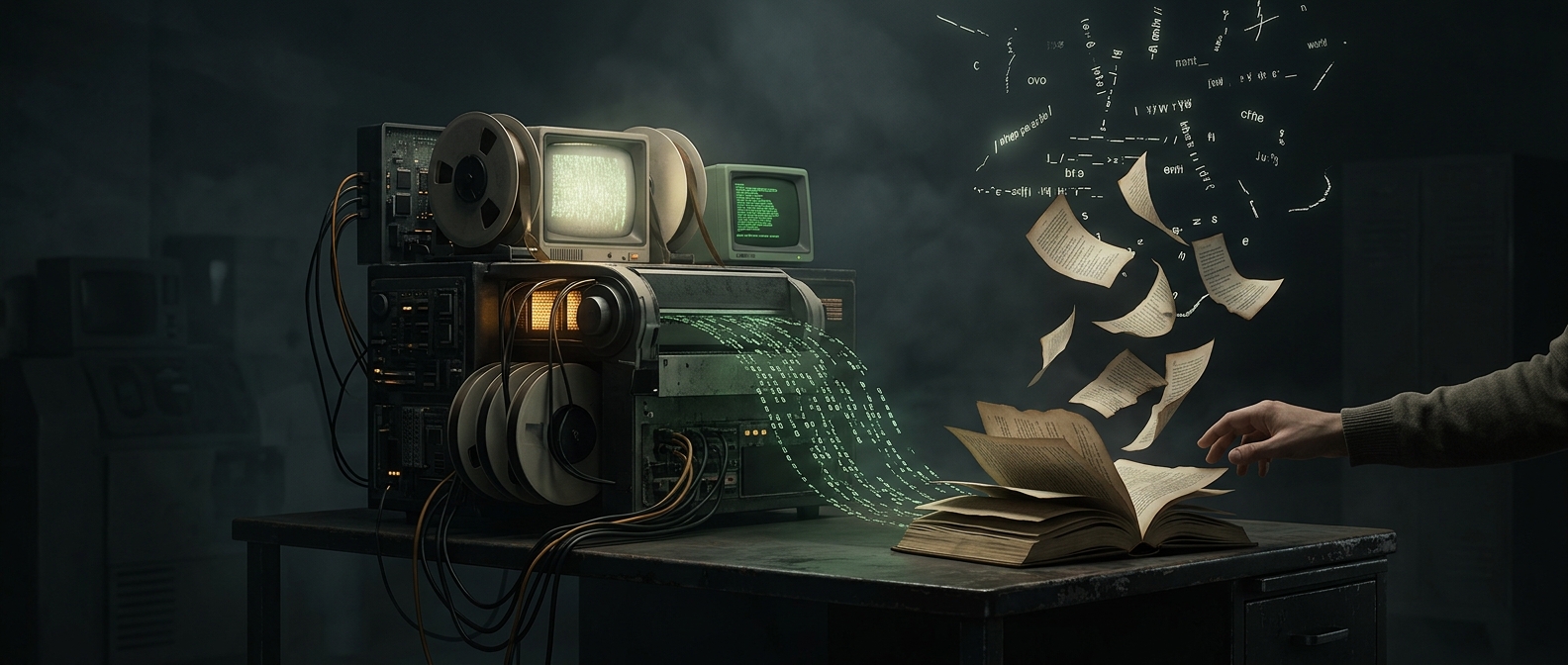
For The Policeman’s Beard Is Half Constructed, Racter’s generated passages were gathered into a book and presented as computer-written prose. The result invited readers to do what people naturally do with language: search for patterns, voices, and hidden intentions—even when the machine itself had none.
The book appeared in 1984, long before today’s systems that generate text by learning statistical patterns from vast collections of writing. Racter instead depended on rules and vocabulary built into the program. Its output could surprise because the combinations were unpredictable, but the range of what it could say was bounded by the machinery and choices behind it.
That makes the book more than a curiosity about strange sentences. It captures an early tension in computer writing: a machine can produce language that feels expressive to a reader without understanding the expression. In Racter’s case, the book’s most human contribution may have been the reader’s impulse to make sense of it.