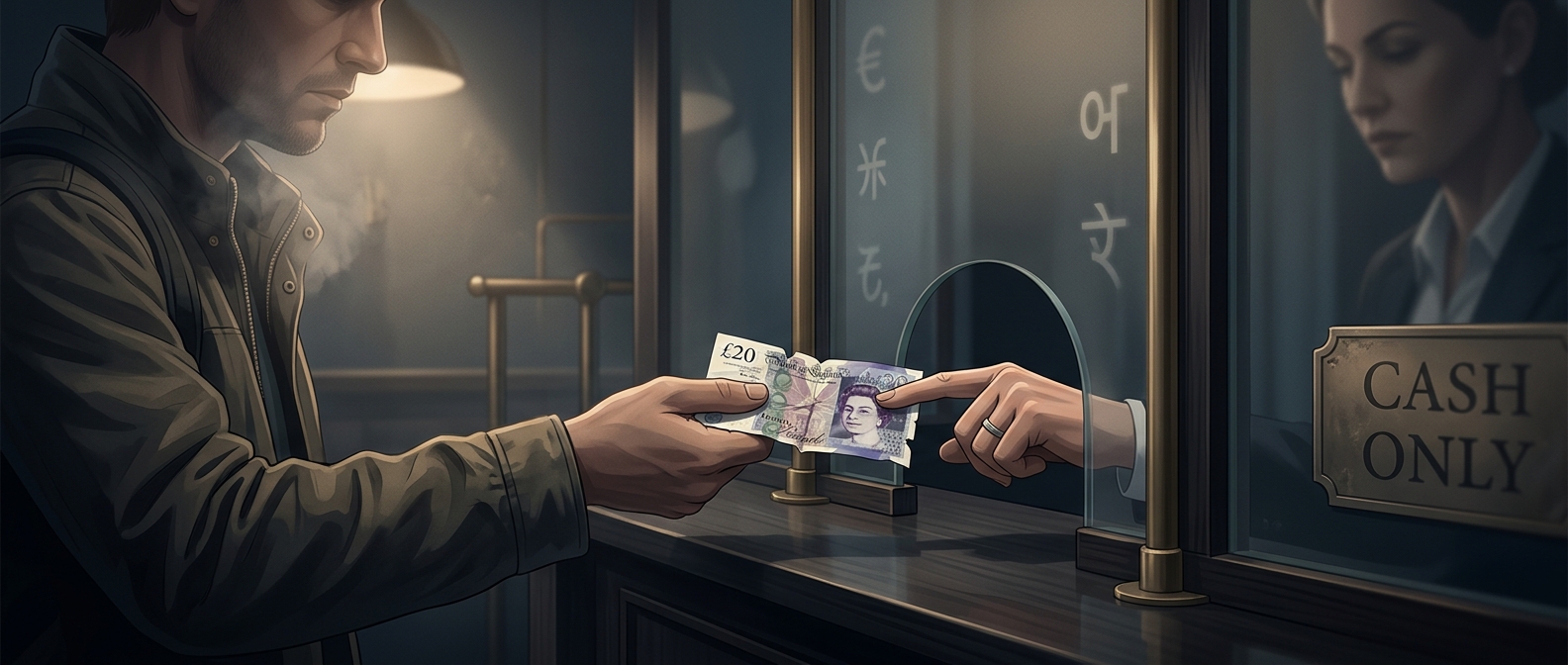
Why a Small Tear Can Make Foreign Cash Hard to Spend
A vendor who takes a foreign banknote may not be able to use it to restock a shop or pay a supplier. The note has to pass through another business—often a bank or currency-exchange service—before it can be converted or put back into circulation. If that intermediary is likely to refuse a damaged bill, the vendor may be left holding cash they cannot readily use.
Condition Becomes a Resale Risk
Banks and exchange services may apply stricter rules to foreign notes than to local ones. A tear, heavy marking, or severe crease can make a bill look altered or make its security features harder to check. Even when the note is genuine and still valid, an intermediary may decline it rather than spend time assessing it or risk being stuck with it.
That risk travels backward. A shopkeeper who expects trouble exchanging a note may refuse it at the counter, or accept only bills that look easy to pass on. The standard is not universal: policies differ by country, institution, and the kind of damage. A light fold may be fine in one place while a small tear is enough to trigger refusal somewhere else.
Keep Notes Easy to Pass Along
For travelers, the practical issue is less whether a bill remains legal tender at home than whether the next person in the cash chain will accept it. Keep foreign notes flat and dry, avoid writing on them, and ask an exchange service about its condition rules before relying on a damaged bill.
A note can retain its face value and still be inconvenient to spend: once a shop doubts it can pass the bill on, its condition becomes part of the price of accepting it.