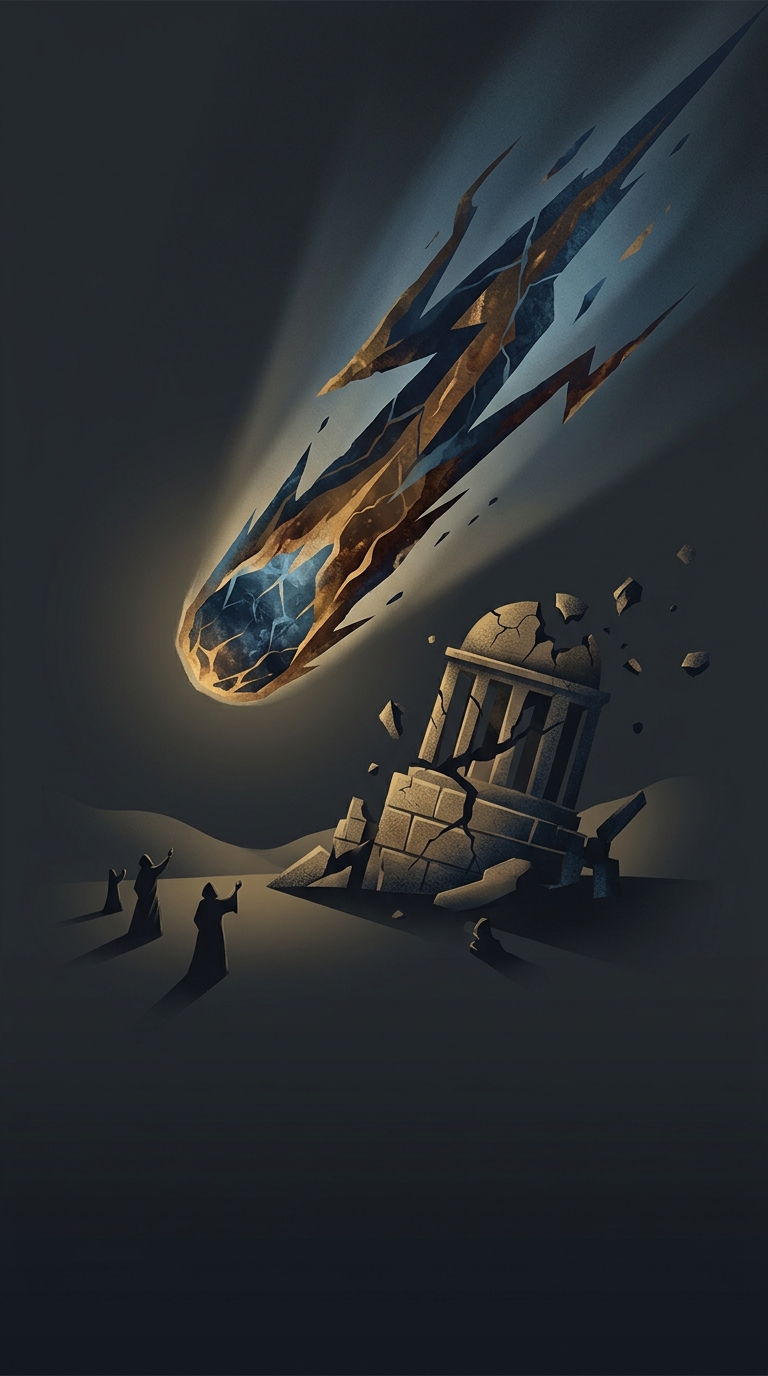
A comet became a sign of a hidden destination
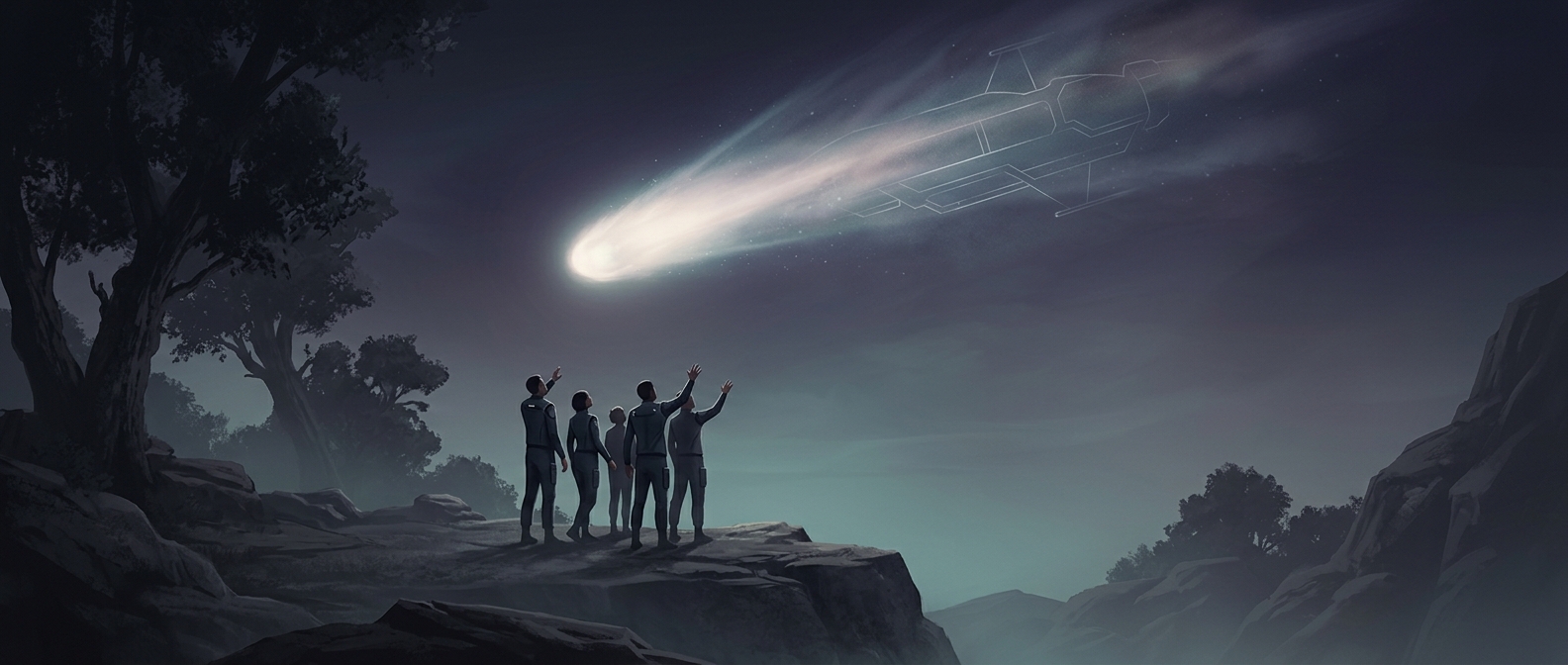
When Hale-Bopp brightened in the night sky in 1997, Heaven’s Gate members interpreted it through a belief system that treated Earth as a temporary place of testing. They expected salvation not from a conventional heaven, but from advanced beings they called the Next Level. In that framework, a spacecraft accompanying the comet could be understood as a vehicle arriving from beyond the human world.
The comet’s visibility gave an otherwise invisible belief a striking focus. The idea of a companion craft circulated in reports and rumors around the comet, but it was not confirmed by astronomical observations. For the group, however, the claim fit a story they already believed.
The body was seen as a temporary container
Heaven’s Gate leaders Marshall Applewhite and Bonnie Nettles taught that a person’s body was not the person’s lasting identity. They described it as a “vehicle” that could be left behind when someone advanced to the Next Level. This made “leaving” the body seem, within the group’s own logic, like a route to transformation rather than an ordinary death.
That belief shaped how members understood the comet: not simply as an astronomical object, but as a possible marker of passage out of earthly life. In March 1997, 39 members died in a coordinated mass suicide in California, believing they were departing to join the spacecraft. The episode shows how a dramatic event in the sky can acquire extraordinary meaning when it meets a community’s established expectations—and how those expectations can turn an unseen destination into a reason to act.