Why Meteor Crater Worked as a Lunar Practice Ground
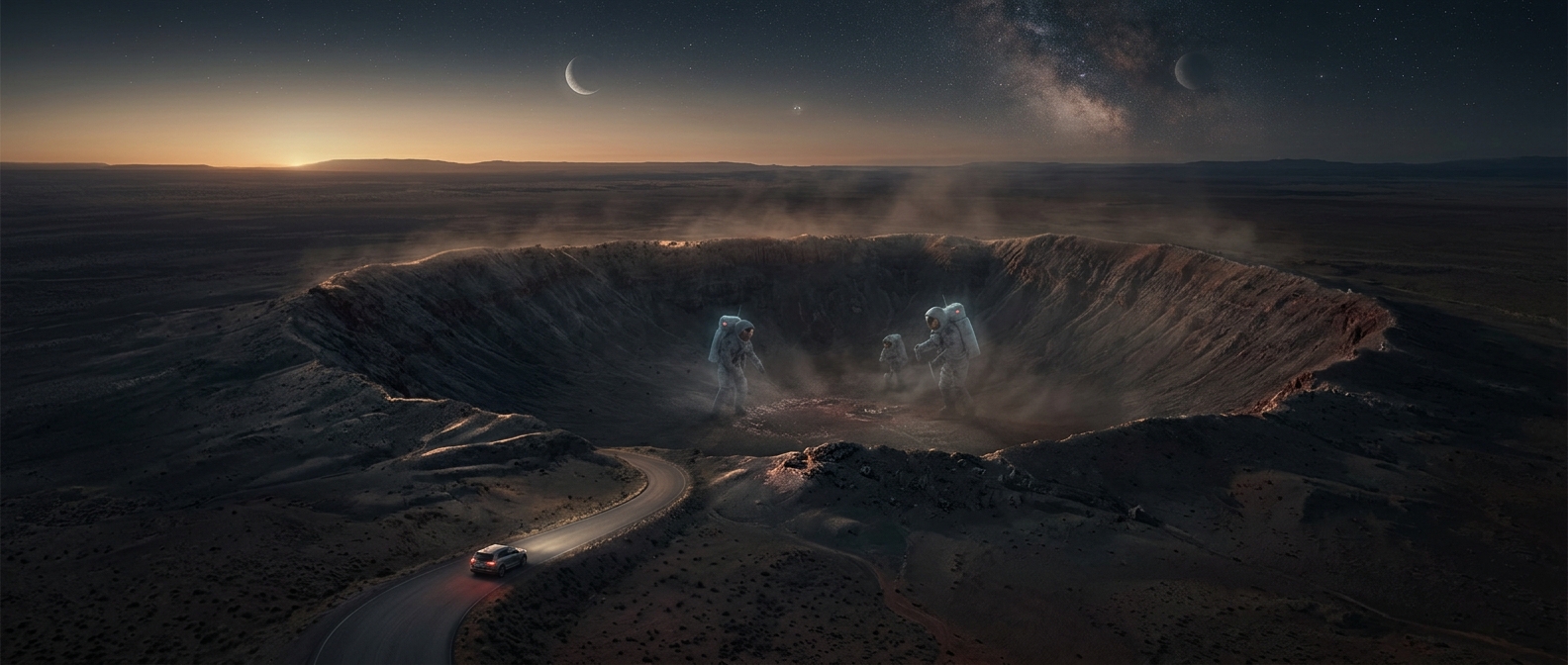
Near Winslow, Arizona, Barringer Crater offered Apollo crews a rare combination: a clear impact structure and rough ground they could inspect on foot. Its steep rim, broken rock and scattered debris gave astronauts a chance to practice reading a landscape made by a sudden collision—not just walking across an unfamiliar surface.
That mattered because lunar fieldwork would depend on more than collecting rocks. Astronauts had to notice which features belonged together, describe where a sample came from and make useful observations while wearing bulky suits and working under time pressure. On Earth, geologists could coach them as they studied the crater and its rocks.
What an Impact Leaves Behind
When a fast-moving space rock strikes the ground, the collision releases enormous energy. It fractures and throws out rock, while excavation and collapse shape the crater and its rim. Those effects create clues: the arrangement of debris and the character of exposed rock help explain how the impact transformed the ground.
At Meteor Crater, astronauts could practice looking for such clues in a real setting. The value was not that Arizona was the Moon, but that the crater made impact geology tangible. A field exercise could turn abstract ideas about lunar terrain into decisions: where to look, what to compare and how to record a find so scientists could interpret it later.
A Useful Analogue, Not a Duplicate
The match had limits. Earth’s atmosphere, weather and gravity differ from the Moon’s, and the Arizona landscape has been shaped by processes that do not operate there in the same way. The crater was therefore a training tool, not a perfect stand-in. Its lasting lesson was practical: on a spacewalk, careful observation and context can matter as much as the rock an astronaut brings back.