A ship designed around the journey
For much of the ocean-liner era, a ship’s main job was to carry passengers between ports. Cunard’s RMS Caronia helped shift that emphasis: it was built with extended pleasure voyages in mind, so the ship itself could be part of the holiday rather than simply the means of reaching a destination.
That changed what passengers were paying for. On a cruise, days at sea are not empty space between stops. They are part of the itinerary, and the ship’s shared rooms, dining, and recreation become attractions in their own right. A vessel designed for this kind of travel could serve passengers who wanted to spend weeks aboard and visit a succession of places, rather than make one crossing as quickly as possible.
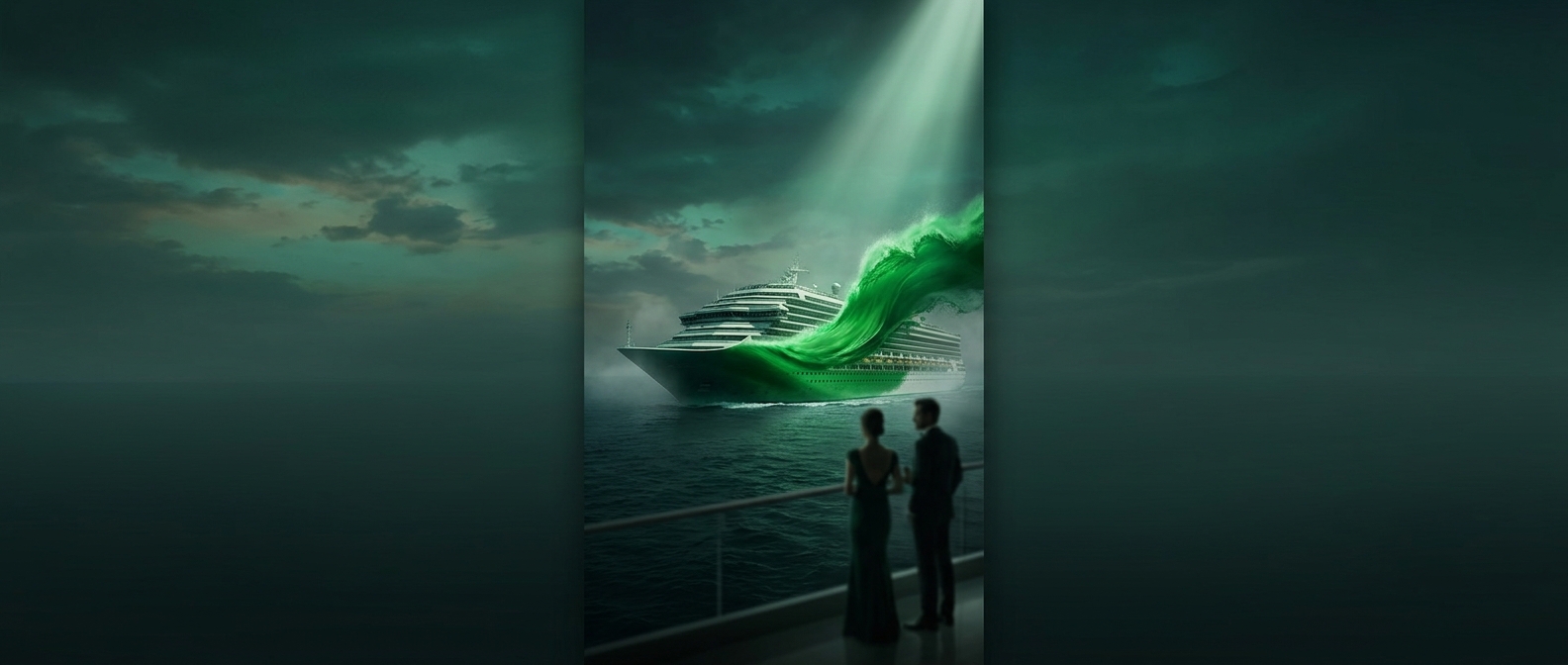
The “Green Goddess” at sea
Caronia’s pale-green exterior made it unusually recognizable among ships whose dark hulls were more familiar. The color earned it the nickname “Green Goddess,” giving a visible identity to a vessel associated with a new kind of ocean holiday.
The broader change was commercial as well as visual: a cruise ship could sell an experience that began when passengers boarded and continued between ports. Caronia helped establish that floating-resort idea, in which the voyage itself—not just arrival—was the reason to travel.