How an anchor turns into a moving hazard
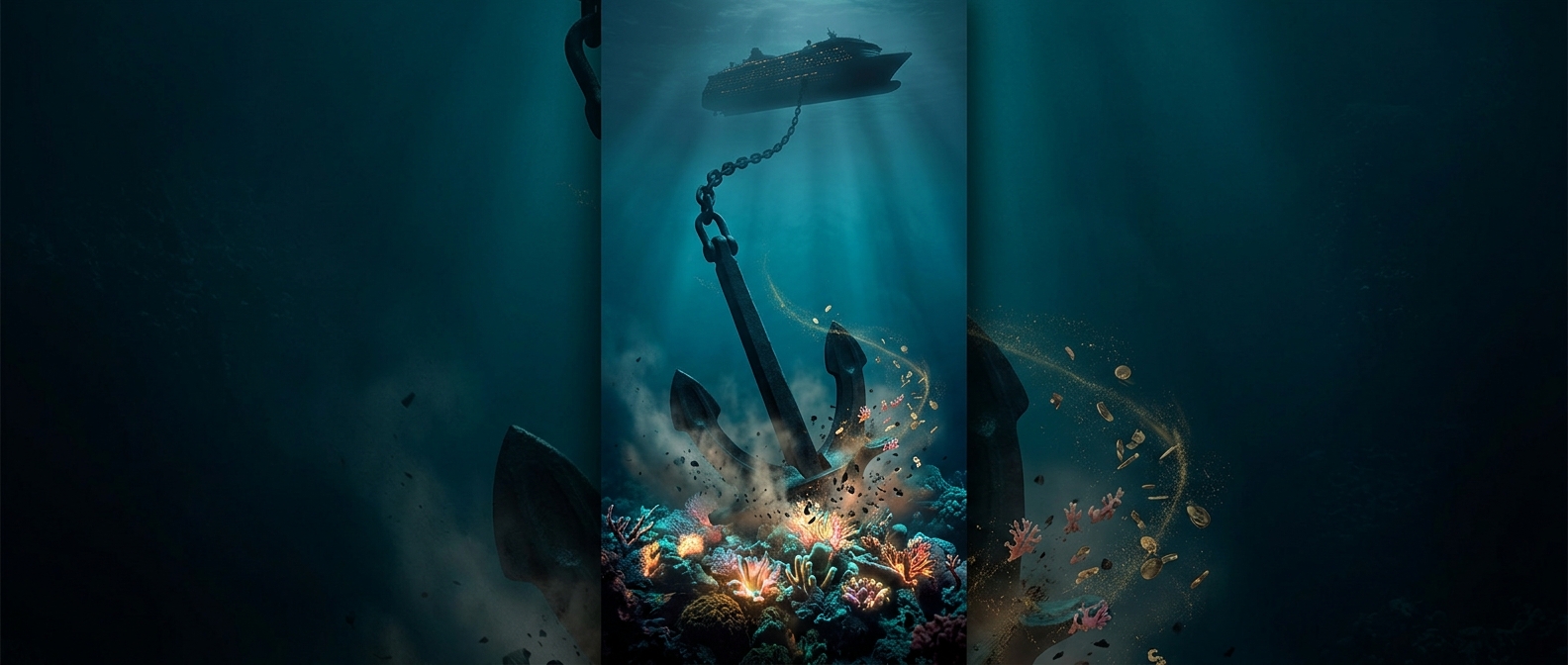
Dropping anchor is not like setting a weight neatly on one spot. A ship lets out a long length of chain so the anchor can grip the seabed while the vessel rides safely above it. Wind and current can make the ship swing around its anchor, causing the chain to sweep a broad arc across the bottom. On a coral reef, that movement can scrape, crush, or snap colonies—even when the anchor itself lands some distance away.
Coral is a living structure built by tiny animals. Its rigid branches and formations provide shelter and feeding space for reef life, so physical breakage can damage more than the individual coral struck. Broken pieces and stirred-up sediment may also affect nearby organisms.
Why the damage can last
A reef may look like rock from a ship’s deck, but living coral often grows slowly. A crushed or uprooted colony cannot simply spring back when the chain moves on; recovery depends on what was damaged and on local conditions. Repeated anchoring can make the problem worse by striking the same area again before it has recovered.
Where anchoring threatens reefs, designated moorings can give ships a fixed place to secure themselves without dragging heavy chain over coral. The practical lesson is that the danger is not confined to the point where an anchor touches down: the chain’s sweep can make the footprint of a single anchoring much larger than it appears from above.