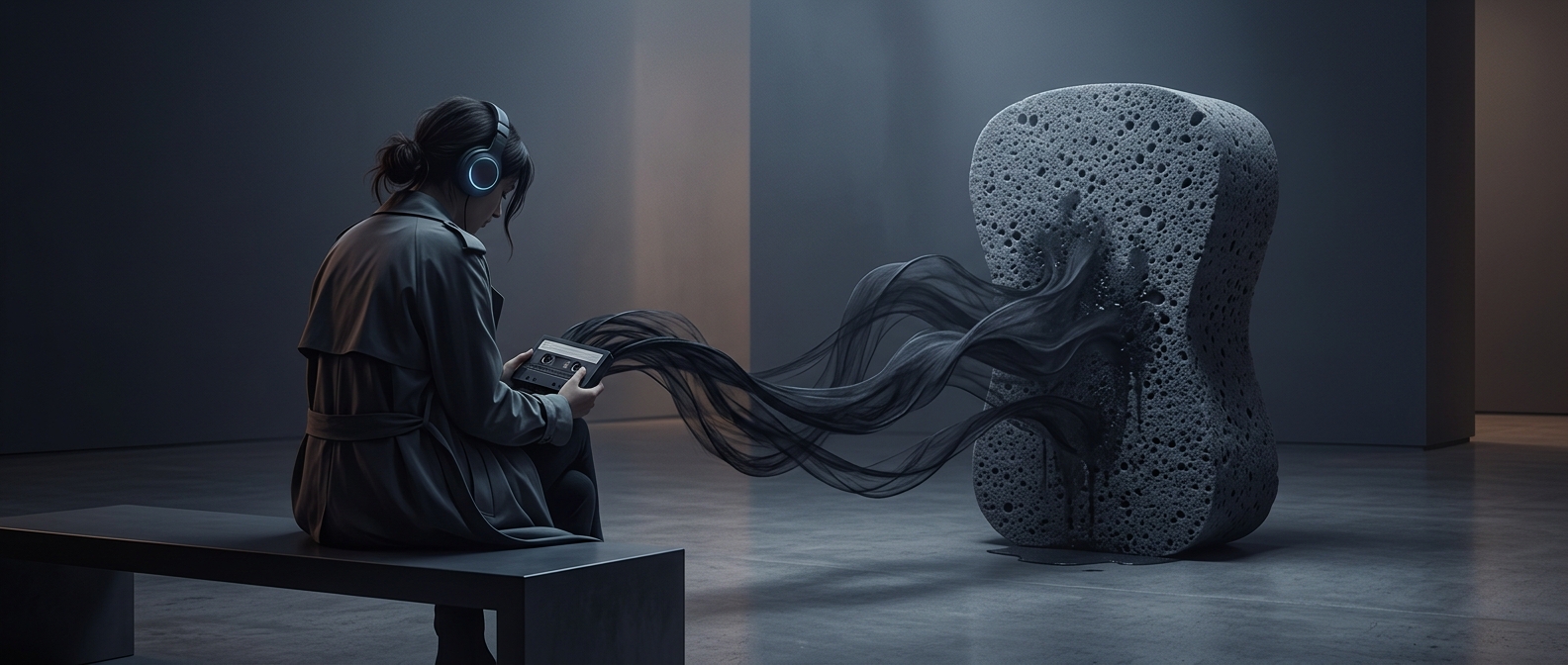
A tune can interrupt the worry loop
Anxious thoughts often repeat the same questions or imagined outcomes. Singing gives attention a competing, structured task: recall the melody, choose the next words, and keep time. Those small demands can make it harder to give the worry loop your full attention—not because the concern has vanished, but because attention is occupied elsewhere.
A familiar song is especially easy to take up. You already know what comes next, so you can focus on performing rather than figuring out unfamiliar material. The result can be a short mental change of channel.
Singing changes the rhythm of breathing
To sing a phrase, you breathe in and then release air steadily as you produce the notes. That pattern may encourage slower, more controlled breathing than the quick, shallow breaths that can accompany tension. Singing also gives you immediate sensory feedback—the sound of your voice and the feel of the breath—so attention has something concrete to return to.
The shower can make this easier to do privately and without much preparation. But the effect is temporary: singing may create a pause in anxious thinking, not resolve the problem behind it. Its practical value is that, for a few minutes, attention and breath have a simple rhythm to follow.